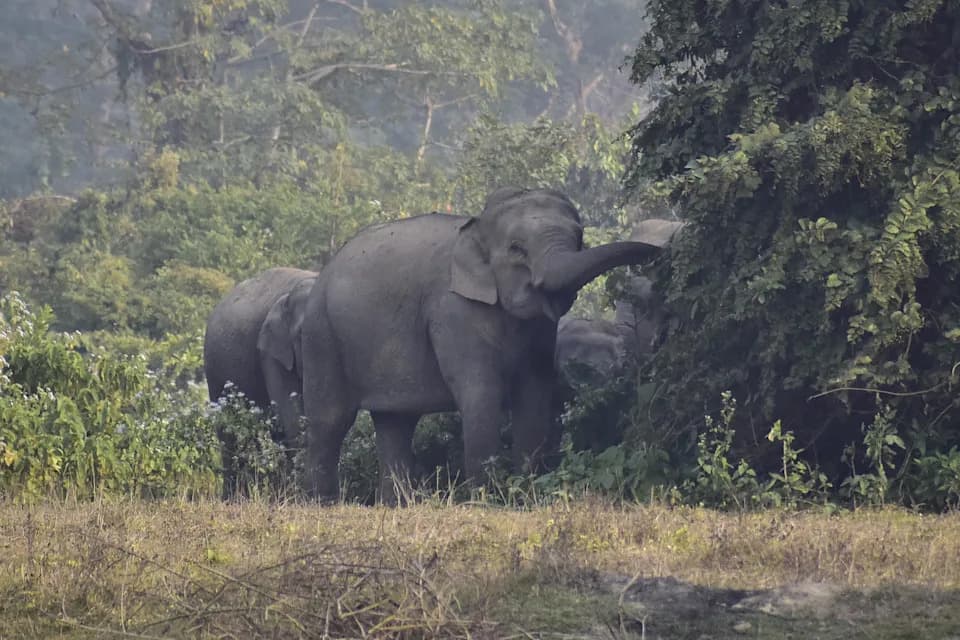
Elephants use both airborne and ground-borne vibrations to communicate over long distances. Their low-frequency infrasonic rumbles can travel more than a mile through air and couple into the ground as Rayleigh waves, which often propagate efficiently across flat terrain. Specialized foot anatomy — wedge-shaped fat pads and skeletal pathways for bone conduction — enables them to detect seismic cues, and observed stance changes likely improve sensitivity. Seismic signals supplement airborne calls, with possible uses ranging from social coordination to detecting distant weather.
How Elephants 'Talk' Through the Ground: Seismic Signals and Foot Anatomy
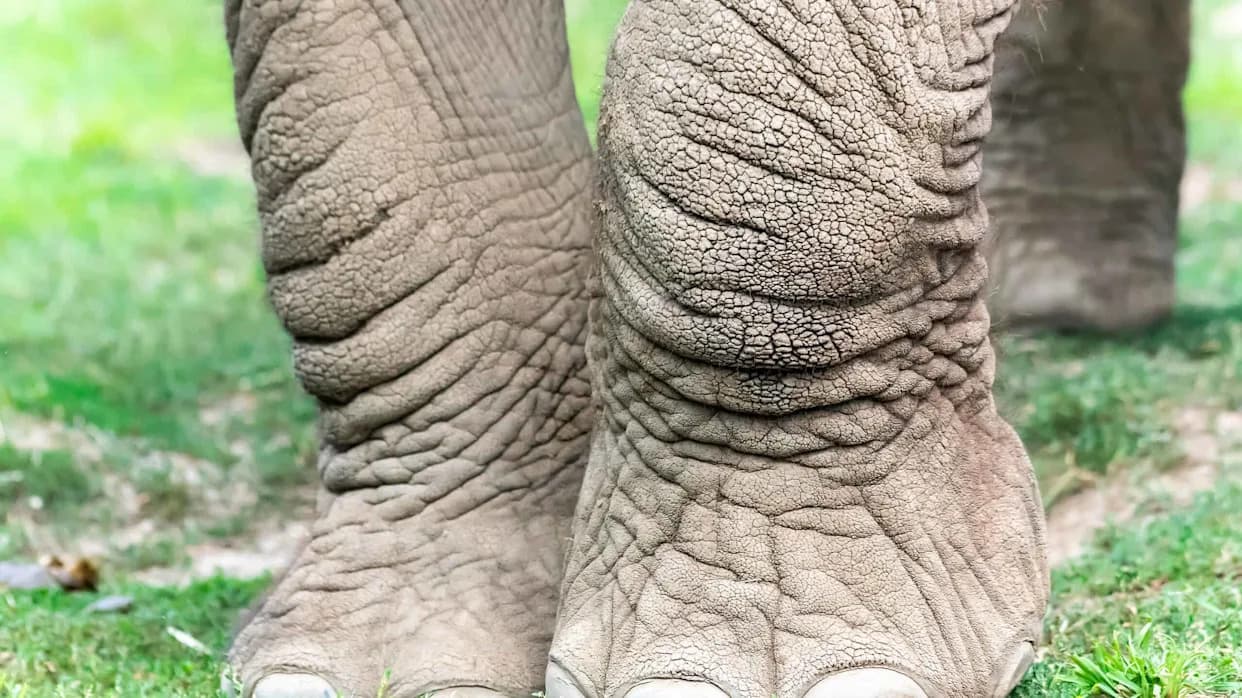
The front feet of an elephant. The bottom legs and feet are light gray and very wrinkly. Semi-circle shaped (with the arch at the top) white toenails are visible on the front of the elephant's feet.© The Speedy Butterfly/Shutterstock.com
African elephants (Loxodonta africana) do more than trumpet and rumble — they can also send and receive messages through the ground. In the wide, open landscapes of savannas and the denser reaches of forests, these low-frequency signals give elephants a powerful way to communicate across long distances.
How Seismic Communication Works
When an elephant produces a very low-frequency rumble, part of that energy travels through the air while another portion couples into the ground as seismic waves. Researchers have shown elephants can generate Rayleigh waves — surface acoustic waves that move efficiently across soil and rock. In many environments, especially flat savannas, these ground-transmitted vibrations travel farther and lose less energy than airborne sound.

Elephant herds need to communicate with each other.©RFerri/Shutterstock.com(RFerri/Shutterstock.com)
Why This Matters
Infrasonic calls (below human hearing) are useful for long-distance signaling: they can coordinate herd movements, warn of danger, or help locate relatives. Because seismic waves radiate in all directions regardless of wind and are less affected by thick vegetation, they can complement airborne calls and extend the range of elephant communication.
Elephant Feet: Built to Detect Vibrations
Elephant feet are specially adapted to pick up ground-borne signals. Elephants effectively walk on their tiptoes, with digit bones angled toward the ground, and each foot contains a wedge-shaped fat pad made of fatty tissue and elastic fibers. These pads cushion the bones under tremendous weight and also transmit subtle ground motions to sensitive nerve endings.
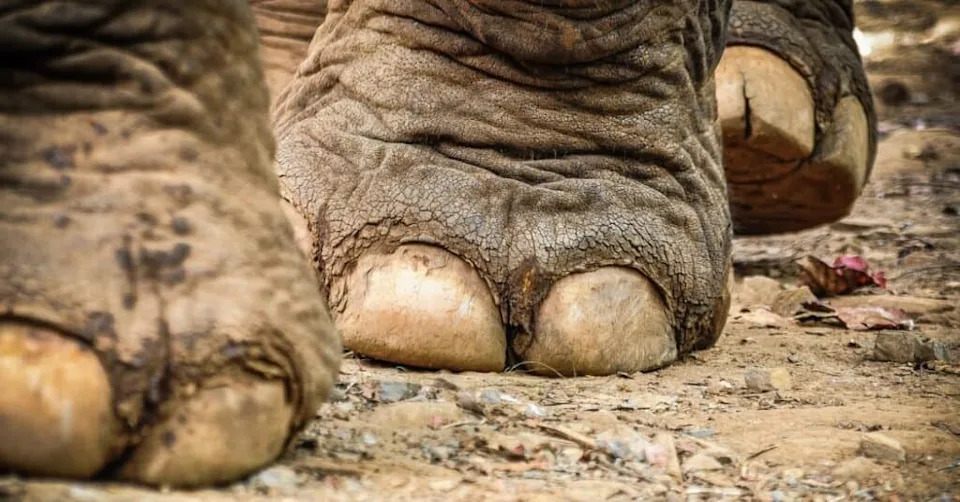
Elephant feet have a fatty pad that can detect vibrations.©iStock.com/marco giovanelli(iStock.com/marco giovanelli)
Soft tissues in the pads move with incoming vibrations, stimulating mechanoreceptors whose signals travel to the brain. Vibrations may also travel up the skeleton to the inner ear via bone conduction, giving elephants multiple pathways for sensing seismic cues. Observers have reported that elephants will sometimes freeze, lift a foot, or shift weight onto three feet — behaviors that likely improve their ability to detect faint vibrations by reducing background noise.
Evidence, Limits, and Possible Uses
Field studies and experiments support seismic sensitivity in elephants, but researchers caution against overstating its role. Most elephant calls have both airborne and ground components, and hearing via large ears remains crucial. Seismic signaling probably supplements acoustic channels rather than replacing them.
Potential advantages include reliable spread in all directions, better transmission across dense vegetation, and perhaps the ability to detect distant events such as approaching herds or even weather changes (some studies suggest elephants can sense distant thunderstorms). However, questions remain, such as whether elephants preferentially select terrain with rocky subsoils for improved transmission — current evidence is inconclusive.
Conclusion
Elephants exploit both acoustic and seismic channels: their infrasonic rumbles, specialized foot anatomy, and skeletal conduction give them a unique capacity to use the earth itself as a communication medium. Ongoing research continues to reveal how these remarkable animals combine multiple senses to coordinate life across vast landscapes.
Help us improve.