
The public response to federal immigration raids in Minnesota extends far beyond organized protests. Thousands of volunteers—constitutional observers, clergy, neighbors and retirees—document enforcement, warn communities, staff school pick-ups and run pop-up food banks in a decentralized civic-defense network. Trained volunteers use heat maps, radio dispatch and encrypted apps to coordinate; federal officials have criticized the tactics and launched investigations. Rooted in networks formed after police killings and Minnesota’s civic traditions, this everyday resistance raises the question of whether it is protest or a form of communal self-defense.
Minnesota’s Resistance: How Everyday Civic Action Became More Than Protests
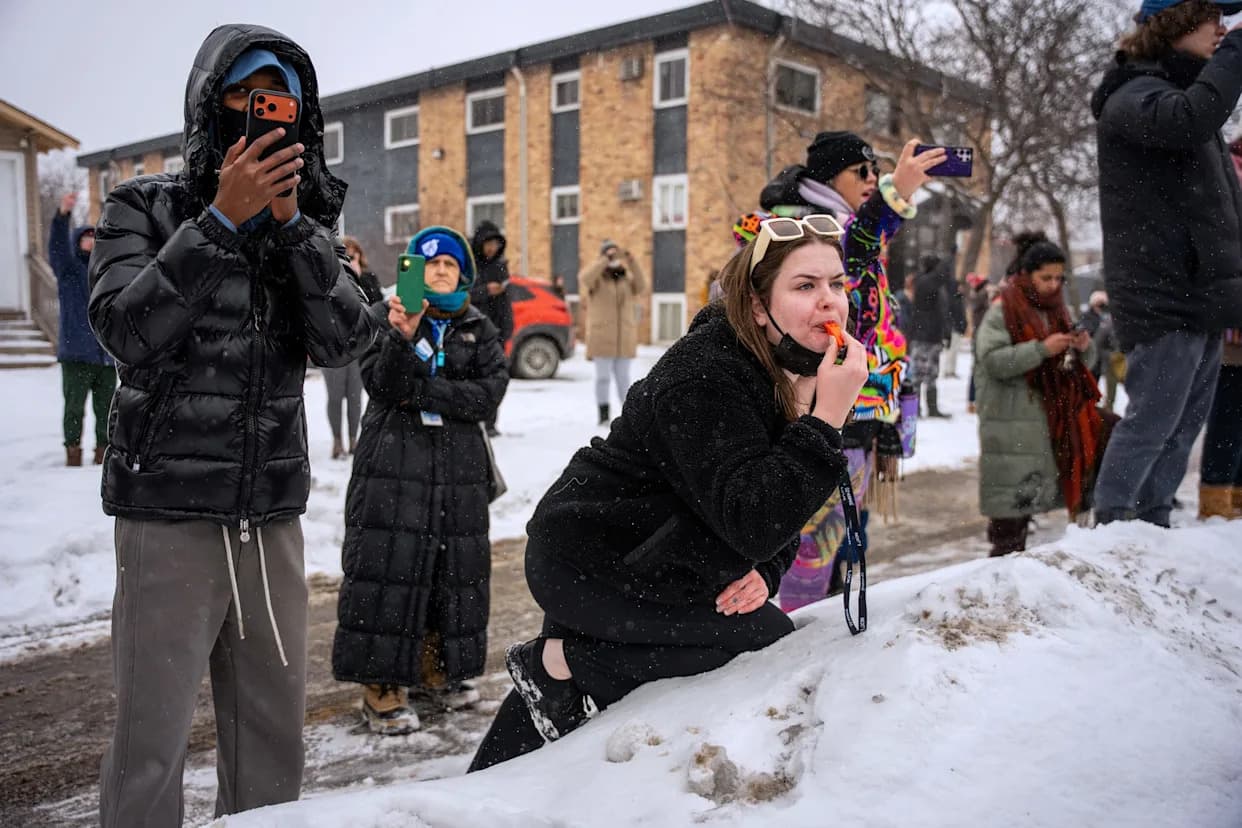
Protesting is only a small part of the resistance in Minneapolis
To call the broad public response to large-scale immigration sweeps in Minnesota a “protest movement” is technically correct, but the label “protester” misses much of what is happening. Thousands of ordinary residents who do not identify as activists are quietly resisting what they see as an authoritarian assault on neighbors, community safety and daily life.
Background: Operation Metro Surge
Since the Trump administration launched Operation Metro Surge in Minnesota in December, a sprawling volunteer ecosystem has taken shape across the Twin Cities. While there have been highly visible confrontations — including tear gas and flash-bangs — much of the resistance is lower-key, decentralized and largely absent from headline news and viral clips.
What This Resistance Looks Like
That ecosystem includes geographically focused monitoring groups who call themselves “constitutional observers.” Volunteers film immigration agents, catalog agent vehicles in public databases and use whistles, horns and phone alerts to warn neighbors when federal agents arrive.
The practice is now common: commuters, pedestrians and people running errands often pull out their phones when they encounter an active enforcement action. Stella Carlson — the witness in a pink coat who provided a sworn affidavit after seeing an agent shoot Alex Pretti — told investigators she was on her way to work, heard whistles, and checked the scene because whistles signaled ICE activity in the area.
High-Profile Violence And Conflicting Narratives
The killing of 37-year-old ICU nurse Alex Pretti — shot and killed by a federal immigration agent — has intensified scrutiny and dispute. U.S. Border Patrol Commander Gregory Bovino and Department of Homeland Security Secretary Kristi Noem described Pretti as a “protester” and suggested he intended mass violence; other witnesses and community members say he was not clearly part of an organized demonstration on Nicollet Avenue’s Eat Street.
Incidents such as the shootings of Renee Good and Pretti, plus the detention of a 5-year-old in a bunny hat, have galvanized many volunteers but much of the civic response is driven by everyday encounters: a cook pulled from a restaurant, a caravan of ICE vehicles arriving at a gas station, or neighbors trembling at the sight of enforcement officers.
Coordination, Training And Tools
These volunteer networks are often well organized. Observers receive training that includes role-playing to ensure lawful documentation of encounters. Organizers maintain heat maps of enforcement activity that are updated multiple times daily. Dispatchers coordinate street-level monitors across sectors using radio systems and encrypted apps such as Signal.
FBI Director Kash Patel said the FBI is initiating a criminal investigation into encrypted group chats used by Minneapolis organizers — a development that highlights how authorities are monitoring coordination tools as well as enforcement actions.
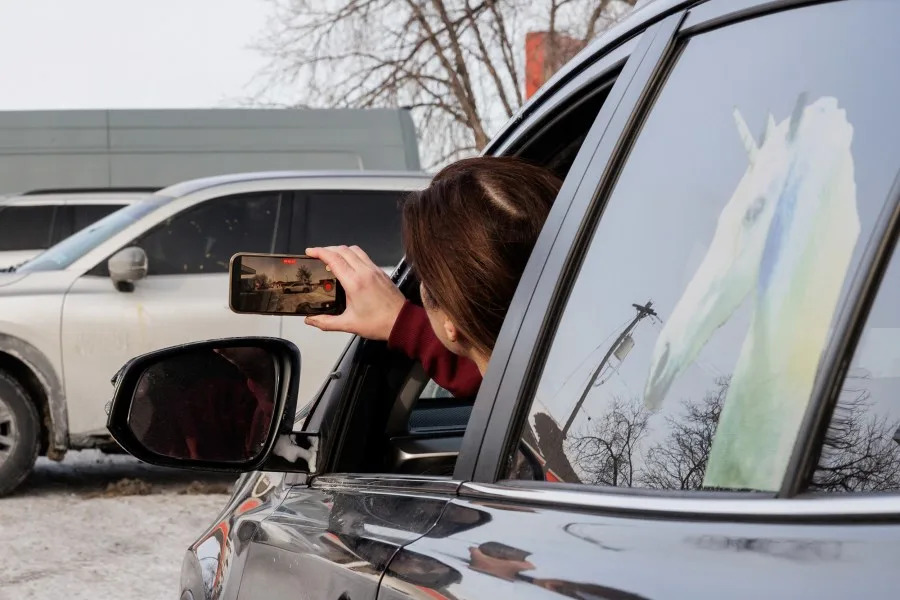
A person records federal agents on Jan. 19, 2026, in Savage, Minn.Madison Thorn / Anadolu via Getty Images
Official Response And The Language Battle
Although Americans generally have a First Amendment right to follow or record law enforcement in public, federal officials argue that observers sometimes cross a line. At a White House briefing, press secretary Karoline Leavitt accused Democratic leaders of “emboldening left-wing agitators who stalk, record, dox, target, impede and place (immigration agents) in extremely dangerous situations.”
Participants counter that the administration is weaponizing language to cast civic protection as unlawful agitation. President Donald Trump has used terms like “professional insurrectionists” and “paid agitators,” language that organizers say mischaracterizes a mosaic of careful, community-focused actions.
Everyday Civic Protection
Much of the resistance is practical and local: impromptu rideshares ferry nursing-home and hospital workers afraid to use public transit; church basements become pop-up food banks delivering meals, medicine, diapers and hygiene supplies; neighbors share schedules to shovel snow or bring in trash cans for families wary of leaving home.
Volunteer “peacekeepers” move quickly to de-escalate confrontations and sometimes literally put out small fires. Senior citizens, parents juggling childcare, and people working part-time shifts are among those who stand watch at bus stops, school pick-ups and market entrances — sometimes for hours in subzero temperatures — to provide a visible presence that may deter enforcement actions.
“There are protests; that’s what we did on Friday. But the day-to-day things I would term ‘protection and prevention,’” said Rev. Zachary Wilson, a Presbyterian pastor in St. Paul who was among clergy arrested at a recent airport demonstration. “If wearing a collar makes the paramilitary commanders think twice and helps protect my neighbors even a little, I’ll put up with the annoyance.”
Roots And Resilience
The scaffolding for today’s response existed before the current immigration sweeps. Networks formed after the murder of George Floyd — and earlier police killings — helped build organizational capacity for neighborhood monitoring and mutual aid. Minnesota’s history of union organizing, progressive grassroots politics and refugee-resettlement work by faith-based groups also fed into a rapid, expansive volunteer response.
“Maybe ICE didn’t realize that in Minnesota, civics is a way of life,” said Melissa Rach of Minneapolis. Former Mayor RT Rybak added, “They will never ever EVER break Minnesota.”
A Question About Civic Self-Defense
The depth, routine and scale of these activities raise a larger question: when does persistent, community-led refusal to accept a model of policing defined by fear and force become less like episodic protest and more like civic self-defense? What is emerging in Minnesota looks structural — networks, roles and habits that sustain protection and assistance beyond marches and chants.
Conclusion
When historians look back, images of Minnesotans standing in freezing weather to confront armored federal agents may symbolize the moment. But the lasting story is likely to be the quieter, sustained work done by people who do not always see themselves as protestors — neighbors who film, share rides, deliver food and simply show up to keep their communities safe.
Help us improve.





















