Scientists have established the world's first permanent glacier ice-core archive near Concordia Station on the Antarctic Plateau, storing samples at about -61°F. Initial cores from melting Alpine glaciers in France and Switzerland were transported and sealed in the vault, led by the Ice Memory Foundation. The archive will grow in coming decades with cores from other vulnerable mountain ranges and will preserve irreplaceable climate records used to refine models and inform policy.
World's First Antarctic Ice Vault Built to Rescue Vanishing Glacier Records
Photo Credit: iStock
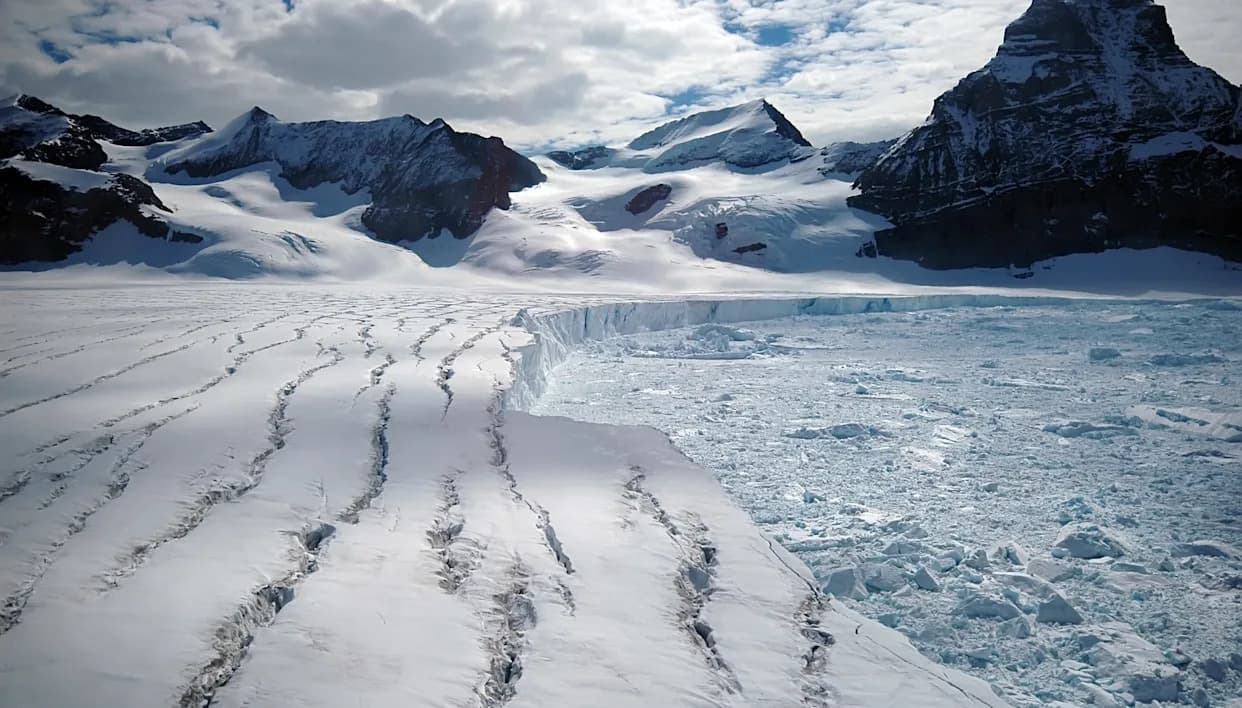
Scientists have created the world's first permanent glacier ice-core archive on the Antarctic Plateau, carving a snow cave near Concordia Station where temperatures remain about -61°F. The repository is designed to preserve irreplaceable ice cores and the climate records they contain before those records are lost to melting.
What the Project Did
An international team coordinated by the Ice Memory Foundation transported ice cores extracted from rapidly melting Alpine glaciers in France and Switzerland thousands of miles by air and sea, then sealed them in the Antarctic vault. The site was chosen in neutral territory to minimize political interference and maximize long-term preservation.
"We are in a race against time to rescue this heritage before it will vanish forever," said Carlo Barbante, a climate scientist who participated in the project.
"To safeguard what would be otherwise irreversibly lost ... is an endeavour for humanity," said Thomas Stocker, another climate scientist involved.
Why It Matters
Ice cores are like frozen history books: they record past temperatures, atmospheric gases, pollution, dust and other environmental markers. Once a glacier melts, those records are irretrievably lost. Preserving cores in a stable, cold archive protects data that scientists use to reconstruct Earth's climate over hundreds to thousands of years and to improve the accuracy of climate models.
The team plans to expand the archive in coming decades by adding cores from other vulnerable mountain ice fields, including the Andes and the Himalayas. These collections will support future research into long-term climate variability and provide reference material for policymakers and scientists worldwide.
Broader Context
Complementary research efforts continue to monitor glacier melt and assess global impacts such as sea-level rise and ecosystem disruption. While international preservation projects secure physical records, reducing greenhouse gas emissions and supporting climate resilience remain essential to slowing glacier loss.
What You Can Do: Raise awareness of glacier decline, support science-based climate policy, and reduce personal and community greenhouse gas emissions to help limit future loss of natural climate archives.
Help us improve.