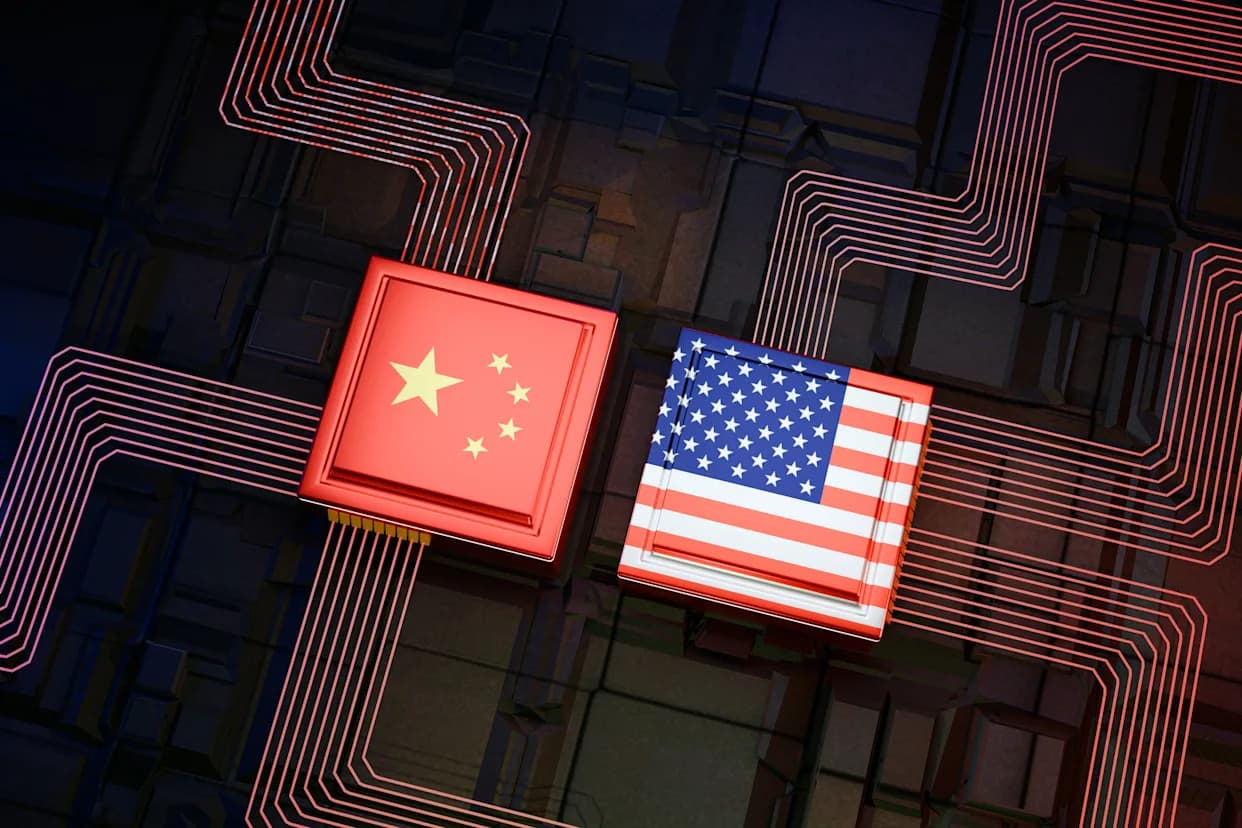
The U.S. currently leads the AI race thanks to control of advanced chips and a high share of top researchers, which has produced the world’s most capable models and strong commercial traction. New export rules could allow up to 890,000 Nvidia H200 chips to reach China, potentially accelerating its AI capabilities. China’s growing domestic talent pool and abundant energy supply—together with any expanded chip access—could rapidly narrow the gap.
Six Charts That Reveal Who’s Really Winning the US–China AI Race
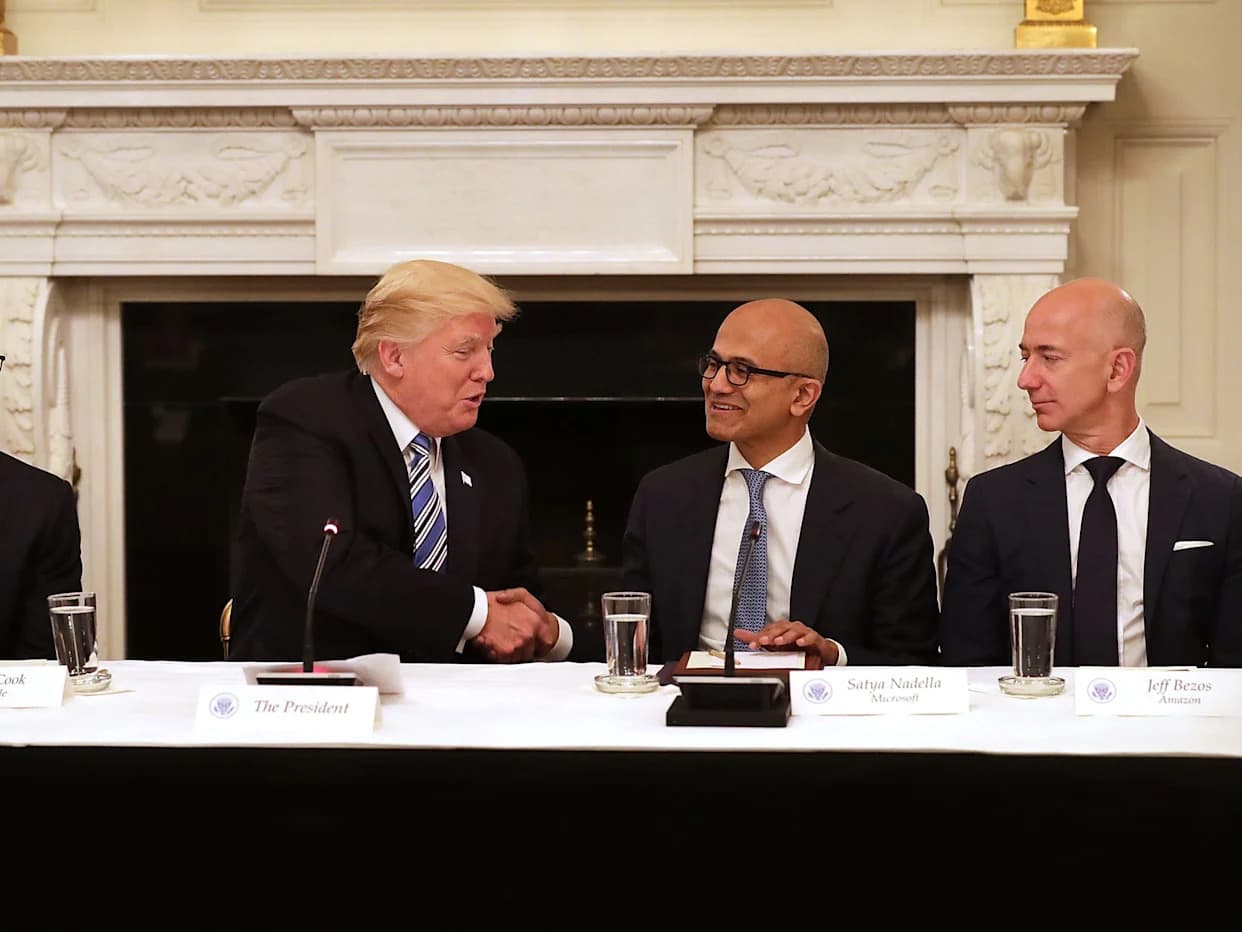
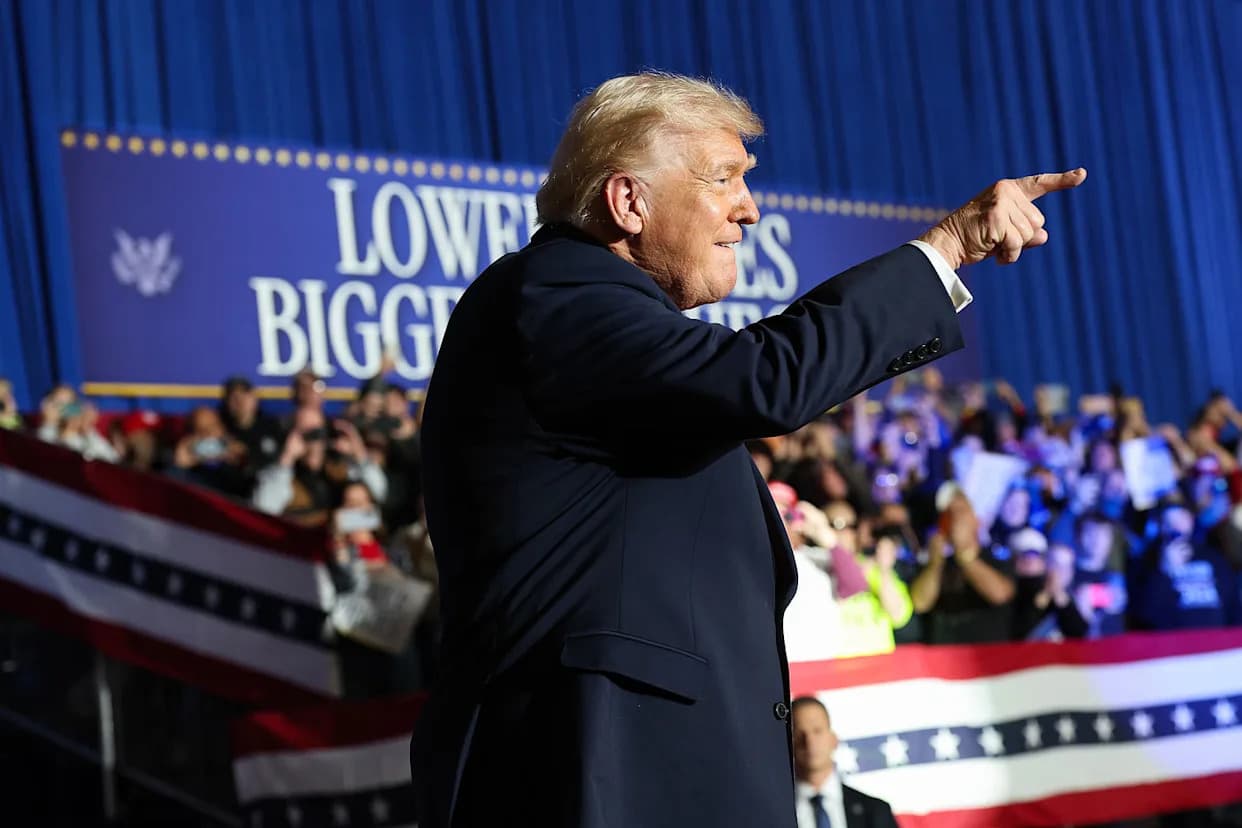
Two high-profile events on January 20, 2025 crystallized the intensifying U.S.–China competition over artificial intelligence: Donald Trump’s inauguration as U.S. president in Washington, D.C., and the release in Hangzhou of DeepSeek’s R1 model—an announcement many industry observers called China’s “Sputnik moment.”
What Are They Racing For?
AI policy researcher Lennart Heim says there are multiple interpretations of the goal: widespread AI deployment across economies, robotics, or the creation of human-like artificial general intelligence. "By most metrics, the U.S. is clearly leading," Heim adds, but he cautions that "the best metrics are the numbers we don't have."
Compute: The Key Bottleneck
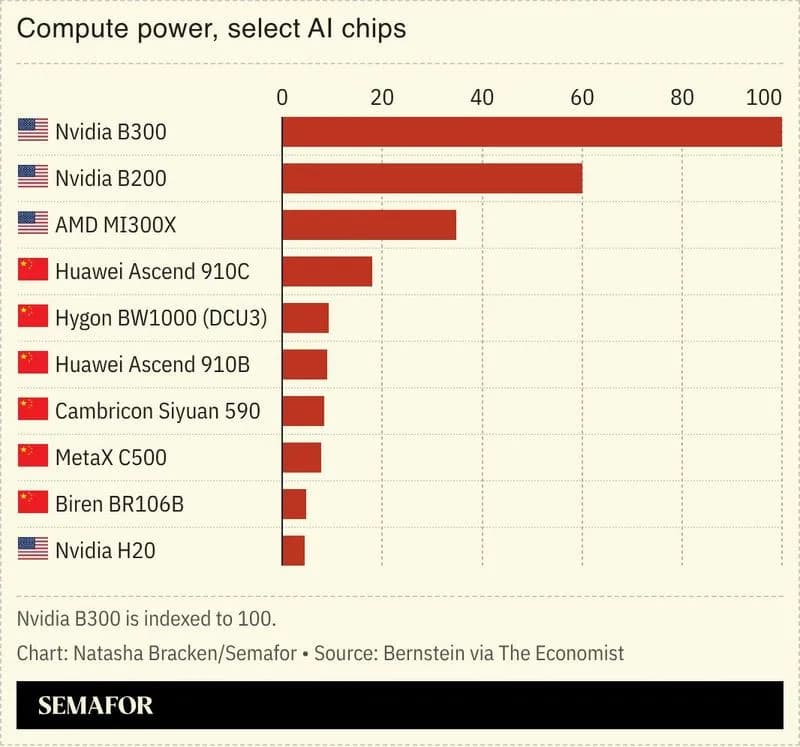
Compute—specialized chips used to train and run models—is a primary driver of AI progress. U.S. control of advanced chips has given American firms an edge. The Biden administration began restricting exports of advanced chip-manufacturing equipment in 2022 and expanded limits to include chips themselves in 2023, constraining Chinese access. "Money has never been the problem for us; bans on shipments of advanced chips are the problem," DeepSeek CEO Liang Wenfeng said in July 2024.
In January 2025, the Trump administration announced export-rule changes that could allow Chinese companies access to as many as 890,000 Nvidia H200 AI chips—more than twice the number China is projected to produce domestically in 2026, according to the Center for a New American Security. Critics warn this could substantially boost China’s AI capabilities while effectively equipping a strategic competitor.
"Limited access to advanced chips has been the primary constraint on China’s AI progress. The new export rule will significantly boost China’s AI capabilities." — Janet Egan, report author
It’s uncertain how quickly those chips will be deployed: reports say Chinese customs initially blocked some imports, and analysts note Beijing may sometimes signal restriction to encourage domestic chip purchases and to project self-reliance.
Talent and Research
DeepSeek’s R1 illustrated that a focused, talented team can achieve major breakthroughs with limited resources. A Stanford analysis found that more than half of the researchers behind the R1 breakthrough never left China for school or work—challenging the assumption of an automatic U.S. talent lead. An analysis of NeurIPS authors indicates China now produces more top AI researchers than the U.S., and the share working inside China more than doubled between 2019 and 2022.
Policy changes—such as a proposed $100,000 visa fee—could make it harder for foreign talent to work in the U.S., potentially weakening America’s innovation advantage.
Energy: An Underappreciated Advantage For China
AI training requires massive power. While U.S. companies scramble for power contracts, China has produced more energy than the U.S. since 2010. "Of all the key inputs into AI, energy is the one where the U.S. is least competitive," says Chris Miller, author of Chip War. If China gains reliable access to advanced chips—via imports or faster domestic production—its abundant energy supply could prove decisive.
Model Performance and Commercialization
For now, U.S. firms lead on model capability. Epoch AI estimates Chinese large language models lag U.S. counterparts by about seven months on average. Analysts also note that some Chinese models benefit from "distillation," training on outputs from stronger models; users reported DeepSeek’s model sometimes identifying itself as "ChatGPT," an indicator of reliance on external model outputs.
Revenue provides a concrete measure of deployment. Alibaba’s Cloud Intelligence division, which develops the Qwen models among other services, reported approximately $22 billion in annualized revenue—an upper bound on income tied to its AI work. OpenAI’s CFO reported the company had exceeded $20 billion, showing how quickly U.S. AI startups have scaled commercial adoption.
What This Means
The U.S. currently enjoys advantages in top AI chips and a large share of leading researchers, which translate into more capable models and strong commercial traction. However, relaxed export rules, China’s growing pool of domestic talent, and its abundant energy supply mean the competitive gap could narrow rapidly. The next phase of this competition will depend on chip flows, domestic semiconductor progress, regulatory choices, and the global movement of talent.
Contact us at letters@time.com.
Help us improve.