The study used a robotic bat to test whether a simple echo-threshold rule can explain how bats find prey on leaves. The robot—mounted on a 9.8-foot (3 m) track with binaural microphones and a sonar emitter—ran more than 45 trials using 3D-printed leaves and artificial dragonflies. It detected prey 98% of the time and produced 18% false positives while operating without assessing leaf orientation first. Researchers conclude bats likely follow a rule of pursuing strong, stable echoes and plan to test other species.
Robot Bat Reveals How Bats Hunt in Total Darkness
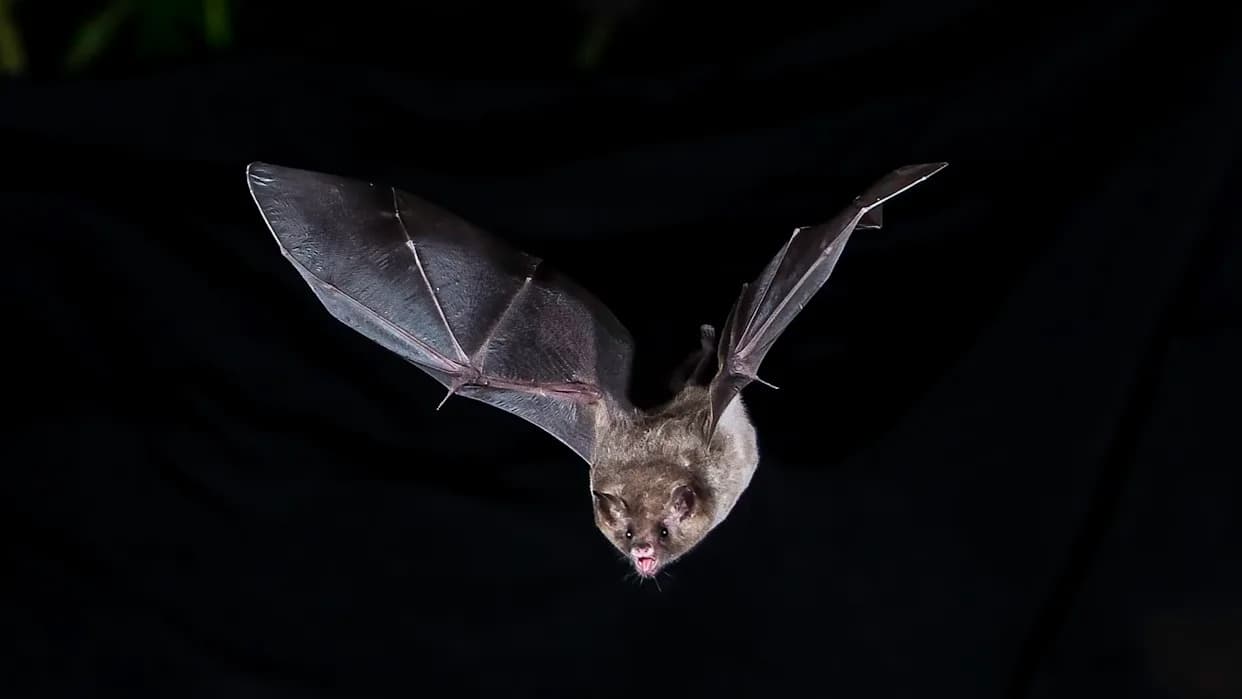
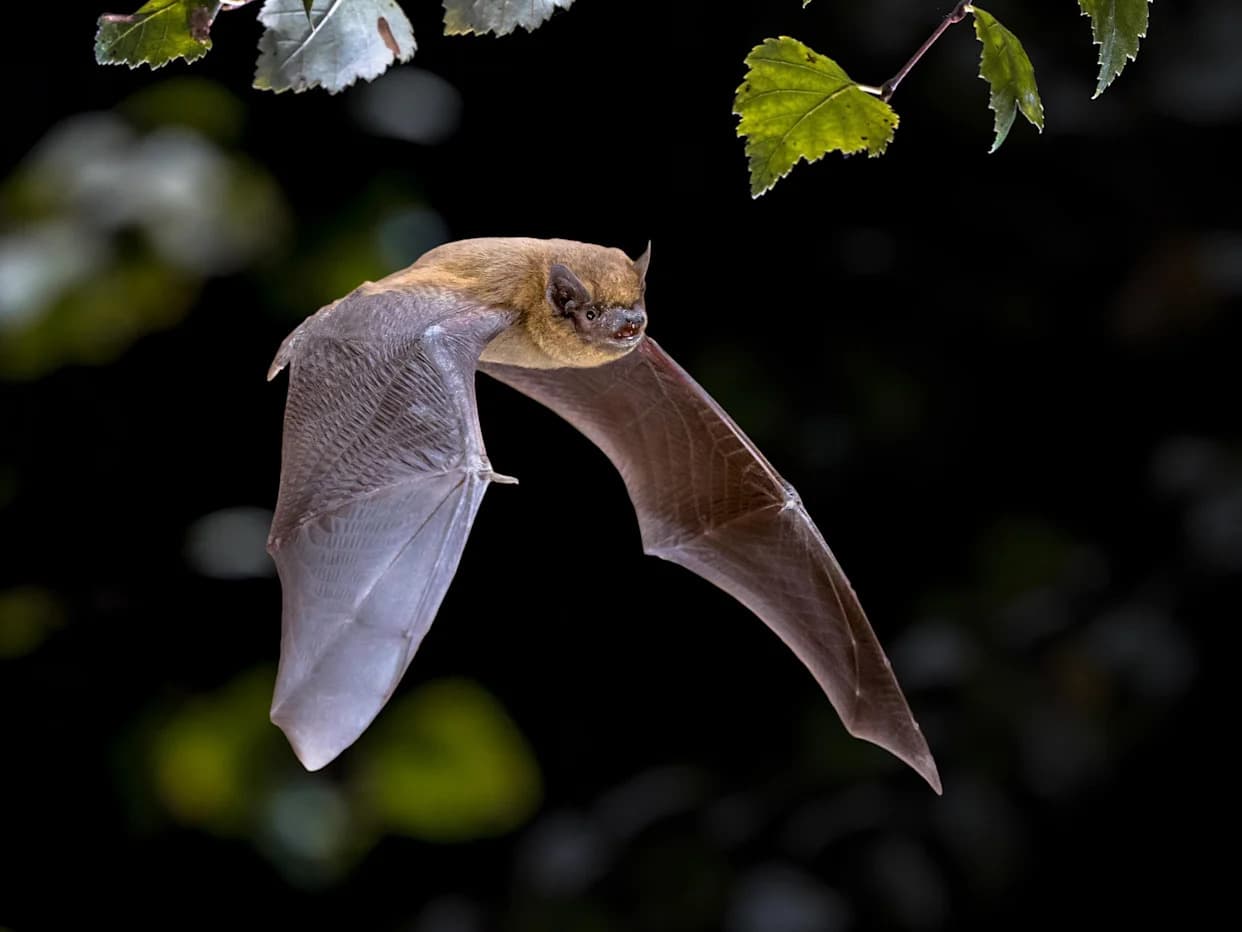
The lesser long-nosed bat (Leptonycteris yerbabuenae) is a medium-sized bat found in Central and North America.
Biologists and engineers have built a robotic bat that reproduces echolocation to reveal how real bats rapidly decide whether a leaf holds prey. The experimental platform simulated a bat’s flight path and showed that a simple echo-based rule can guide target selection even in acoustically cluttered environments. The findings appear in a study published in the Journal of Experimental Biology.
The research was co-led by bat scientist Inga Geipel, a research associate at the Smithsonian Tropical Research Institute. The robot’s behavior largely confirmed Geipel’s earlier hypothesis about foraging strategies in big-eared bats. Although she predicted the outcome, Geipel said the results were gratifying for the animals she studies.
“I’m always Team Bat,” Geipel told Popular Science. “They always trick me, they always outsmart me.”
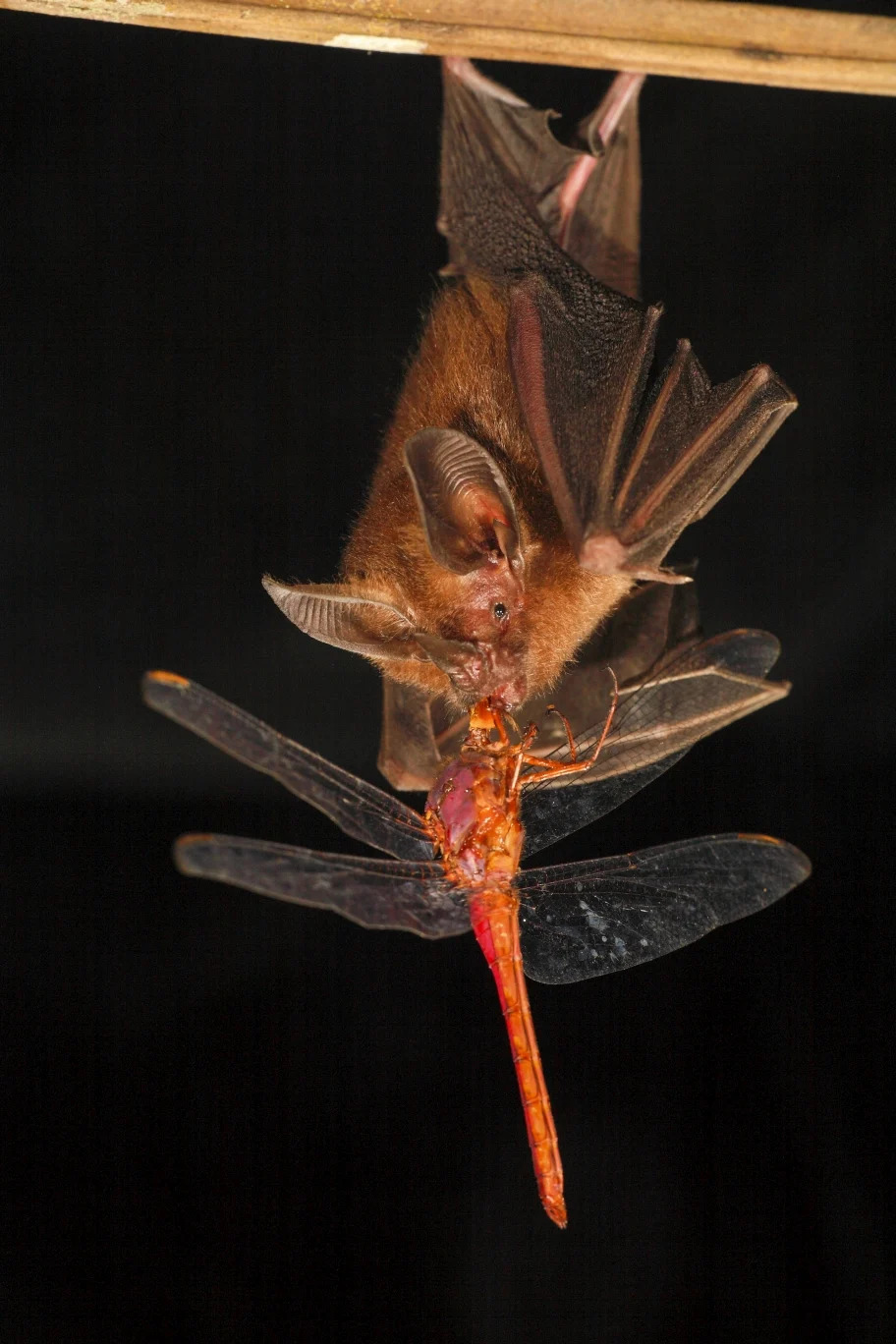
Common big-eared bat (Micronycteris microtis) eating a freshly-caught dragonfly.Image:Christian Ziegler.
Bats use echolocation to navigate and hunt. They emit rapid sound pulses and listen to echoes that bounce back from nearby surfaces, including potential prey. By interpreting the timing and intensity of those echoes, bats form an acoustic map of their surroundings—an ability analogous to how LiDAR helps autonomous vehicles sense the world, but accomplished by bats with only two ears and a mouth.
Why A Robot Bat?
Decades of behavioral work suggested bats might approach leaves at specific angles so that smooth leaf surfaces act like acoustic mirrors, while leaves with insects scatter sound and produce stronger return pulses. But in a dense forest, constantly assessing the orientation of every leaf would be impractical. To test whether a simpler rule could work in real acoustic conditions, the team built a physical robot that implements the hypothesized strategy.
How The Robot Works
The device emphasizes function over biological likeness. It consists of a robotic arm fitted with a sonar emitter that mimics bat chirps and binaural microphones that act as ears. The assembly rides on a 9.8-foot (three-meter) linear track that represents a condensed flight path small enough to fit in a typical office.
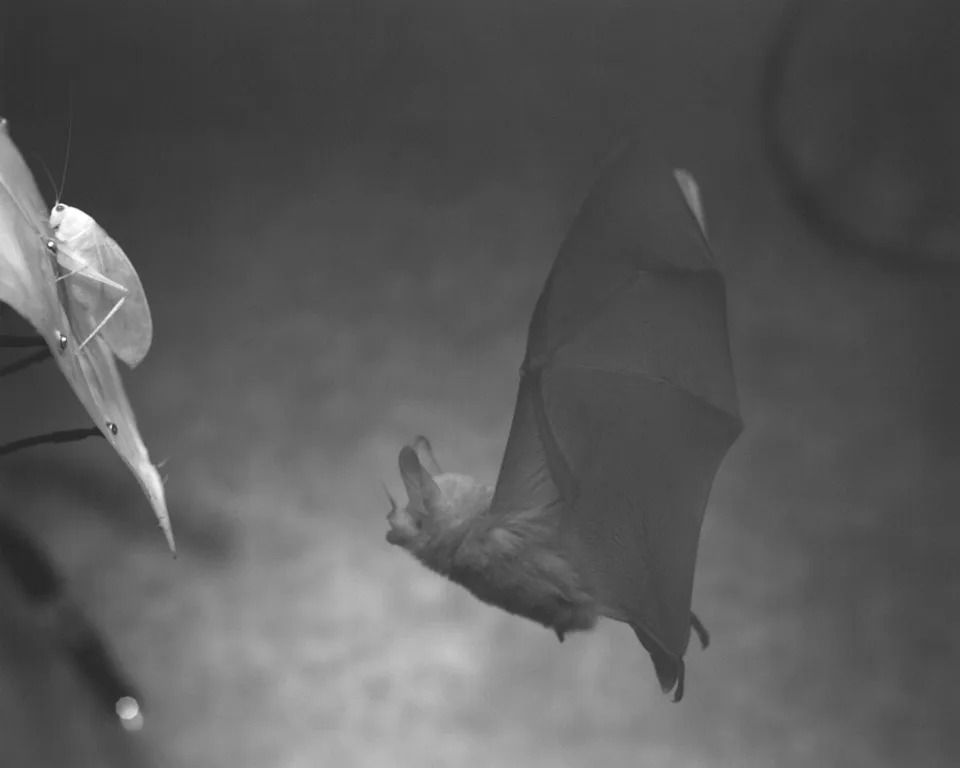
Common big-eared bat (Micronycteris microtis) approaching a katydid resting on a leaf.Image: Inga Geipel, Smithsonian Tropical Research Institute.
Researchers used 3D-printed cardboard leaves; some had a roughly 3.5-inch (nine-centimeter) cardboard dragonfly pinned to the center to simulate prey. As the robot traversed the track, it emitted successive sonar pulses separated by about a 0.5-second delay. The returning signals produced an “echo envelope” that was sent wirelessly to the computer controlling the arm.
Results
Across more than 45 trials with different leaf arrangements (with and without pinned prey), the robot detected leaves bearing a pinned dragonfly 98% of the time and falsely flagged empty leaves as containing prey only 18% of the time. Crucially, the robot achieved this without first assessing each leaf’s orientation. Instead, it used a simple threshold rule: pursue strong, stable echoes and ignore weaker or unstable returns.
Although the experiments focused on big-eared bats (Micronycteris microtis), the researchers hope the mechanism may apply to other species that forage in similarly cluttered acoustic environments.
Context And Future Directions
Previous projects have also drawn on bat biology to inspire robotics—examples include Tel Aviv University’s wheeled “Robat,” which used echolocation and onboard machine learning to map terrain, and Caltech/Illinois teams’ lightweight “Bat Bot” with soft, articulating wings. The new robo-bat is less visually flashy but offers rich experimental control and data that help explain how living bats solve difficult sensory problems.
Geipel and colleagues plan to expand testing to additional bat species and to explore how bats distinguish between different prey types clinging to leaves. “We are just scratching the surface here,” Geipel said.
Help us improve.