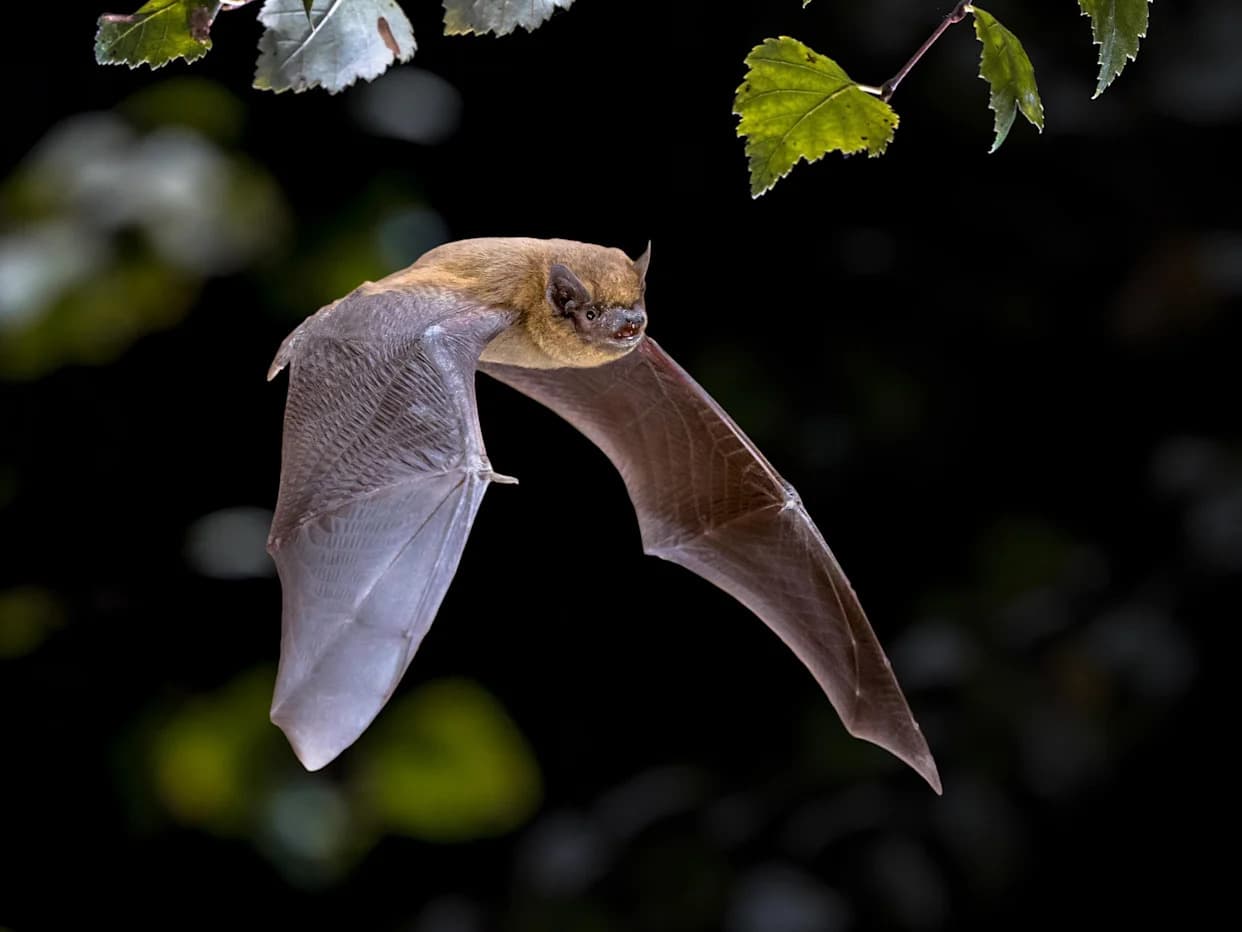
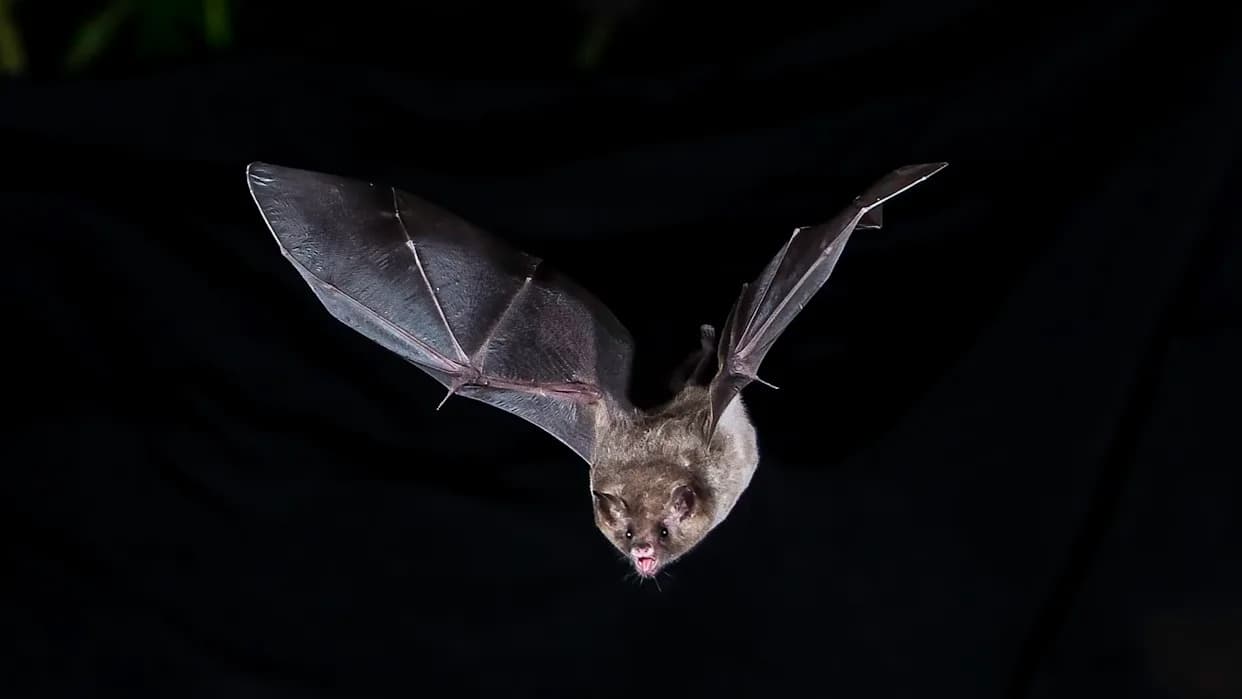
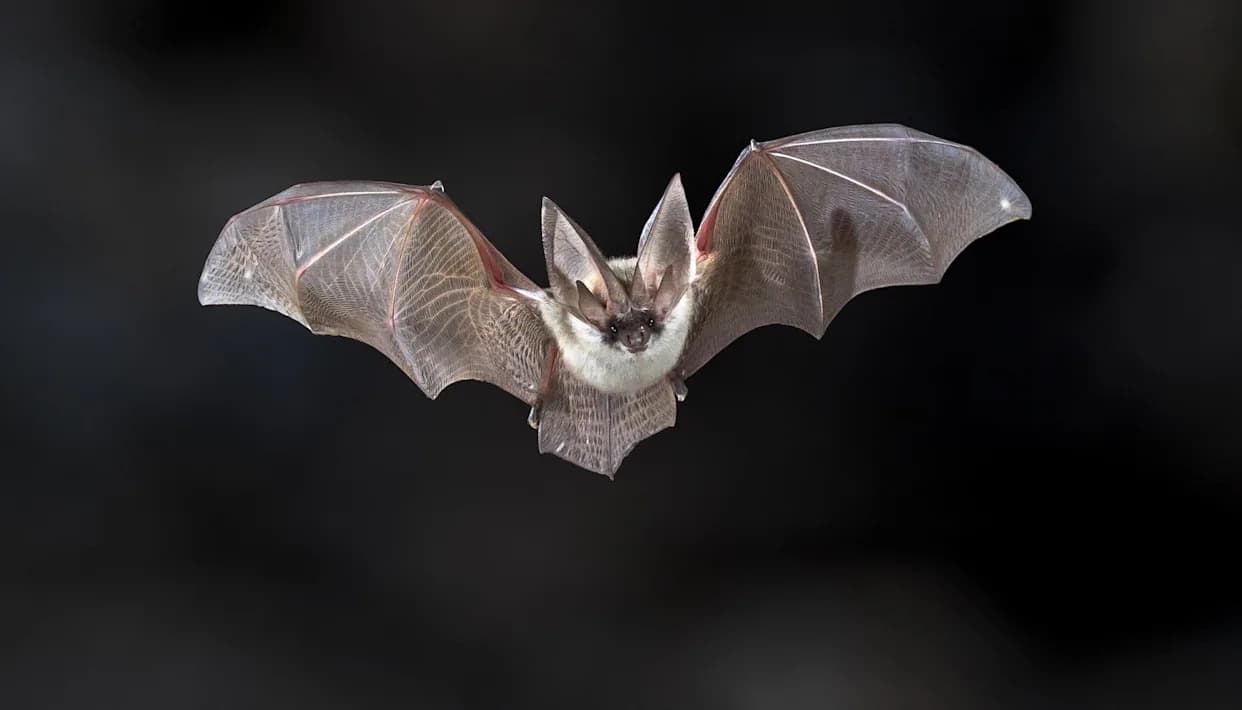
Bats use an acoustic equivalent of visual "optic flow" to estimate their speed in flight. Researchers built a "bat accelerator"—an eight-meter corridor lined with 8,000 revolving panels—to test how moving acoustic backgrounds affect wild pipistrelle bats. Across three nights and 104 recorded flights, panels rotating with flight increased bat speed while panels rotating against flight slowed bats by up to 28%. The team links the behavior to Doppler-like changes in echo timing and suggests acoustic flow helps bats navigate cluttered environments.
Engineers Build a “Bat Accelerator” — How Echolocating Bats Use Acoustic Flow to Gauge Speed
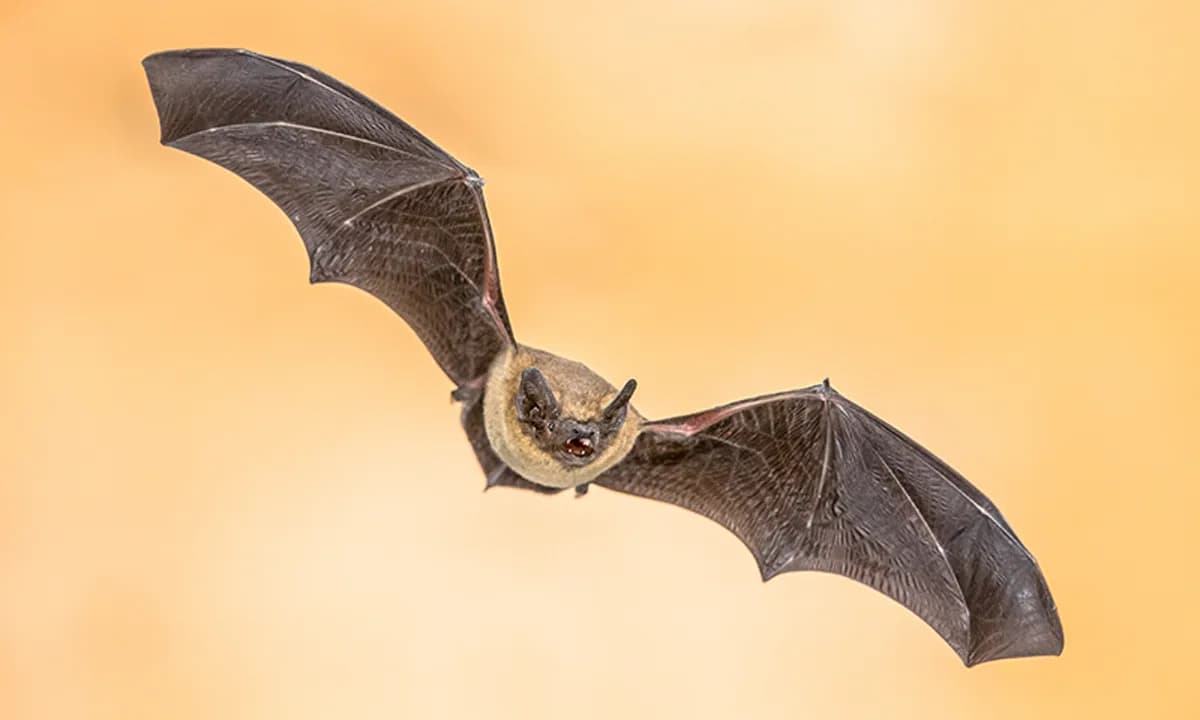
Lead image: Rudmer Zwerver / Shutterstock(Nautilus)
When you ride a bike or drive a car, nearby objects seem to sweep past faster as your speed increases. Your brain uses that visual "optic flow" against an internal map to judge velocity. Bats face a similar challenge in flight, but in darkness they rely on sound rather than sight. Until now it was unclear how they combine many returning echoes into a stable sense of their speed relative to the world.
Testing Acoustic Flow with a "Bat Accelerator"
A study published in Proceedings of the Royal Society B provides strong evidence that echolocating bats use an analogous acoustic flow to guide speed and navigation. To test this idea, researchers from the University of Bristol built a novel apparatus they call a "bat accelerator": a conveyor-belt–style array of 8,000 revolving panels lining an eight-meter stretch of a known bat commuting path in Bristol.
The panels were covered with plastic ivy to create a hedge-like acoustic texture and could rotate either in the same direction as the bats' flight, against it, or stay still. The route is used by wild pipistrelle bats (Pipistrellus pipistrellus and P. pygmaeus), and over three nights 104 full-length flights were recorded through the array.
Clear, Measurable Effects on Flight Speed
The researchers ran three conditions: panels rotating with the bats’ direction of travel, panels rotating against it, or panels held stationary. When panels turned in the same direction as flight, bats increased their speed on average. When panels rotated opposite to flight, bats slowed down significantly—by as much as 28 percent in some trials.
"As bats fly and emit their calls, echoes return at slightly different rates depending on how close objects are and how fast the bat is flying. This creates a kind of sound flow," said study author and University of Bristol sensory biologist Marc Holderied.
Coauthor and aerospace engineer Shane Windsor added, "We know bats fly swiftly, but we’ve shown that we can make them fly even faster with our corridor of ‘revolving hedges’—our bat accelerator." The authors interpret the effect as a Doppler-like phenomenon: motion-induced changes in echo timing and frequency provide cues that bats use to regulate speed. The strongest responses occurred as bats neared the artificial hedgerows, suggesting they rely on echoes from several meters ahead to estimate self-motion.
Implications for Navigation and Robotics
The experiments demonstrate that bats use acoustic flow cues to control speed, an ability that likely aids navigation through cluttered environments. The result has engineering implications: many sonar-based robots perform poorly in clutter, but bats appear capable of extracting Doppler and flow information from complex echoes to estimate velocity and maintain stable flight.
These findings shed light on how animals transform streams of sensory echoes into actionable information and suggest new principles for designing robust bio-inspired sensors and navigation systems.
Help us improve.