The NTSB concluded that hazardous helicopter route design, controller workload, reliance on pilot visual separation, cockpit blind spots and flawed radio communications combined to cause the Jan. 29, 2025 midair collision over the Potomac that killed 67 people. Investigators released more than 70 findings and proposed 48 safety recommendations, 32 aimed at the FAA. Simulations showed how the helicopter blended into city lights and how ADS‑B alerts could have provided critical seconds to both crews. The board called for urgent systemic changes rather than assigning sole blame to individuals.
NTSB: Dangerous Helicopter Routes and System Failures Caused Deadly DCA Midair Collision
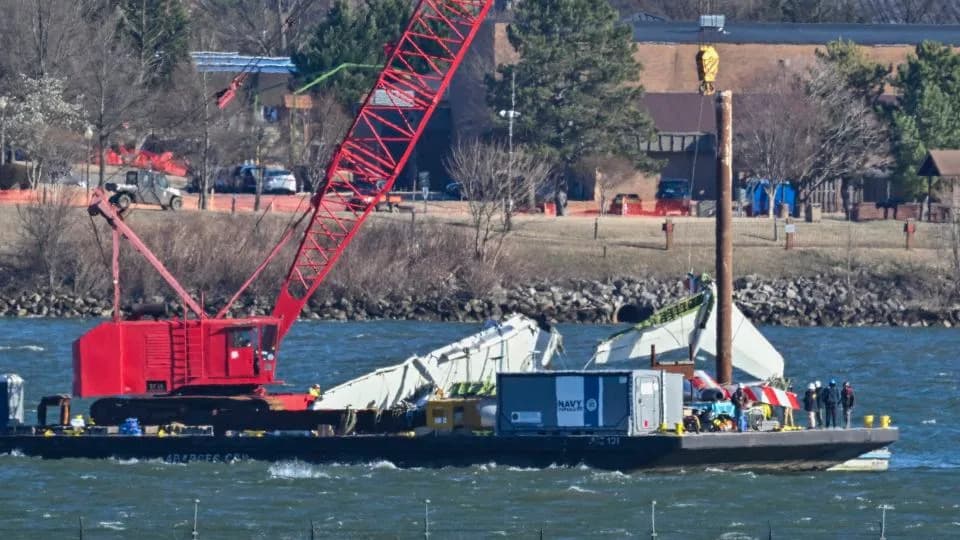
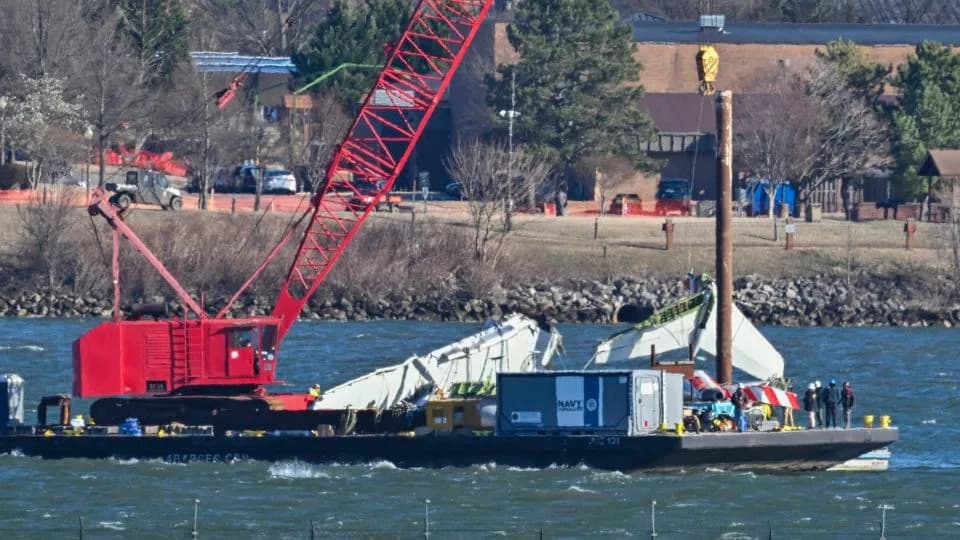
US Navy recovery teams lift the back wing section of an American Airlines plane from the Potomac in Arlington, Virginia, on February 4, 2025. - Roberto Schmidt/AFP/Getty Images
Nearly a year after the midair collision over the Potomac River that killed 67 people near Ronald Reagan Washington National Airport, the National Transportation Safety Board sharply faulted the Federal Aviation Administration for hazardous route design and for failing to act on years of near‑miss data. The NTSB described a chain of systemic failures — not a single mistake — that combined to produce the January 29, 2025, crash.
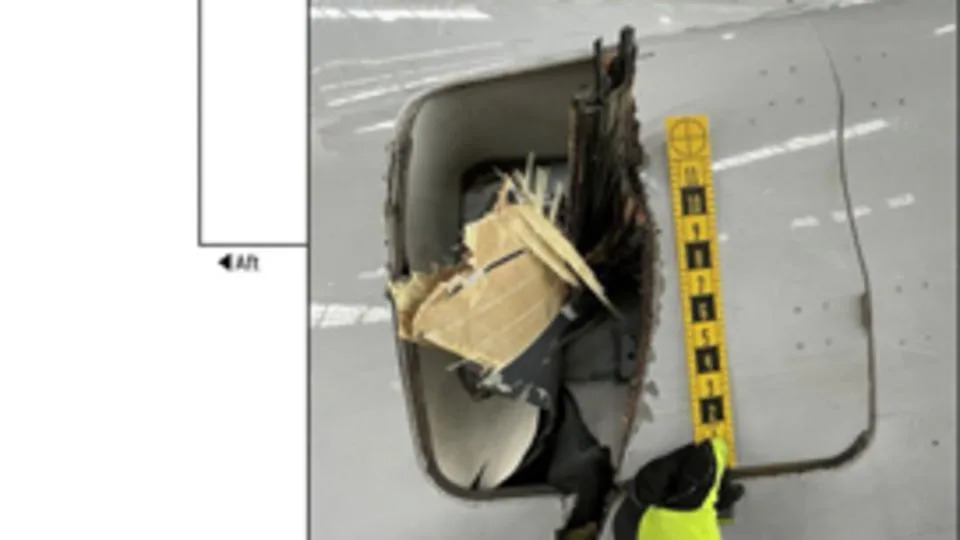
This image released by the NTSB shows part of the tail rotor of the Black Hawk helicopter lodged in the right side of the fuselage of the American Airlines jet. - NTSB
Key Findings
The NTSB released more than 70 preliminary findings and proposed 48 safety recommendations (32 directed at the FAA). Investigators identified multiple contributing factors: a task‑saturated controller in the National Airport tower; an operational reliance on pilot‑applied "visual separation" in congested airspace; cockpit blind spots and limited night visibility; misleading radio transmissions; and altitude and instrument discrepancies on the Army Black Hawk.
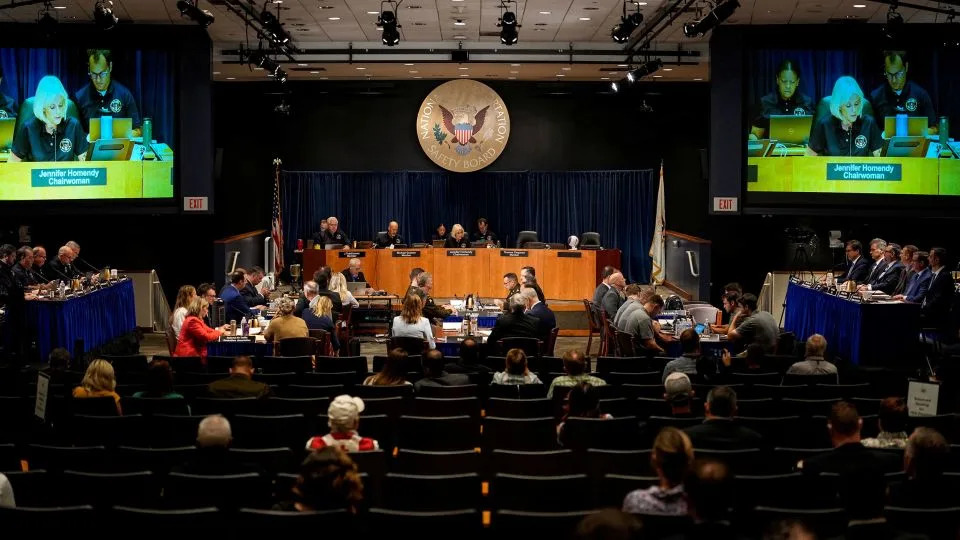
National Transportation Safety Board Chair Jennifer Homendy presides over day three of an NTSB investigative hearing on the midair collision of an Army Sikorsky UH-60L Black Hawk helicopter and American Airlines flight 5342 over the Potomac River near Ronald Reagan Washington National Airport, at NTSB headquarters in Washington, DC, on August 1, 2025. - Kent Nishimura/Reuters/File
How The Collision Happened
Investigators concluded the helicopter crew believed they had American Eagle Flight 5342 in sight but were actually looking at a different aircraft — an error attributed to expectation bias. The NTSB said the helicopter’s main rotor struck the left wing of the CRJ‑700 as the jet was in a left turn, indicating the two aircraft clipped each other rather than striking broadside.
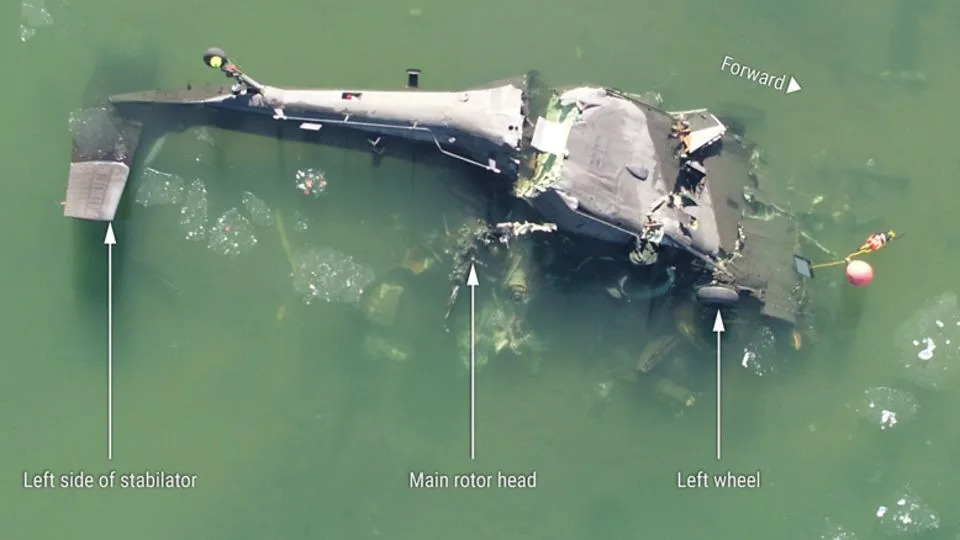
This image released by the NTSB shows the Sikorsky UH-60 Black Hawk helicopter upside-down in the Potomac River near Ronald Reagan Washington National Airport following the collision. - NTSB
"This was preventable. This was 100% preventable," NTSB Chair Jennifer Homendy said during the public hearing.
Operational And Technical Shortcomings
- Controller Workload: The local and helicopter control positions were combined; the controller was communicating with multiple aircraft and reported feeling "overwhelmed." The NTSB noted staffing levels met policy but warned that policy alone did not mitigate risk.
- Audio Interference: A partially blocked transmission altered the controller’s instruction — "PAT 2‑5 pass behind the CRJ" was heard as "PAT CRJ," which led the helicopter crew to report Visual Separation while not seeing the correct aircraft.
- ADS‑B: The board emphasized that if the aircraft had been equipped with ADS‑B In/Out, Flight 5342 would have received an alert about 59 seconds before impact and the helicopter crew about 48 seconds — potentially enough time to avert the collision.
- Altimeter Discrepancies and Route Design: The helicopter route at the time allowed Black Hawks to fly as close as 75 feet below descending airliners. Combined with allowable instrument errors and Army altitude tolerances, this made dangerously close proximity more likely.
Evidence And Visualizations
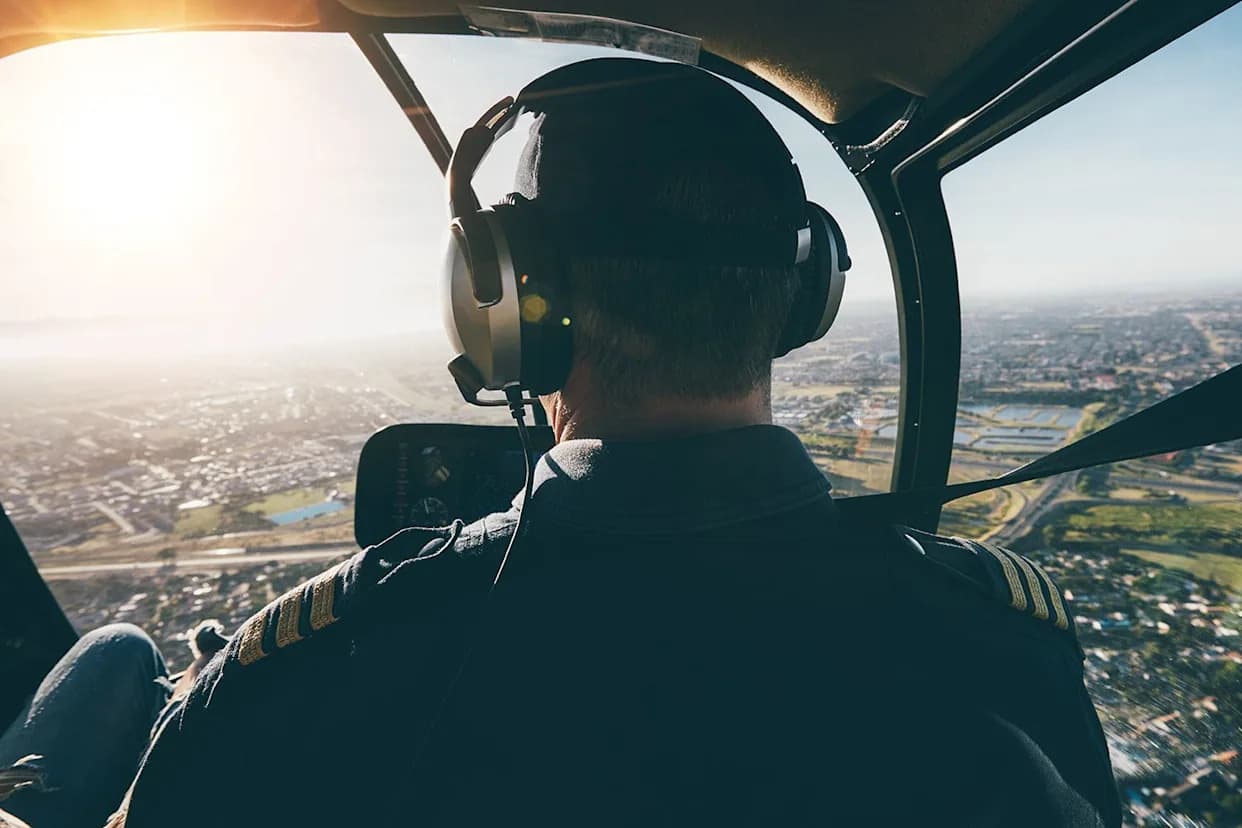
Investigators used recreated flight paths and cockpit views in Microsoft Flight Simulator and released animations showing how the helicopter’s lights would have blended into Washington’s bright background at night. The simulations highlighted cockpit masked areas and blind spots — especially from the right‑seat view — and reinforced how difficult it would have been for the airline crew to visually detect and avoid the helicopter.
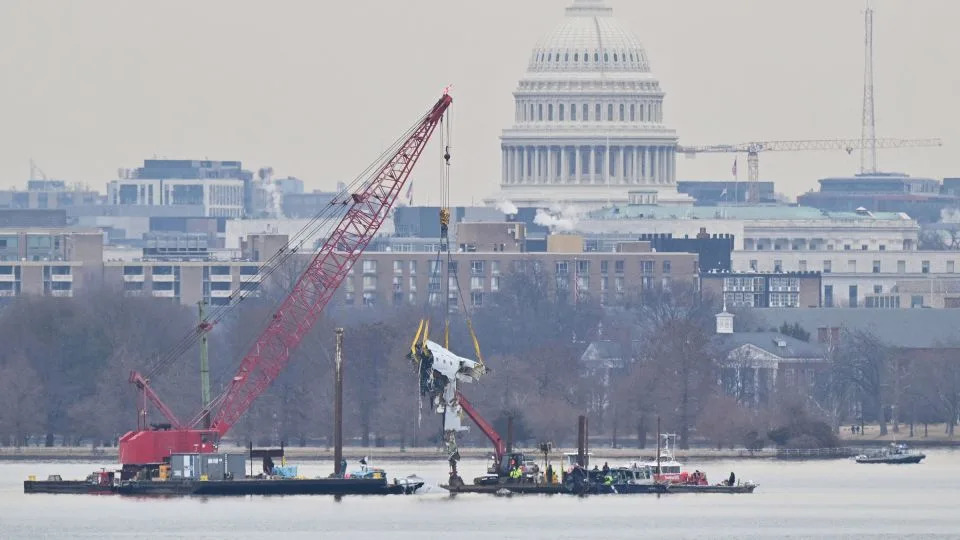
A crane removes airplane wreckage from the Potomac River, where American Airlines flight 5342 collided with a US Army military helicopter, near Ronald Reagan Washington National Airport in Arlington, Virginia, on February 3, 2025. - Roberto Schmidt/AFP/Getty Images/File
Data, Recommendations And Response
The NTSB analyzed FAA records and identified 15,214 close‑proximity events near DCA over several years, 85 of which were classified as serious. Investigators said FAA systems contained the data but lacked sufficient analysis and follow‑up. The NTSB proposed 48 safety recommendations (32 to the FAA) addressing route design, surveillance technology, tower procedures, and data monitoring.
The FAA said it has implemented measures at DCA — reducing hourly arrival rates and increasing tower staffing — and that Secretary of Transportation Sean Duffy and the agency are moving to modernize the National Airspace System. Lawmakers are also debating broader ADS‑B requirements in related legislation.
Closing Remarks
The NTSB emphasized systemic accountability over individual blame, noting human error is often a symptom of broken systems. Chair Homendy apologized to families and urged rapid action so similar tragedies are not repeated: "Why collect data if you’re not going to analyze it?"
Help us improve.