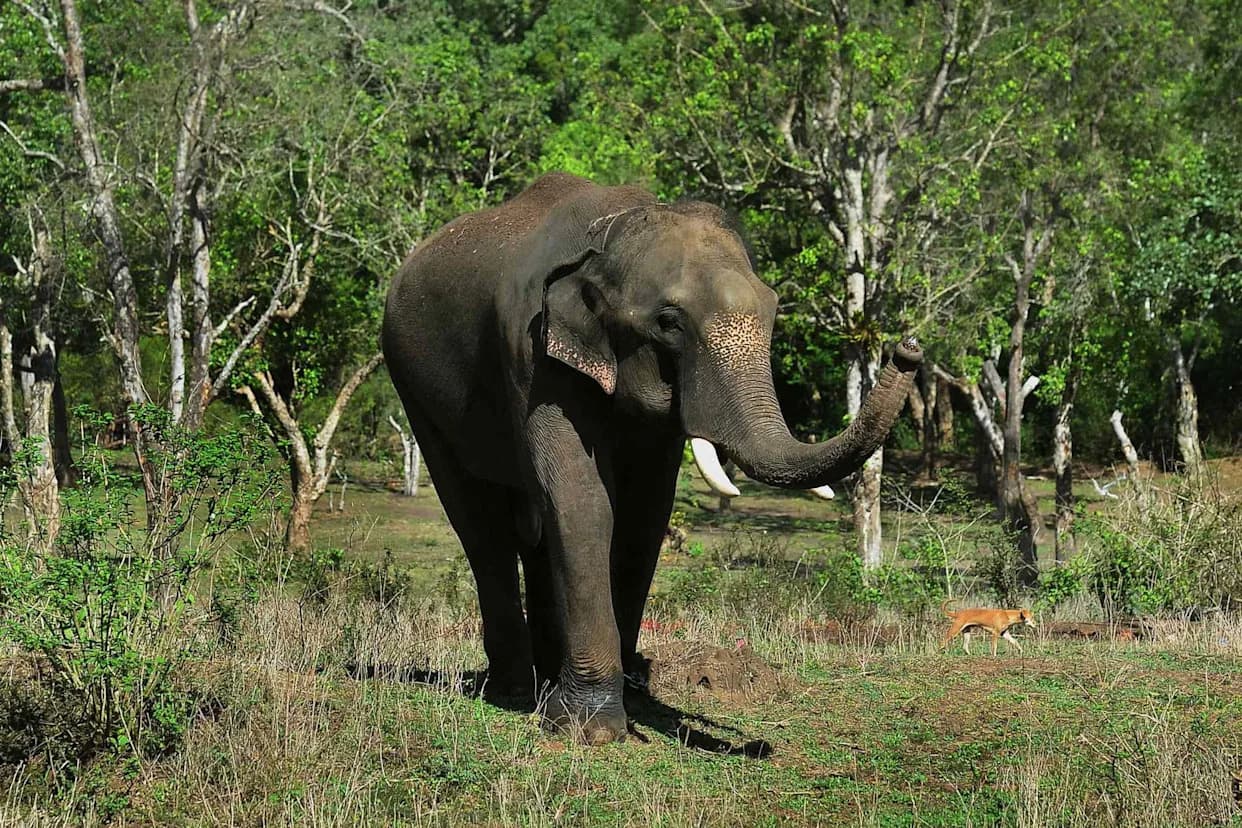
The lone bull elephant is blamed for a nine-day rampage in West Singhbhum, Jharkhand, that left 20 people dead and 15 injured. Search teams, supported by drones, are combing forests and a nearby reserve in Odisha but the animal had not been seen since Friday. More than 20 villages have been abandoned or barricaded at night as authorities try to protect residents. Experts link the attacks to habitat loss, rising human-elephant contact, and the behavior of solitary bulls in musth.
Rampaging Bull Elephant Kills 20 in Jharkhand; Villages Flee as Search and Drone Teams Scour Forests
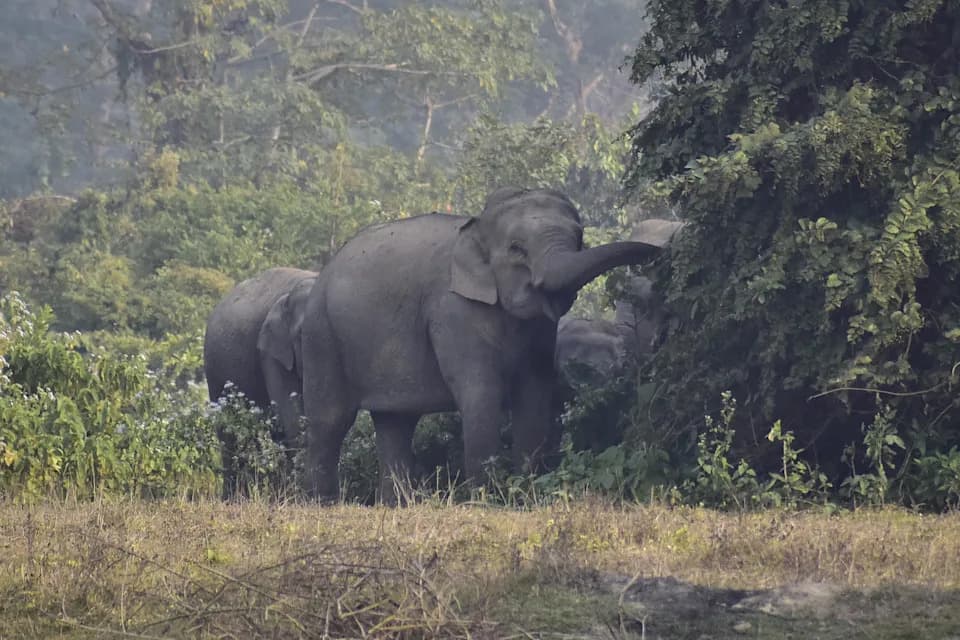
A herd of wild elephants gathers near a field in search of food at a village in Nagaon district, Assam, India, on December 24, 2025. / Credit: Anuwar Hazarika/NurPhoto via Getty Images
Indian wildlife and forest officials are hunting a lone bull elephant blamed for a nine-day rampage in Jharkhand that killed at least 20 people and injured 15 others, officials and villagers said.
The attacks began in early January in the rural West Singhbhum district and sparked panic across more than 20 villages, many of whose residents have temporarily abandoned farms or barricaded themselves indoors at night.
Search Efforts Underway
"We are trying to trace and rescue this violent wild elephant that killed so many people," government forest officer Aditya Narayan told AFP, confirming the death toll. A professional elephant handler, known as a mahout, as well as children and elderly residents, are among the victims.
After leaving a trail of destruction the bull had not been seen since Friday, despite multiple patrols. Search teams, supported by drones, are combing dense forest tracts and a national reserve in neighbouring Odisha to try to locate the animal.
"A police team, or forest official vehicle, visits in the night to provide essential help to villagers," village head Pratap Chachar said, describing the fear in local communities.
Wider Context: Habitat Loss and Human-Elephant Conflict
Crop-raiding and dangerous encounters with elephants affect hundreds of thousands of Indians each year. Asian elephants now occupy roughly 15% of their original range, and shrinking habitat combined with expanding settlements and forest disturbances such as mining has increased human-elephant contact.
Parliamentary figures cited by officials put the toll from elephant-related deaths across India at 629 people in 2023-2024. Experts say the animals most likely to attack people are often solitary bulls in musth, a periodic condition of heightened aggression and surging testosterone. A former forest official suggested the Jharkhand bull may have been in musth and could have calmed and rejoined a herd.
Conservation And Mitigation Efforts
India hosts the majority of the world's wild Asian elephants, a species the International Union for Conservation of Nature (IUCN) lists as endangered. The Wildlife Institute of India estimated the country's wild elephant population at 22,446 last year and warned of mounting pressures on the species.
Authorities and conservation groups have pursued several mitigation measures: an elephant hospital was opened in Mathura, and the southern state of Tamil Nadu has rolled out an AI and machine-learning surveillance system aimed at preventing elephant deaths on railways.
Separately, recent incidents underline the scale of the problem: a high-speed passenger train struck a herd in Assam, killing seven elephants and injuring a calf, and there have been fatal elephant encounters reported in other countries in recent months, including Zambia, Kenya, South Africa and Thailand.
Authorities continue to urge caution in affected areas while search and rescue teams work to find the animal and reduce further harm to communities and wildlife.
Help us improve.