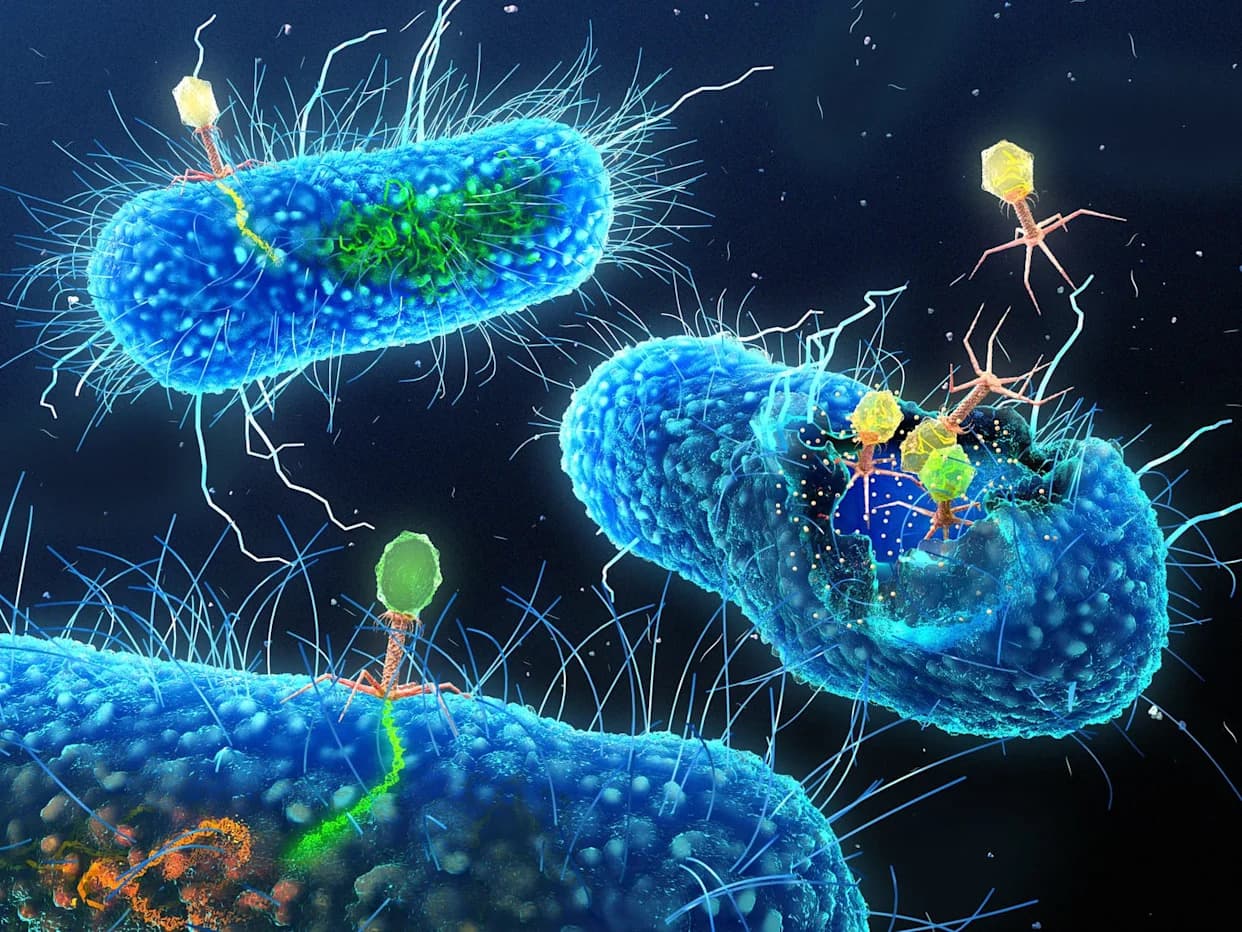
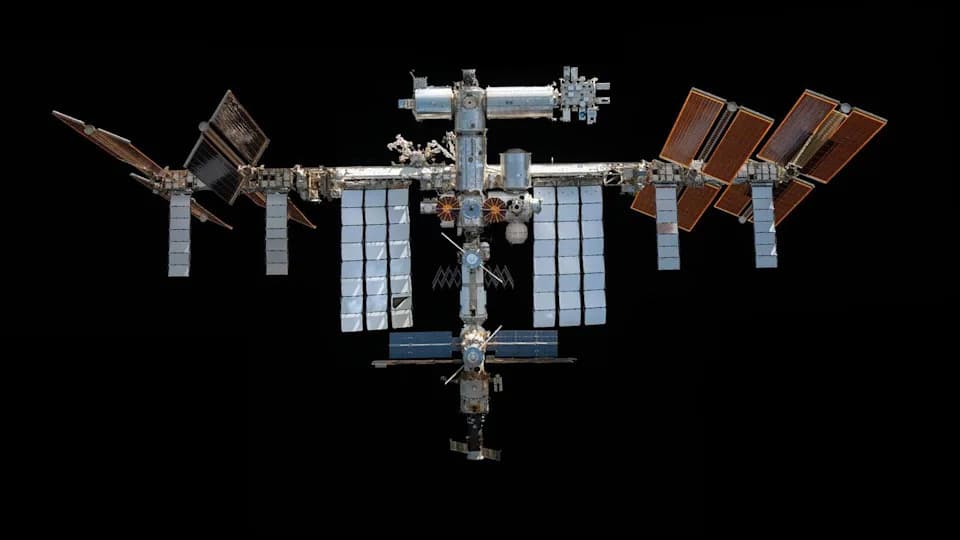
The ISS hosted a 25-day experiment pairing Escherichia coli with the T7 bacteriophage to observe evolution in microgravity. Space-altered bacteria developed mutations in stress-response and nutrient-management genes and changed surface proteins; phages later evolved compensatory mutations. Some orbit-derived phage variants were especially effective against bacteria that cause UTIs, and those insights helped researchers engineer phages with improved activity against drug-resistant pathogens. The study appears in PLOS Biology.
Microgravity-Mutated Phages From the ISS Could Help Beat Antibiotic-Resistant UTIs
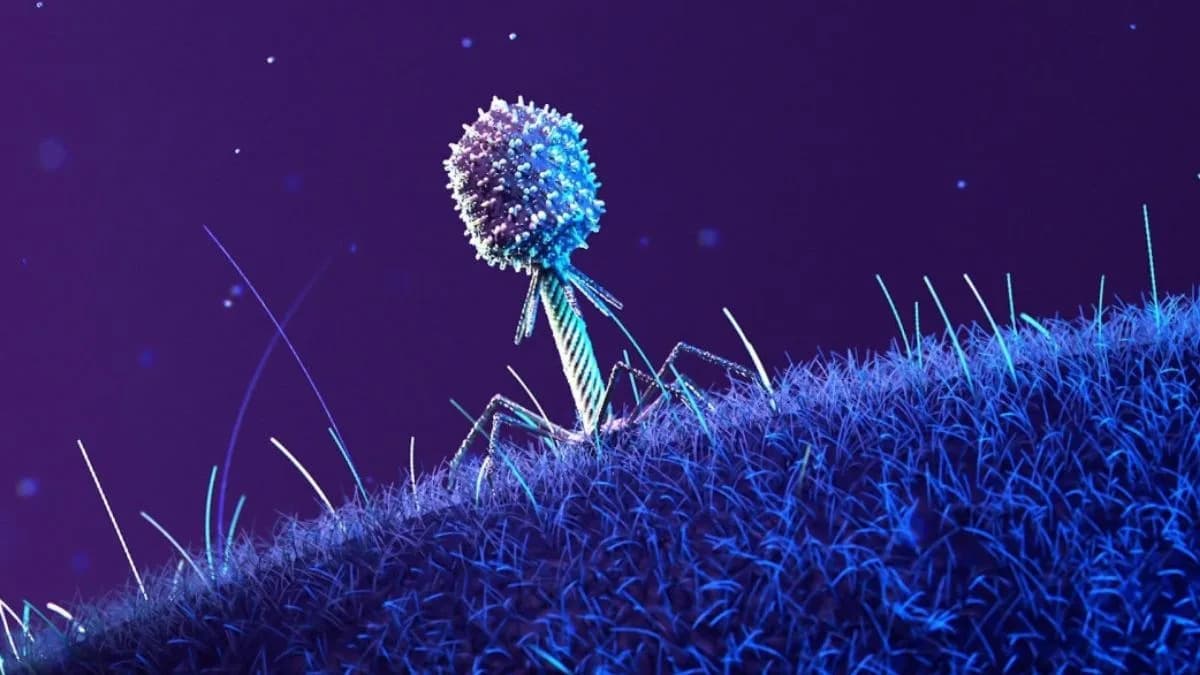
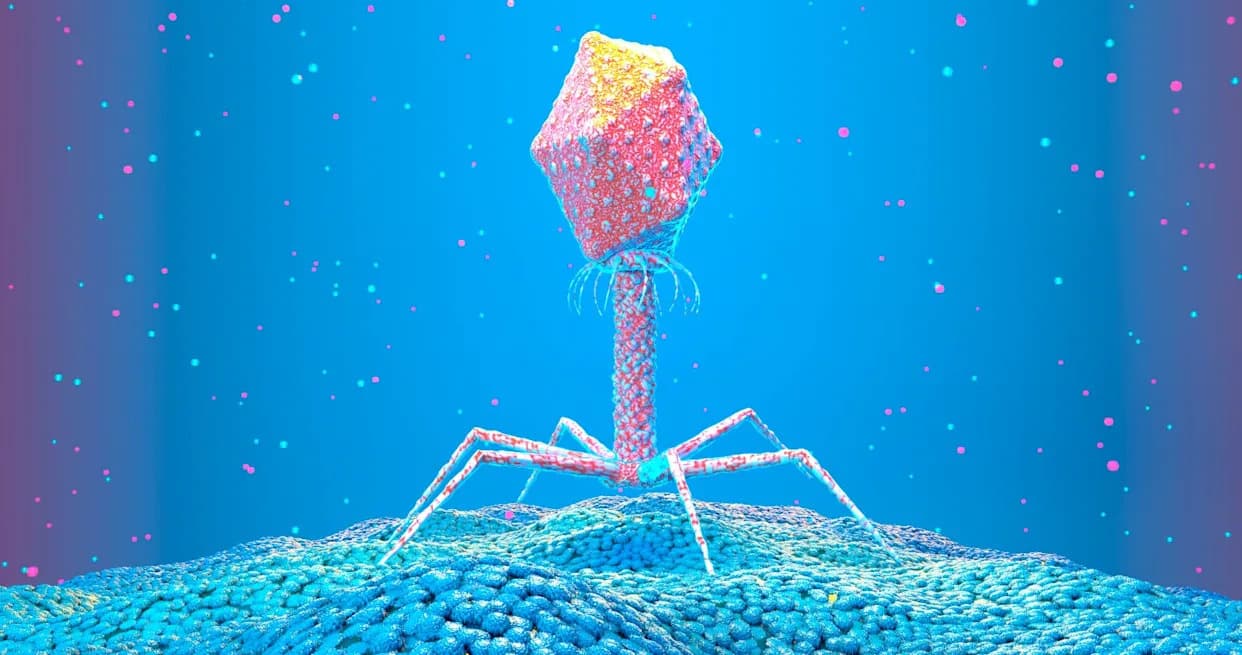
a 3d digital graphic depicting a phage standing on the vast and hairy-looking surface of a bacteria
A box of microbes returned from the International Space Station (ISS) after a 25-day experiment, and the genetic changes those organisms acquired in orbit may point to new ways to treat drug-resistant infections on Earth.
What the Experiment Did
Researchers from the University of Wisconsin–Madison and Rhodium Scientific sent Escherichia coli and its well-studied viral predator, the T7 bacteriophage, to the ISS in 2020. Astronauts incubated multiple bacteria–phage combinations in microgravity for 25 days while identical control experiments ran simultaneously in Madison under Earth gravity.
Key Findings
"Space fundamentally changes how phages and bacteria interact: infection is slowed, and both organisms evolve along a different trajectory than they do on Earth," the team reports.
In weightlessness, the bacteria accumulated mutations in genes linked to stress responses and nutrient management, and their surface proteins were altered. After an initial delay, the T7 phages also evolved compensatory mutations that restored their ability to bind to and infect the modified bacteria.

Audition now for ScienceAlert's Casting Call
Real-World Potential
Crucially, the researchers found that some of the space-specific phage mutations were particularly effective at killing strains of bacteria that cause urinary tract infections (UTIs). The team notes that a large proportion of UTI-causing bacteria are resistant to multiple antibiotics, which makes bacteriophages—either naturally adapted or engineered—an attractive alternative or complement to traditional drugs.
By studying the adaptations that arose in microgravity, the researchers say they identified biological insights that enabled them to engineer phages with substantially improved activity against drug-resistant pathogens on Earth. The full study is published in PLOS Biology.
Context and Caution
These results are promising but preliminary. Space-driven evolution helped reveal new phage traits and mechanisms of host interaction, yet translating these findings into safe, effective clinical treatments will require extensive laboratory validation, regulatory review, and clinical trials.
Implication: Studying microbe evolution in space can uncover adaptive strategies that inform novel antimicrobial approaches, offering a potential new avenue in the global fight against antibiotic resistance.
Help us improve.