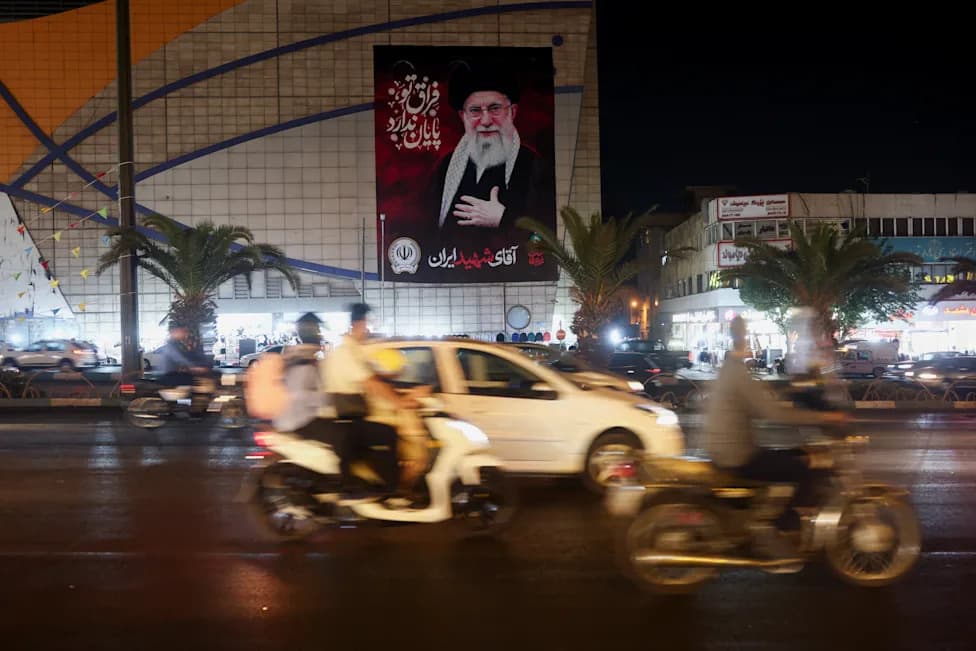
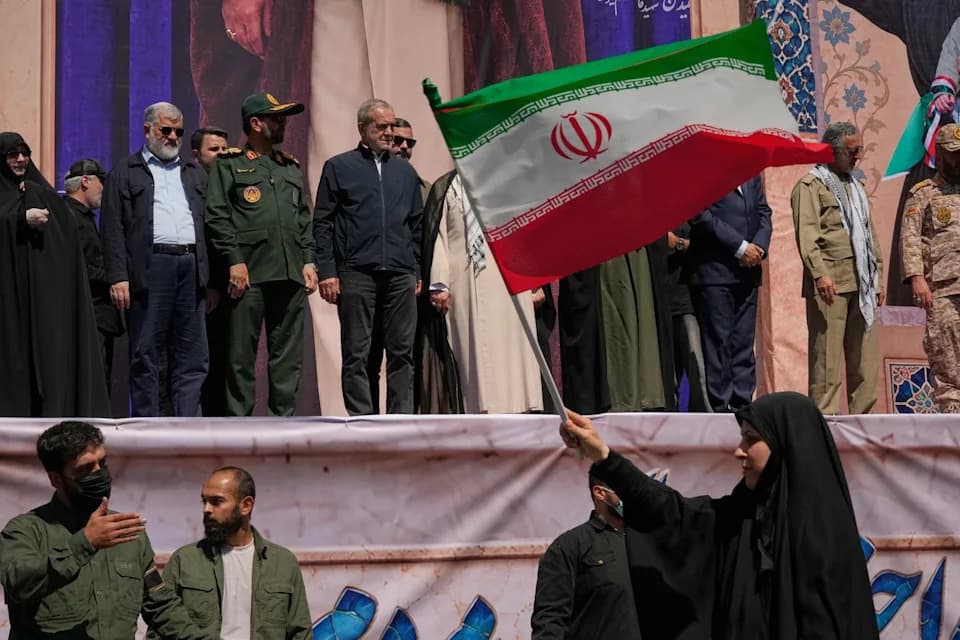
The European Union has added Iran’s Islamic Revolutionary Guard Corps to its list of terrorist organizations, citing Tehran’s violent repression of protests. Iran condemned the move as politically motivated and warned of “hazardous consequences,” while announcing additions to its drone inventory and planned naval drills in the Strait of Hormuz. Analysts say the designation is largely symbolic and may have limited practical effect, and international leaders urged diplomacy to prevent wider regional escalation.
EU Designates Iran’s Revolutionary Guard As Terror Group — Tehran Warns Of “Hazardous Consequences”
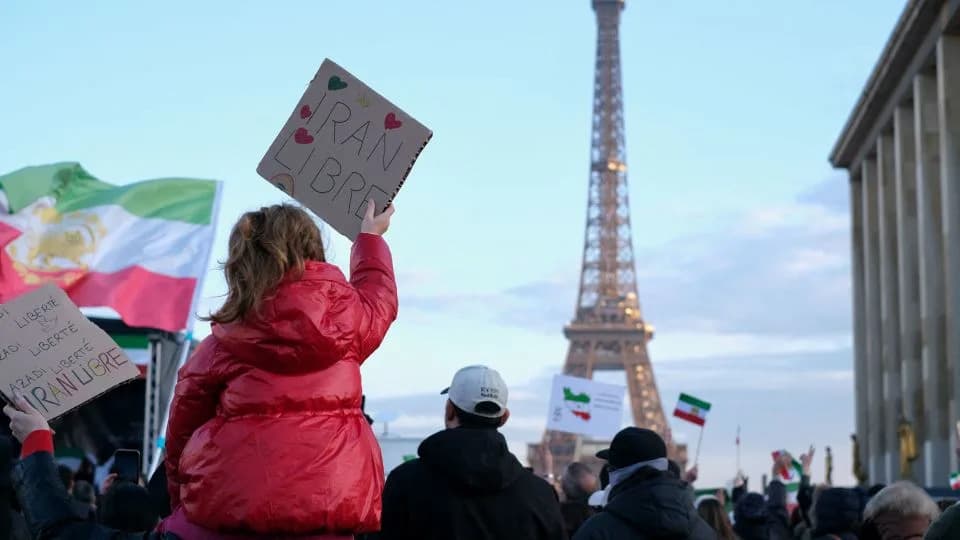
A rally to protest the killingof thousands of demonstrators in Iran since late December was held at the Trocadero in Paris on January 18. - Babeth Aloy/Hans Lucas/AFP/Getty Images
The European Union formally placed Iran’s Islamic Revolutionary Guard Corps (IRGC) on its terrorist list on Thursday, prompting Tehran to warn of “hazardous consequences” as tensions with Western capitals intensified.
EU foreign ministers approved the listing at a meeting in Brussels, saying the decision was a response to Iran’s violent repression of anti-government protests. EU foreign policy chief Kaja Kallas wrote on X that “repression cannot go unanswered,” adding: “Any regime that kills thousands of its own people is working toward its own demise.” European Commission President Ursula von der Leyen said the designation was appropriate for a regime that “crushes its own people’s protests in blood.”
In Tehran, the General Staff of the Iranian armed forces condemned the move in a statement carried by state media outlet IRNA, calling it “illogical, irresponsible and spiteful” and accusing European governments of following U.S. and Israeli policy. The statement defended the IRGC’s role in countering extremist groups, including the Islamic State, and warned that “the hazardous consequences of this hostile and provocative decision will fall directly on the European policymakers.”
Iranian Foreign Minister Abbas Araghchi accused European states of escalating tensions and increasing the risk of a wider regional war. “Europe is instead busy fanning the flames,” he wrote on X, calling the EU action a “major strategic mistake” taken at the urging of the United States and warning that Europe could face economic fallout, including higher energy prices, if conflict erupts.
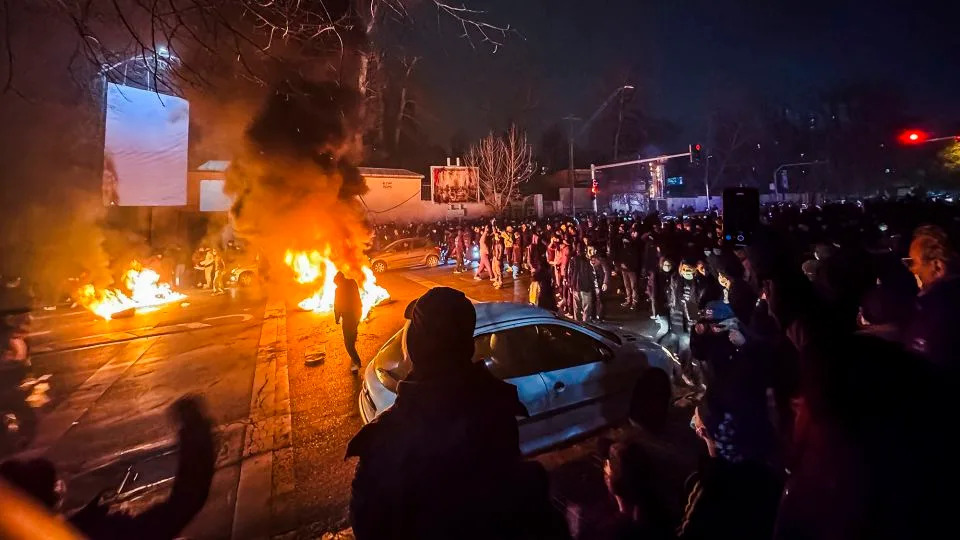
Iranian anti-government protesters block a street in Tehran on January 9. - MAHSA/Middle East Images/AFP/Getty Images
What the Designation Means
The EU’s listing places the IRGC alongside groups such as al‑Qaeda, Hamas and the Islamic State. The measure is intended to signal political condemnation and impose legal and financial restrictions, although analysts say its practical impact on Tehran’s behavior may be limited.
Background On The IRGC
Formed after Iran’s 1979 Islamic Revolution, the IRGC operates separately from Iran’s regular armed forces and maintains its own ground, naval and air components, as well as intelligence and special operations units. It reports directly to Supreme Leader Ayatollah Ali Khamenei and is tasked with protecting the Islamic Republic.
Estimates put IRGC personnel between roughly 150,000 and 190,000, including the elite Quds Force — a unit the United States designated as a terrorist organization in 2007. The Basij, an IRGC-affiliated paramilitary volunteer militia, is estimated to have around 450,000 members and has been heavily involved in suppressing protests, according to the Institute for the Study of War.
The United States designated the IRGC as a foreign terrorist organization in 2019. At that time, U.S. officials accused Iran of supporting proxy groups whose actions they said contributed to the deaths of U.S. service members in Iraq between 2003 and 2011.
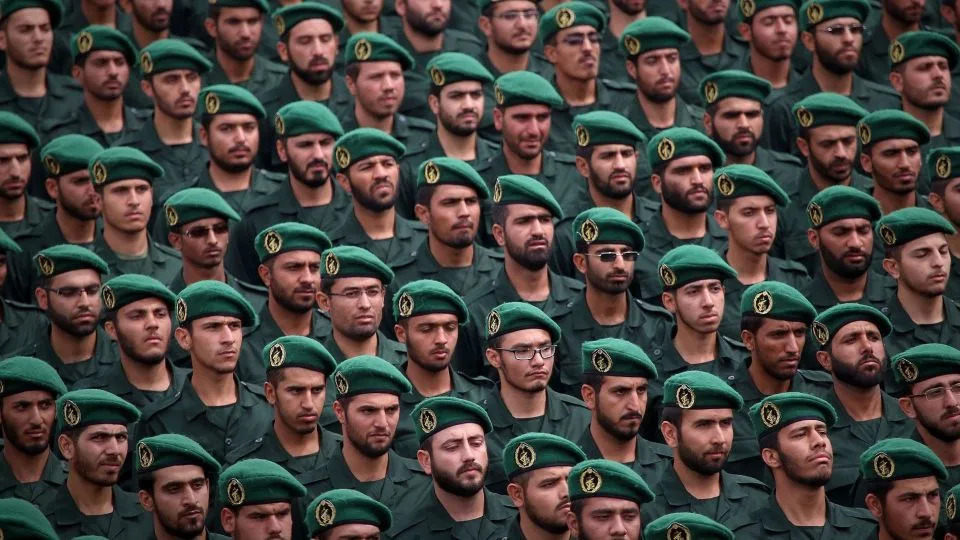
A graduation ceremony of the Islamic Revolutionary Guard Corps takes place in Tehran on March 21, 2014. - SIPA/AP
Military Moves And Regional Risks
Tehran told state media it has added 1,000 “strategic drones” to its arsenal, though details about the systems were not disclosed. Iranian authorities also announced IRGC naval live‑fire exercises next week in the Strait of Hormuz, a critical chokepoint through which more than one‑fifth of the world’s oil and a substantial portion of liquefied natural gas transit.
Some analysts describe the EU designation as largely symbolic. Trita Parsi, executive vice president of the Quincy Institute for Responsible Statecraft, told CNN the move “will have very little impact,” noting Europe already has limited trade ties with Iran and that past designations have not decisively altered Tehran’s behavior.
International Reaction
International leaders urged restraint and diplomacy. United Nations Secretary‑General António Guterres called on all parties to pursue de‑escalation to avoid a crisis that could have devastating consequences in the region. Former U.S. President Donald Trump has previously threatened military strikes on Iran if it does not accept what he described as an “equitable” nuclear deal; meanwhile, U.S. officials and commentators say military options remain on the table if diplomacy fails.
The situation remains fluid. Analysts warn the designation increases political pressure but may not change Tehran’s strategic behavior, while Tehran’s warnings and announced military steps could further raise the risk of miscalculation in an already volatile region.
CNN’s Kevin Liptak, Hira Humayun, Sharon Braithwaite and Caitlin Danaher contributed to this report.
Help us improve.