The evolutionary arms race between bacteria and bacteriophages takes a different turn in microgravity, a PLOS Biology study finds. Phages evolved on the ISS experienced slower infection cycles but developed mutations that improved binding and infectivity. Some space-adapted phages, returned to Earth, showed enhanced activity against clinical E. coli strains that commonly cause urinary tract infections. The findings could inform phage therapy development and strategies to protect astronaut health, though cost and safety considerations remain.
Phages Evolved on the ISS Return to Earth More Effective Against Some Drug-Resistant E. coli

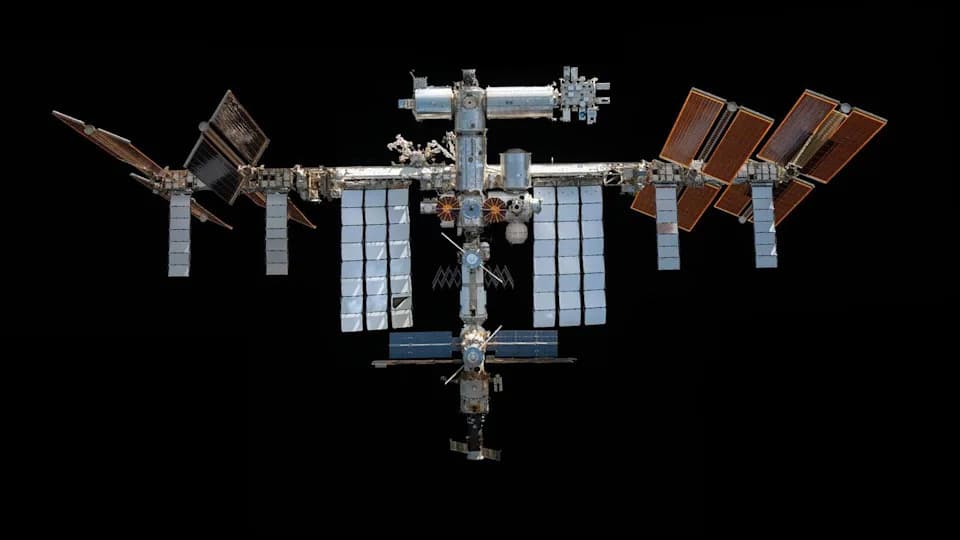
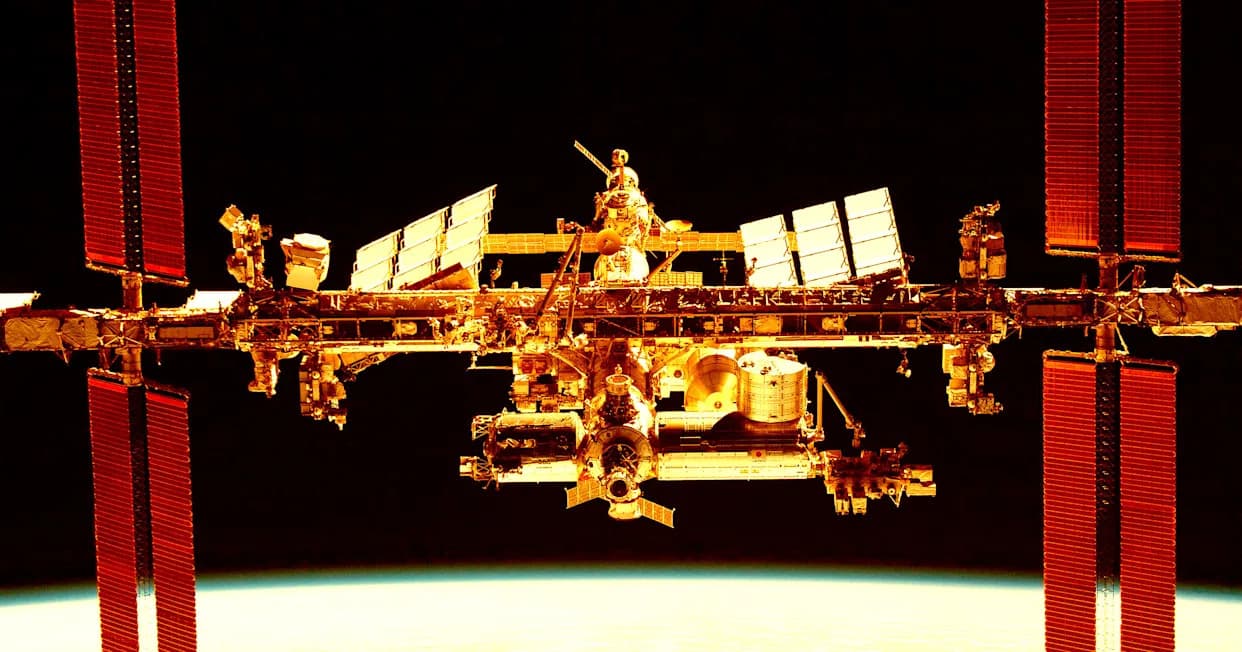
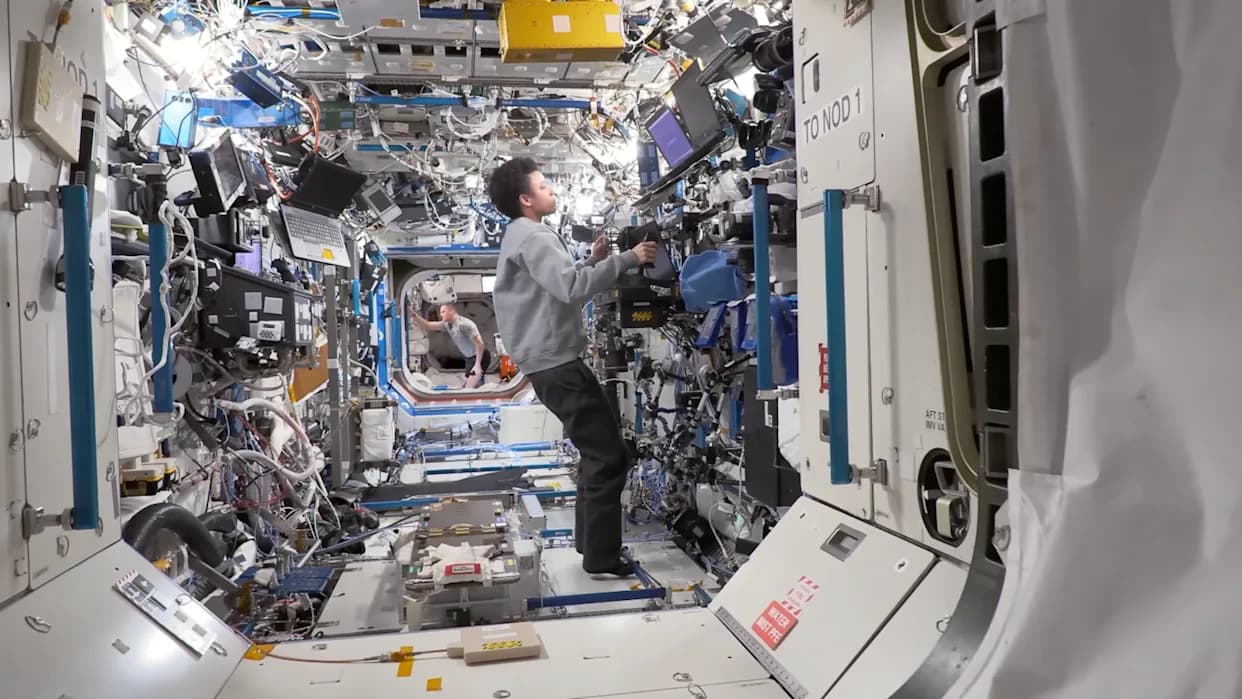
Scientists brought bacteria and phages, meaning viruses that infect bacteria, aboard the ISS to study their evolution. . | Credit: International space station (dima_zel/Getty Images); E.coli (Shutterstock)
Bacteria and the viruses that infect them—bacteriophages, or phages—are locked in a constant evolutionary arms race. A new study published Jan. 13 in PLOS Biology shows that this contest follows a different path in microgravity: phages that evolved aboard the International Space Station (ISS) adapted to slower encounter rates and returned to Earth with mutations that made them better at infecting certain Escherichia coli strains.
Study Design
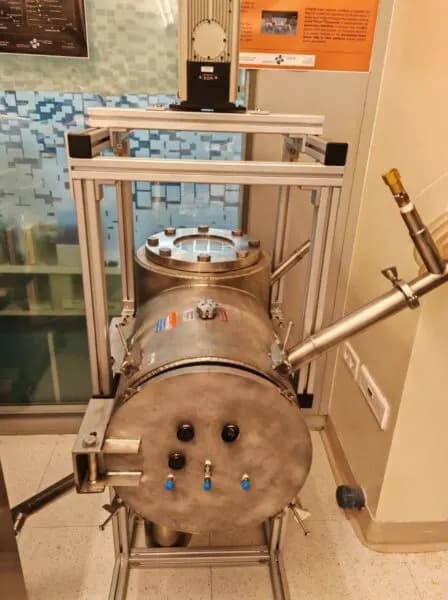
Researchers incubated identical cultures of E. coli infected with the T7 phage on the ISS and on Earth. They used whole-genome sequencing to identify genetic changes arising in both bacterial and viral populations, and applied deep mutational scanning to probe changes in the phages' receptor-binding proteins.
Key Findings
Genome analysis revealed distinctive mutations in the ISS samples that did not appear in ground controls. In microgravity, infection cycles were slower—likely because gravity-driven fluid mixing that increases encounter rates on Earth is absent in space—so phages evolved to bind hosts more efficiently. Meanwhile, E. coli populations on the ISS developed receptor changes and other defenses tailored to that environment.
"This new study validates our hypothesis and expectation," said Srivatsan Raman, lead author and associate professor at the University of Wisconsin–Madison.
When returned to Earth, some space-adapted phages showed increased activity against clinical E. coli strains that commonly cause urinary tract infections and are normally resistant to T7. The researchers described this as an unexpected but promising outcome.
Implications and Caveats
The findings suggest microgravity-driven evolution could reveal genetic changes useful for engineering or selecting phages with improved activity against resistant bacteria on Earth. They also point to potential benefits for astronaut health on long-duration missions, where treatments may need to work in microgravity.
Experts caution practical considerations: sending biological material to space or reliably simulating microgravity on Earth has cost and logistical challenges, and further testing is required to assess safety, spectrum of activity, and clinical utility.
Next Steps
Future work will need to map the exact molecular changes responsible for enhanced binding, test broader sets of pathogenic bacteria, and evaluate whether space-selected traits can be reproduced more cheaply by ground-based microgravity simulators or targeted engineering.
Reference: Raman et al., PLOS Biology, Jan. 13 (study comparing ISS and Earth-evolved T7 phage and E. coli populations).
Help us improve.