New START, signed in 2010 and in force since 2011, caps deployed strategic warheads at 1,550 per side and limits deployed delivery systems to 700 and total launchers to 800. On-site inspections were central to verification but were suspended during COVID and halted by Russia in 2023; both sides now rely on national intelligence. The treaty allowed a single extension (used in 2021); with that option exhausted, Russia has proposed an informal one-year adherence and the U.S. response is pending. If New START lapses without a replacement, experts warn it would raise the risk of an unregulated arms competition and greater strategic uncertainty.
Explainer: Why the New START Treaty’s Expiry on Feb. 5 Matters — And What Comes Next
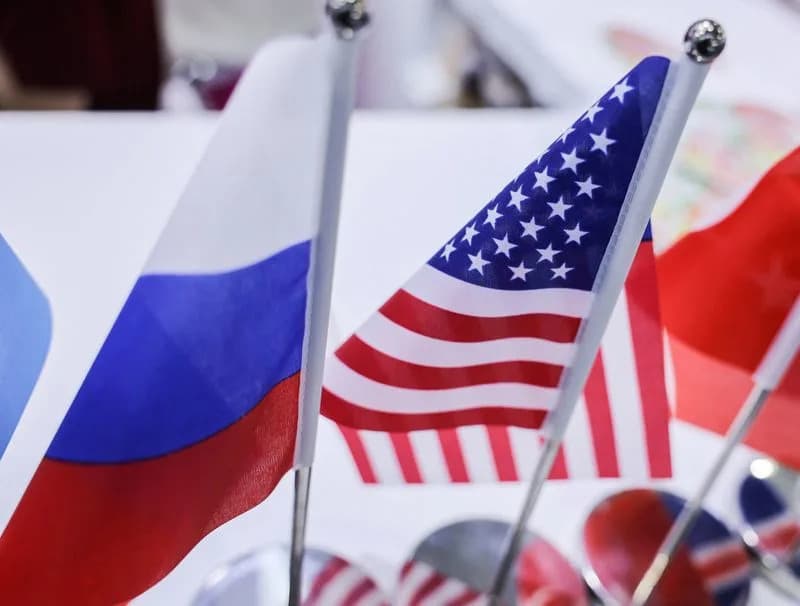
National flags of the U.S and Russia are placed on a table at a booth at the China International Fair for Trade in Services (CIFTIS) in Beijing, China, September 11, 2025. REUTERS/Maxim Shemetov
The New START treaty — the last remaining bilateral U.S.-Russia pact limiting strategic nuclear arms — is set to expire on February 5. Below is a clear, up-to-date guide to what New START requires, why its lapse matters, and the realistic options and risks now facing both capitals.
Who Signed New START and What Does It Require?
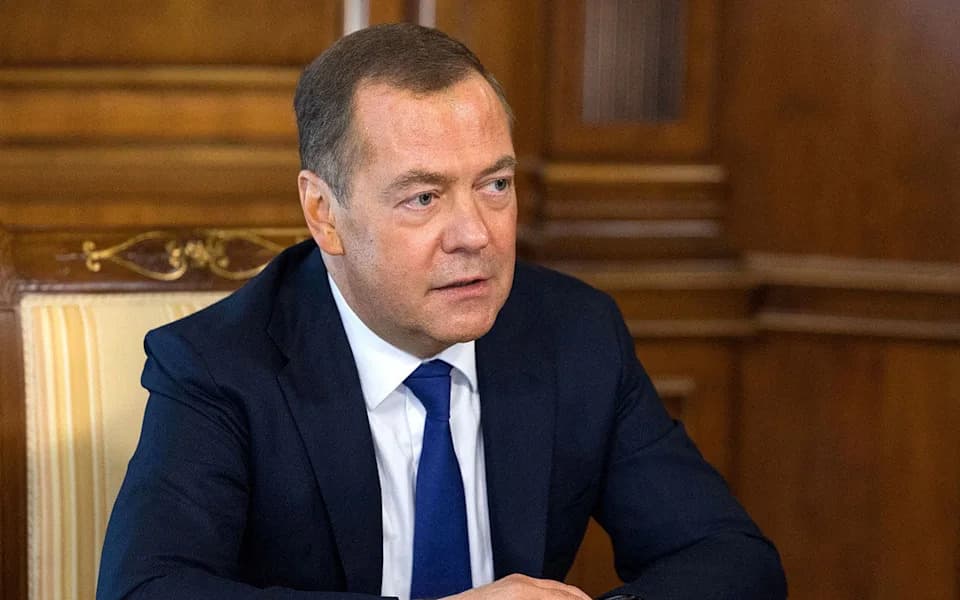
New START was signed in 2010 by U.S. President Barack Obama and Russian President Dmitry Medvedev, and entered into force in 2011. The treaty caps deployed strategic nuclear warheads at 1,550 for each side and limits deployed delivery systems (ICBMs, SLBMs and heavy bombers) to 700. It also restricts deployed and non-deployed launchers to a total of 800. These limits were designed to lower the risk of a large-scale strategic arms race while preserving credible deterrence for both countries.
How Did New START Verify Compliance?
Verification was a central feature: the treaty established short-notice, on-site inspections, notification requirements and data exchanges to build transparency and mutual confidence. Inspections were suspended during parts of the COVID pandemic, and in 2023 Russia announced it would suspend participation in response to U.S. support for Ukraine, halting most on-site verification. Since then, both sides have relied largely on national intelligence to monitor compliance; neither has publicly accused the other of violating the treaty’s warhead limits.
Why Can’t the Treaty Simply Be Extended?
The text of New START permits only one formal extension, which was exercised in 2021. That option has been used, so a further formal extension is not allowed under the current treaty language. In September, President Vladimir Putin proposed an informal, one-year mutual adherence to the numerical limits; as of the moment this article was written, President Donald Trump had not publicly accepted that proposal.
What Are the Arguments For and Against Agreeing to an Informal Adherence?
Supporters of an informal or interim agreement argue it would buy time, preserve the basic limits that have restrained strategic arsenals and reduce the near-term risk of an unconstrained buildup. Opponents say the United States should seize the opportunity to recalibrate its posture to address China’s rapid nuclear modernization and other emerging threats, and that an informal, non-legally binding arrangement could be perceived as strategically constraining without the benefits of verification.
What Happens If New START Expires Without a Replacement?
If formal limits lapse and no successor agreement is reached, both countries would be free to expand their strategic forces. Experts caution that a rapid, large-scale increase is not instantaneous — producing and deploying significant additional warheads and delivery systems faces technical, industrial and logistical limits and would likely take many months to years. Still, the loss of treaty constraints and verification increases the risk of a prolonged, unregulated arms competition and higher strategic uncertainty, especially amid tensions from conflicts in Ukraine and the Middle East.
What Would a Successor Treaty Need to Cover?
Negotiating a replacement would be difficult and time-consuming. A modern successor would likely need to address classes of weapons that New START did not fully cover — for example, short- and intermediate-range systems, non-deployed launchers, and newer or unconventional platforms such as Russia’s reported Burevestnik long-range cruise missile and the Poseidon nuclear-powered torpedo. Negotiators would also face political disputes over participants: the United States has suggested broader talks that might include China, while Beijing rejects three-way talks as unrealistic; Russia insists that the arsenals of Britain and France be part of any new bargain, which those NATO allies oppose.
Bottom Line: What To Watch
The immediate questions are whether Moscow and Washington will accept an informal adherence to the existing limits and whether either side will take preparatory steps to expand forces if the treaty lapses. Over the longer term, the key challenges are rebuilding verification, deciding which arsenals and systems to include in a successor deal, and persuading additional nuclear powers to join or accommodate new limits. The lapse of New START would not mean an immediate flood of new weapons, but it would remove a key stabilizing framework that has limited strategic competition for more than a decade.
Reporting note: This explainer is based on public reporting of treaty text, official statements and expert analysis of verification and force-planning considerations.
Help us improve.