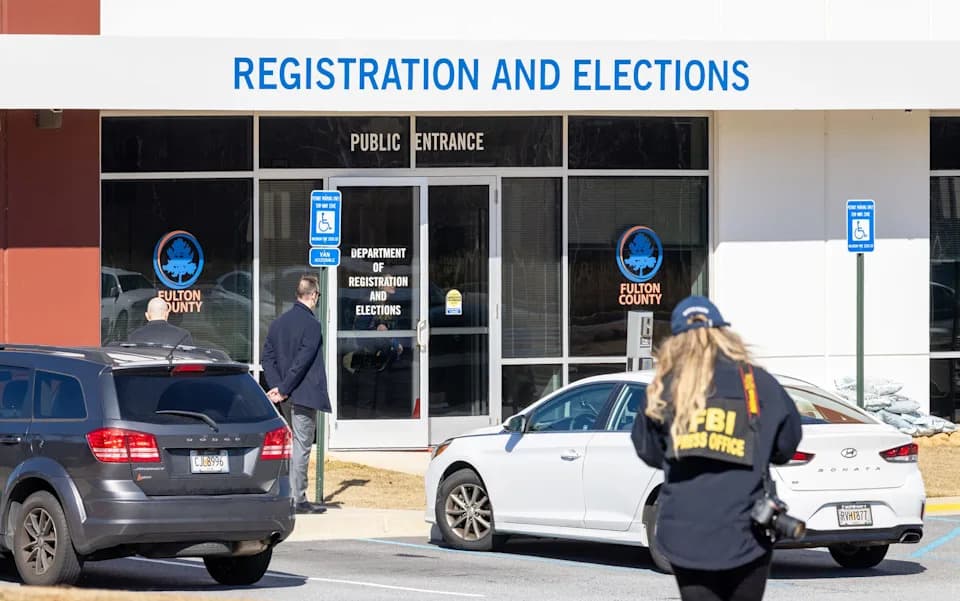
The FBI’s search of the Fulton County elections office — which seized 2020 ballots, tabulator tapes, ballot images and voter rolls — intensified a contentious dispute over access to election records. Reports that Tulsi Gabbard was present at the scene prompted criticism about intelligence involvement in a domestic operation. Legal experts say the administration’s nationwide push for voter data has shaky judicial grounding, and Fulton County officials warn the seizure disrupted chain-of-custody and could be used to undermine local control of elections.
FBI Raid on Fulton County Seizes 2020 Ballots — Raises Legal Questions and Fears of Eroding Trust in Elections

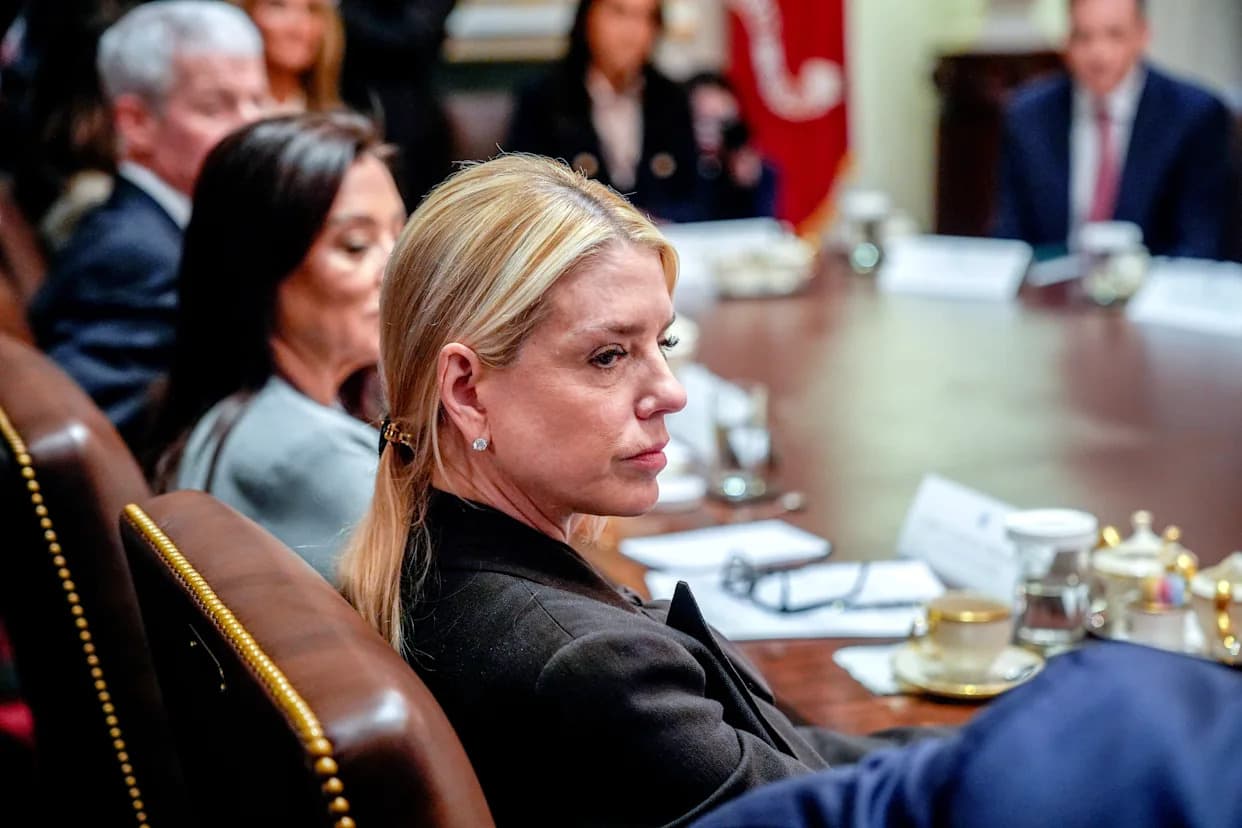
Tulsi Gabbard, the director of national intelligence, at the Fulton county election office on Wednesday evening.Photograph: Elijah Nouvelage/Reuters(Photograph: Elijah Nouvelage/Reuters)
The FBI’s midweek search of the Fulton County elections office — which included seizure of 2020 ballots, tabulator tapes, ballot images and voter rolls — escalated a broader effort that critics say is tied to efforts to cast doubt on the 2020 election and to influence public confidence ahead of upcoming midterms.
Background: Long-Running Claims and Court Findings
During attempts to overturn the 2020 result, misleading claims about ballot handling in Atlanta became central to the narrative that the election was stolen. Distorted surveillance video showing ballots being removed from suitcases fed allegations that fraudulent ballots were counted. In a high-profile libel case, Rudy Giuliani was ordered to pay $148.1 million to election workers for false statements related to those claims; he later settled.
Two independent recounts and state investigations confirmed Joe Biden’s victory in Georgia and debunked allegations of widespread fraud. Nevertheless, Trump allies and election-denial activists in Georgia have continued to press those claims, and some traveled to the site of the raid to stage protests and pose with crime-scene tape.
Details of the Search and Controversy Over Intelligence Involvement
According to a warrant reviewed by the Guardian, FBI agents executed an order authorizing seizure of county 2020 ballots, tabulator tapes, ballot images and voter rolls. Reports said Tulsi Gabbard, identified by some outlets as director of national intelligence, was seen at the site during the operation — a presence that drew sharp criticism and questions about whether national intelligence resources were being used in a domestic operation.
“Either Director Gabbard believes there was a legitimate foreign intelligence nexus — in which case she is in clear violation of her obligation under the law to keep the intelligence committees ‘fully and currently informed’ — or she is injecting the nonpartisan intelligence community into a domestic political stunt,” said Sen. Mark Warner.
The Wall Street Journal reported that Gabbard is leading parts of the administration’s effort to investigate alleged voter fraud nationwide; the DNI’s office issued a statement defending its role and saying election security is an element of national security that requires coordination across agencies.
Legal Context And Chain-Of-Custody Concerns
The search comes amid a broader White House push to obtain voter rolls and sensitive election data from states — a campaign that legal experts say has limited judicial backing. Three of nearly two dozen suits brought by the Justice Department seeking records have been dismissed so far, though the administration continues to pursue others.
Locally, the state election board — now with a Trump-aligned majority — had subpoenaed 2020 records from Fulton County, a dispute Fulton officials had been litigating and preparing to resolve. Fulton County Superior Court Judge Robert McBurney ruled in December that the county must turn over records, while acknowledging the substantial administrative burden; the county estimated production costs at $376,800.
Rob Pitts, chairman of the Fulton County Board of Commissioners, and other county leaders said the records were already the subject of active litigation and likely to be unsealed and turned over within weeks. They argued that the sudden federal seizure disrupted an established chain of custody and created uncertainty about where ballots and data are now held and how they will be protected.
Possible Legal and Political Implications
Until the raid, the dispute over these records had primarily been litigated in civil court. The search warrant cites criminal statutes, which suggests the possibility of criminal investigations or charges involving public officials — a development county leaders said they found alarming and destabilizing.
Last week, a three-judge panel of the 11th Circuit upheld a Georgia law that allows the state election board to assume control of local election offices — a change critics warn could be used to displace local election administrators. Some Fulton officials said the federal action could be used as a pretext to justify such a takeover.
What This Means For Public Confidence
Legal experts and election-security advocates worry the administration’s nationwide record requests and high-profile seizures, even where courts have rejected similar claims, risk fueling misinformation and eroding trust in election outcomes — particularly ahead of competitive national elections in 2026 and beyond.
“Actions like this can be used to amplify false claims of fraud and undermine confidence in our electoral system,” said David Becker, executive director of the Center for Election Innovation & Research. Local officials have urged transparency and court-based processes to protect ballots and voter data from politicization or misuse.
Help us improve.