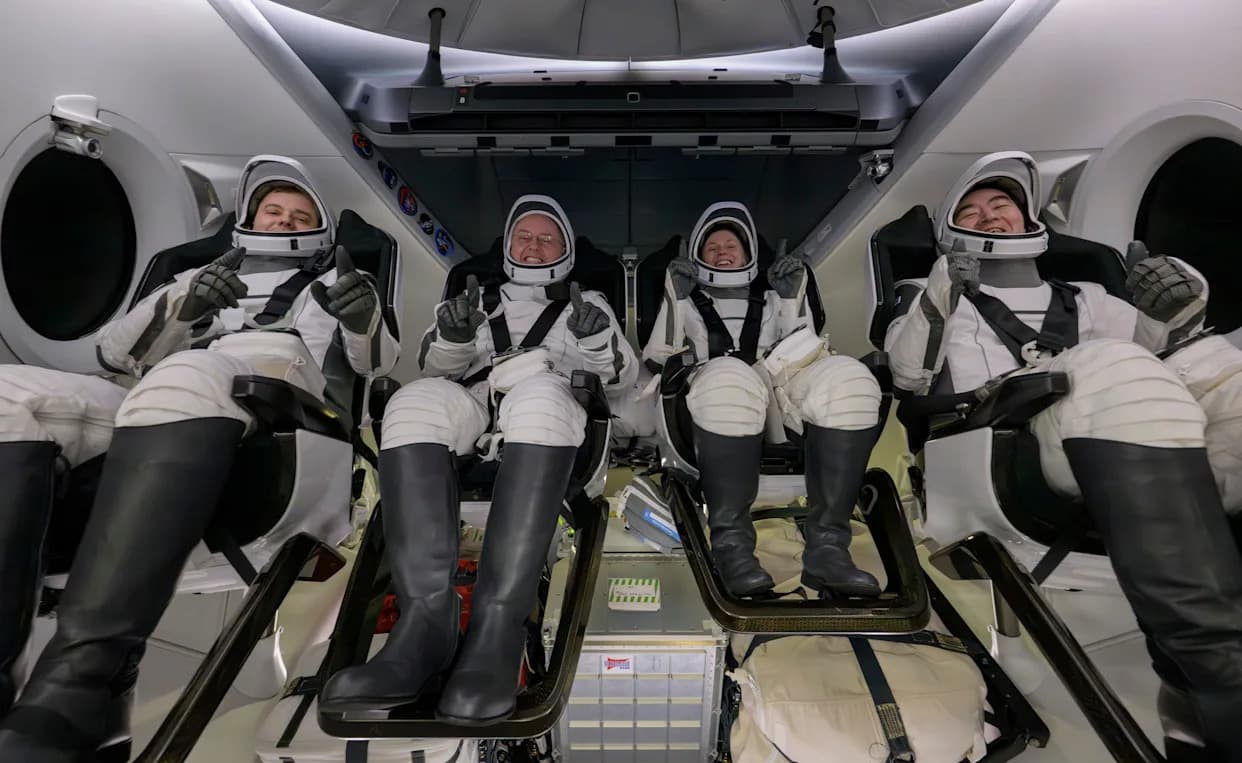
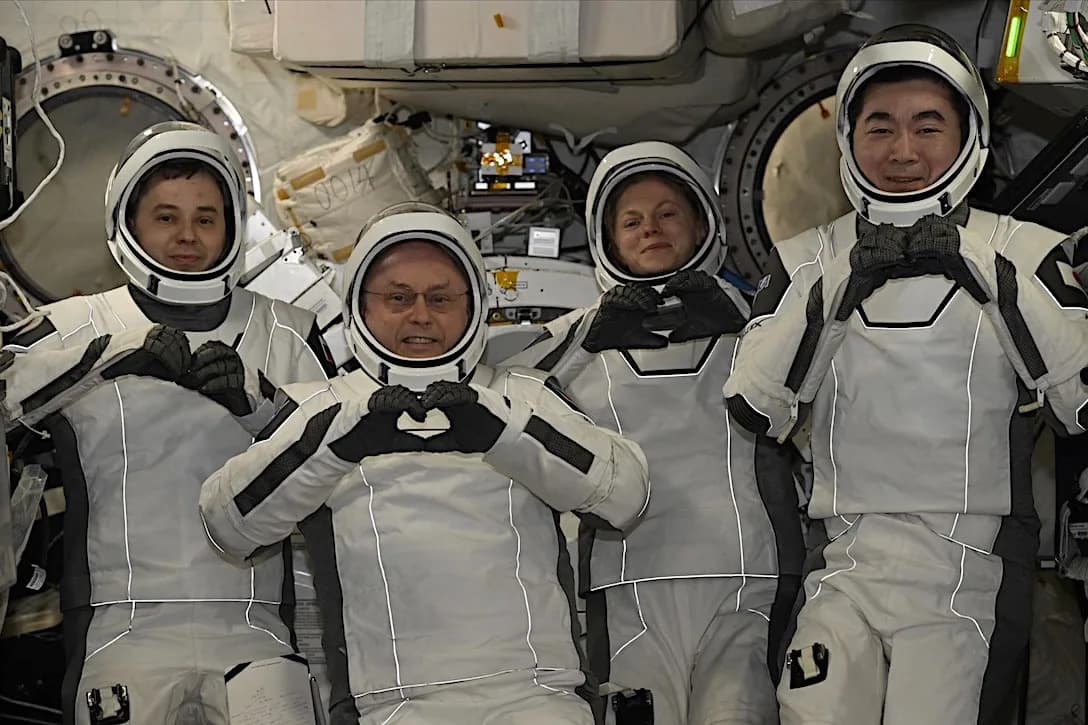
Four ISS crew members returned to Earth early after an unspecified medical concern triggered NASA’s first-ever medical evacuation in 25 years of continuous operations. Astronaut Mike Fincke said that a portable onboard ultrasound "came in super handy," offering the only public clinical clue. The crew was taken to Scripps Memorial Hospital in San Diego for overnight evaluation and were released; NASA has not disclosed identities or diagnosis. Officials say the response provides valuable experience for future deep-space missions like Artemis 2.
Onboard Ultrasound Provided Key Clue in NASA’s First ISS Medical Evacuation

A NASA astronaut has revealed a tantalizing clue about what went down during the first medical evacuation in the space station's history.
Four crew members aboard the International Space Station (ISS) were brought home weeks early after an unspecified medical concern prompted NASA’s first medical evacuation in the station’s 25 years of continuous occupation. NASA has withheld identifying details to protect the crew’s medical privacy.
The flight participants included NASA astronauts Mike Fincke and Zena Cardman, Japanese astronaut Kimiya Yui, and Russian cosmonaut Oleg Platonov. Officials have not disclosed which astronaut required evacuation or the nature of the medical issue.
A practical diagnostic clue: At the crew’s first public appearance after their return, Mike Fincke said an onboard portable ultrasound "came in super handy" during the emergency. He noted the ISS lacks the larger diagnostic equipment available on Earth but praised the team’s readiness.
"We do try to make sure that everybody before we fly are really, really not prone to surprises," Fincke said. "But sometimes things happen and surprises happen, and the team was ready."
Kimiya Yui echoed the sentiment, calling the experience valuable for future human spaceflight: "We can handle any kind of difficult situation... This is actually very, very good experience for the future of human spaceflight."
What the ultrasound could — and can’t — tell us
Knowing an ultrasound was used narrows the possibilities only slightly because ultrasound is a versatile diagnostic tool. Onboard and in clinics, ultrasound can evaluate musculoskeletal injuries (muscles, joints and tendons), assess cardiac function (valves and clots), and screen or monitor other internal conditions. Musculoskeletal injuries are among the most common on the ISS — a 2020 report found exercise is a leading cause of onboard injuries — so a physical injury is possible, but cardiac or other causes cannot be ruled out publicly.
Post-landing care and privacy
After splashdown, the crew was helicoptered to Scripps Memorial Hospital in San Diego for a "planned overnight stay at a local medical facility for additional evaluation," and NASA said they were "released as expected." Before questions at the press briefing, Zena Cardman emphasized the crew would not identify the affected crewmember or discuss diagnostic details: "We are not going to be identifying the crew member or talking through the differential or any of the details of the medical situation."
Why this matters for future missions
Although details remain private, NASA and its partners view the evacuation as a real-world test of medical contingency procedures — an important rehearsal as the agency prepares for longer missions beyond low Earth orbit. Mike Fincke said the sequence of events "bodes well for future exploration" and expressed optimism about readiness for upcoming missions such as Artemis 2.
Bottom line: The only public clinical clue from the evacuation is that a portable ultrasound was used on board. NASA has not identified who was affected or released a diagnosis, citing medical privacy. The incident nonetheless provided important operational lessons for managing medical emergencies in space.
Help us improve.