A new study in Scientific Reports finds that even the largest Pleistocene kangaroos (~550 lb) had hind limbs structurally capable of supporting the tendons required for hopping. Researchers from the University of Manchester measured hind-limb bones and fourth-toe diameters across 63 species and used tendon-strength calculations to test feasibility. Although mechanical hopping was possible, thicker tendons in giant forms would have reduced elastic efficiency, so hopping was likely used in short bursts (for example, to escape predators) rather than as a sustained gait.
Giant Kangaroos Could Hop: New Study Rewrites How Pleistocene Macropods Moved
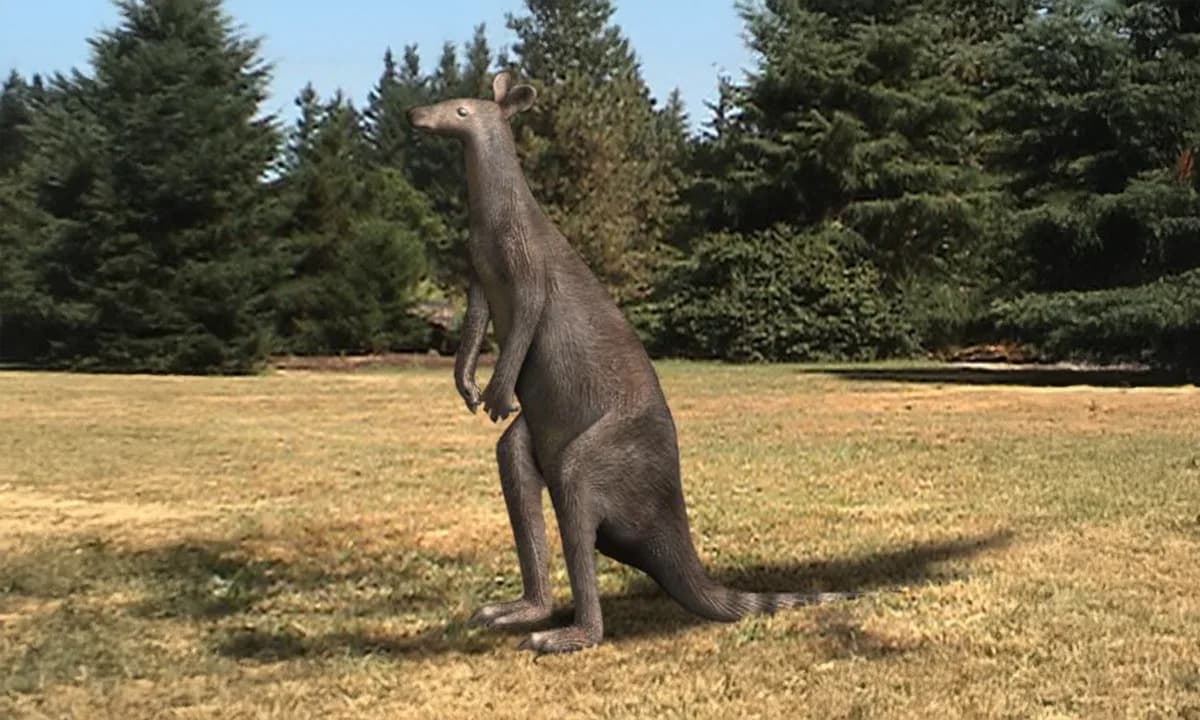
Lead image: Nobu Tamura / Wikimedia Commons(Protemnodon anak, Pleistocene of Australia. digital. Credit: Nobu Tamura / Wikimedia Commons.)
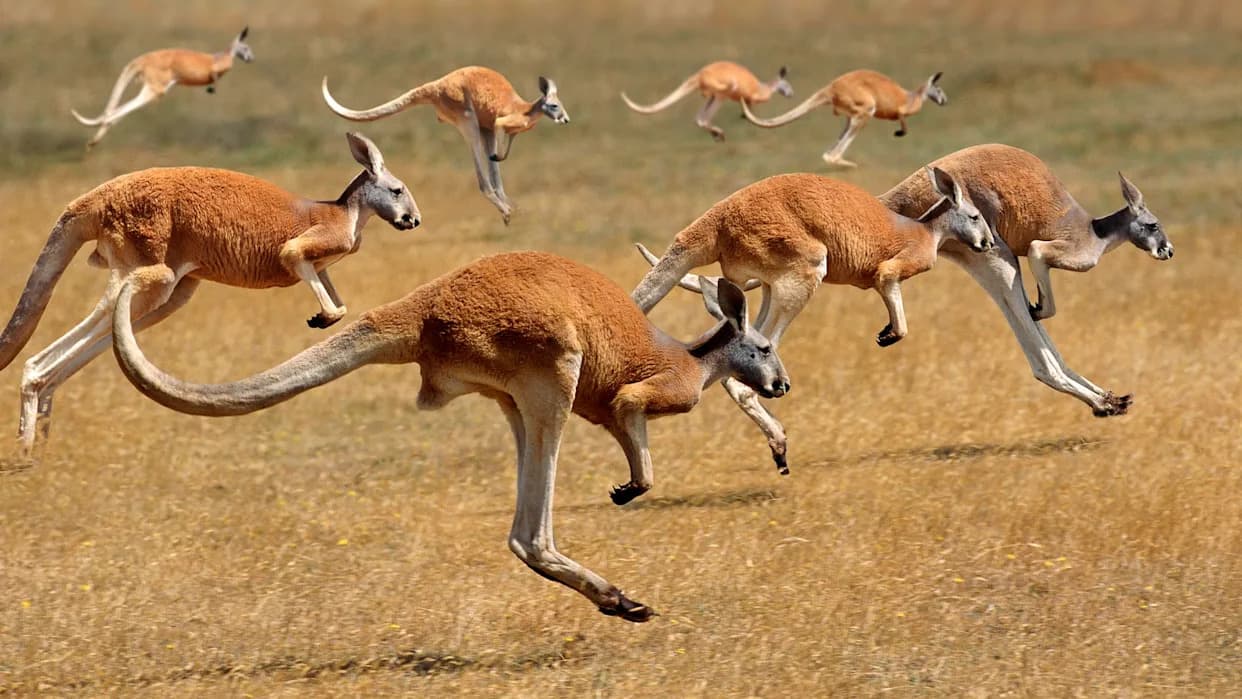
A new analysis overturns long-standing assumptions about how the largest ancient kangaroos moved. While modern kangaroos typically weigh up to about 200 pounds, some Pleistocene species reached roughly 550 pounds, prompting earlier suggestions that such giants were physically unable to hop. A study published in Scientific Reports finds the opposite: the hind limbs of these giant macropods were structurally capable of supporting the tendons and loads required for hopping.
What the Researchers Did
Lead author Megan Jones and colleagues at the University of Manchester examined hind-limb bones from 94 living and 40 fossil kangaroos and wallabies, covering 63 species in total. The fossil sample included major extinct Pleistocene lineages such as Protemnodon, which lived in Australia and New Guinea until about 40,000 years ago. For each specimen the team measured hind-limb bone lengths and the diameter of the fourth toe (a long toe associated with hopping), and used published estimates or skeletal proxies to infer body mass.
How They Tested Hopping Feasibility
Using those measurements, the researchers calculated the minimum cross-sectional size a tendon would need to resist the forces of hopping without rupturing, and then evaluated whether the heel and ankle bones could plausibly anchor tendons of that size. This approach focused on mechanical feasibility—whether bone and tendon geometry could withstand hopping loads—rather than on metabolic cost.
Key Findings
The study concluded that the long metatarsals and stout ankle elements of all sampled kangaroos, including the largest Pleistocene forms (~550 lb), were strong enough to accommodate the tendons required for hopping. This challenges earlier claims that hopping became impossible above roughly 350 pounds.
"While hopping may not have been their primary mode of locomotion," the authors wrote, "our findings suggest that it may have formed part of a broader locomotor repertoire, for example for short bursts of speed."
However, the authors emphasize an important distinction between mechanical possibility and energetic efficiency. Hopping relies on elastic energy storage in tendons; thicker tendons in very large animals are generally less elastic and therefore store and return less energy. The implication is that giant kangaroos could hop, but sustained hopping would likely have been energetically costly. Instead, intermittent or short-burst hopping—for example, to escape predators—was probably the most practical use of this ability.
Ecological Context
Short, powerful hops would have been useful against Pleistocene predators such as the so-called "marsupial lion" Thylacoleo carnifex, whose tooth marks have been found on giant kangaroo bones, and large raptors like the wedge‑tailed eagle (Aquila audax), which may also have preyed on macropods. The new findings broaden our understanding of how extinct megafauna moved and interacted with predators and environments in ancient Australia.
Implications: The study prompts a re-evaluation of locomotor behavior in extinct giant kangaroos, suggesting a flexible locomotor repertoire that combined walking, bounding, and occasional hopping depending on context and energy costs.
Help us improve.