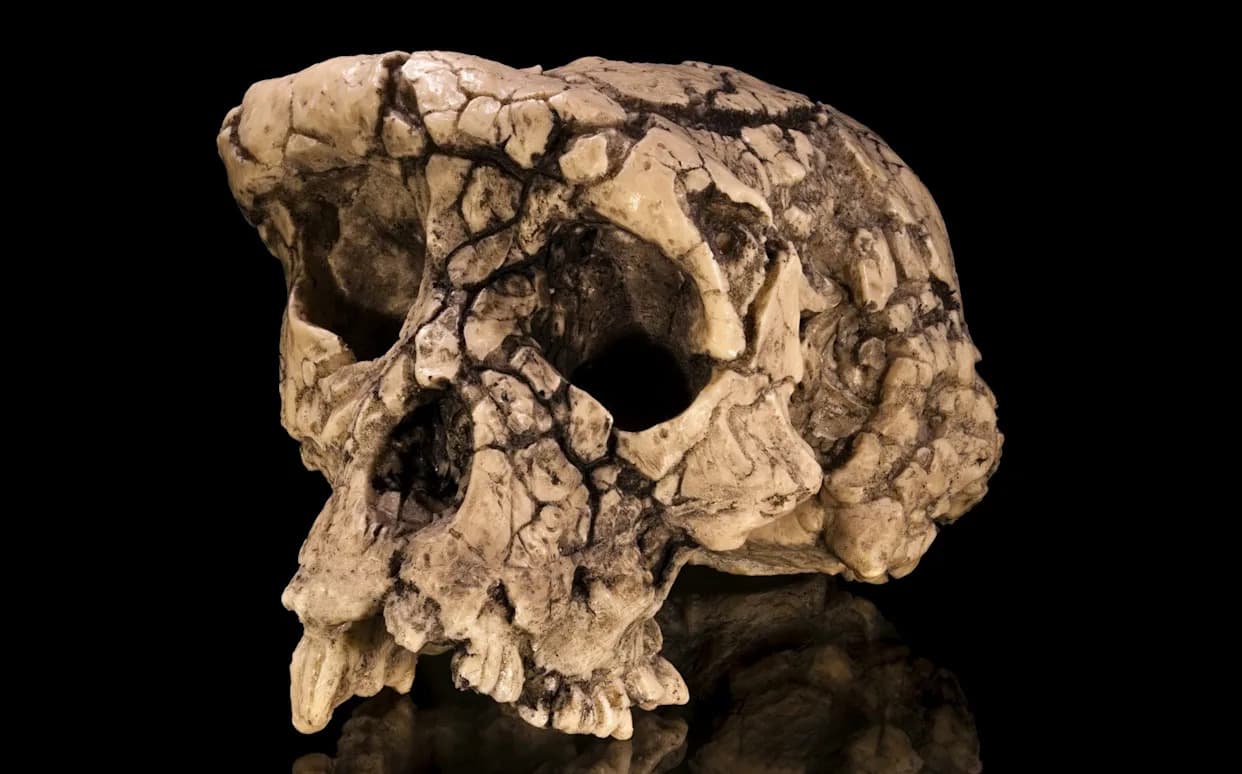
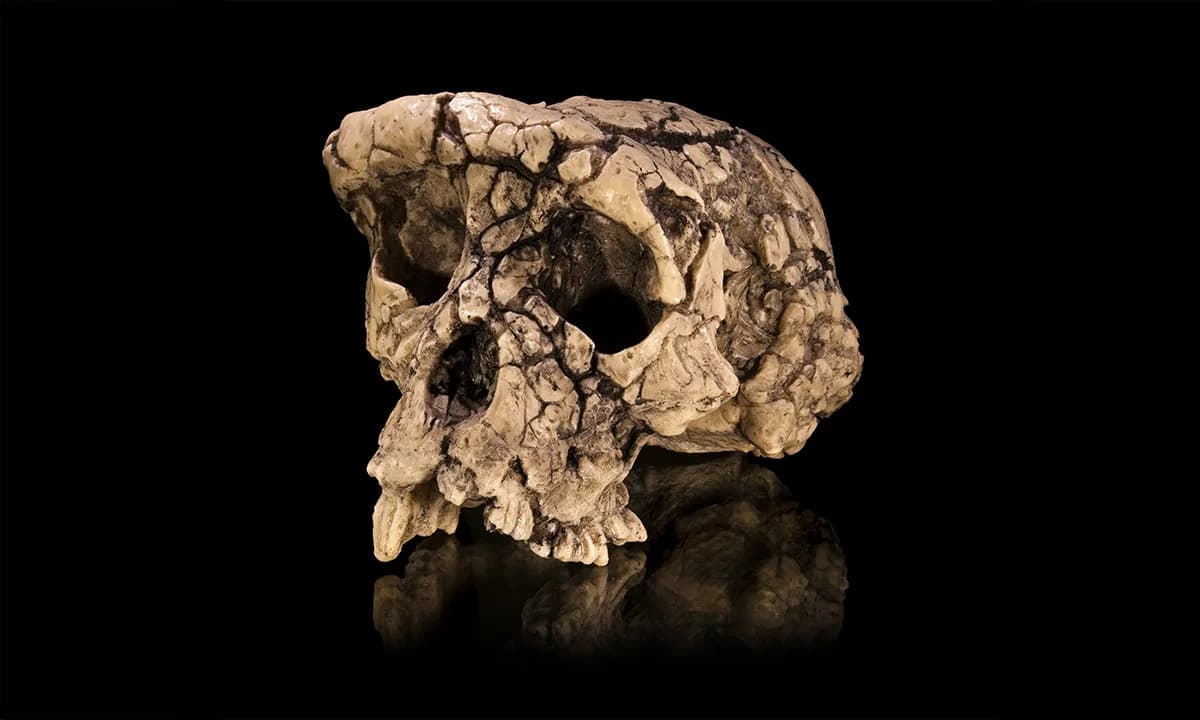
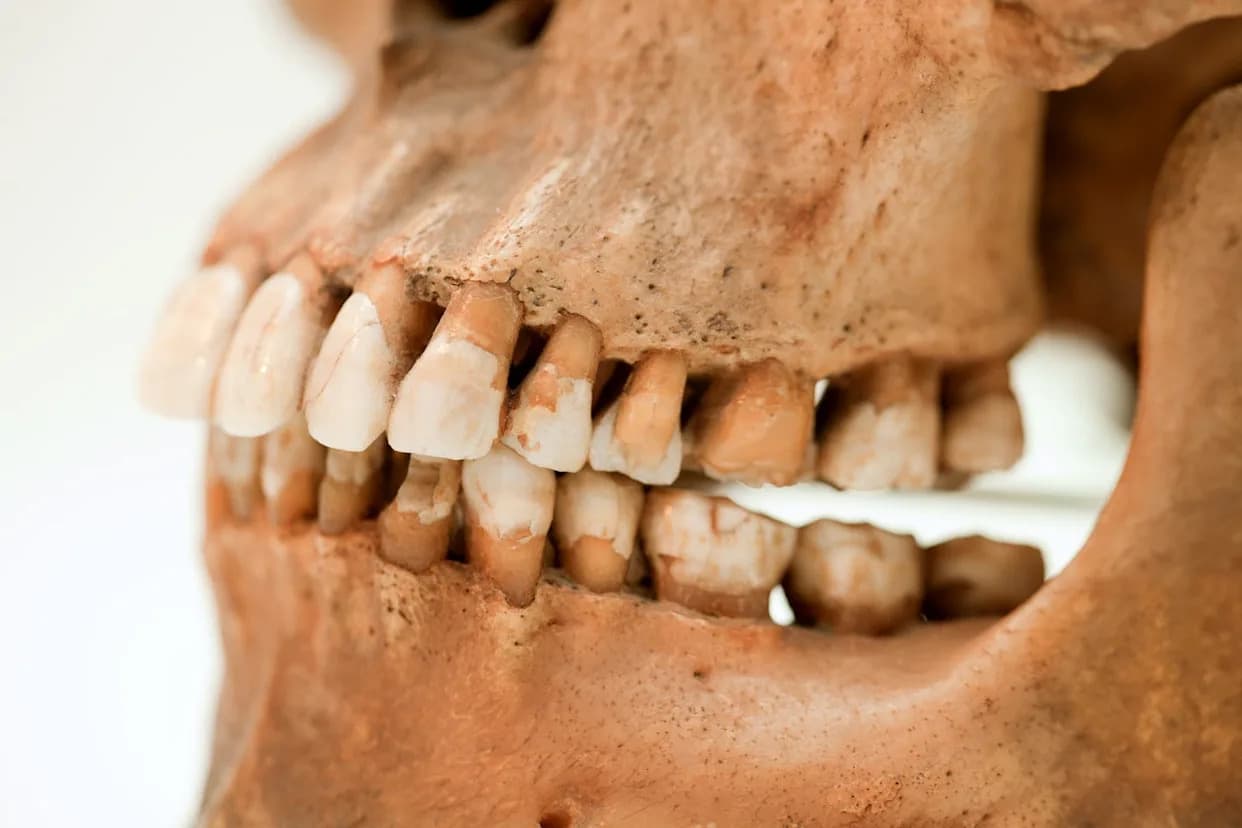
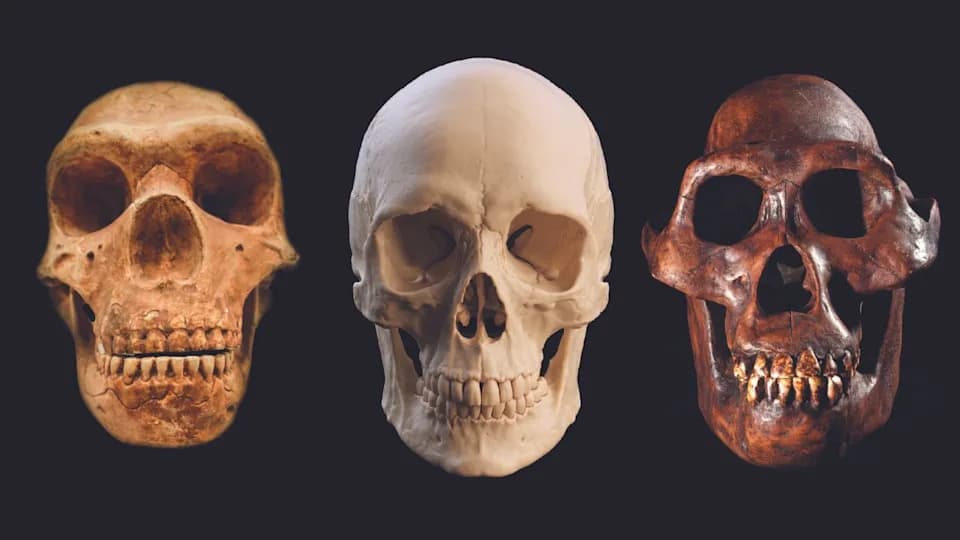
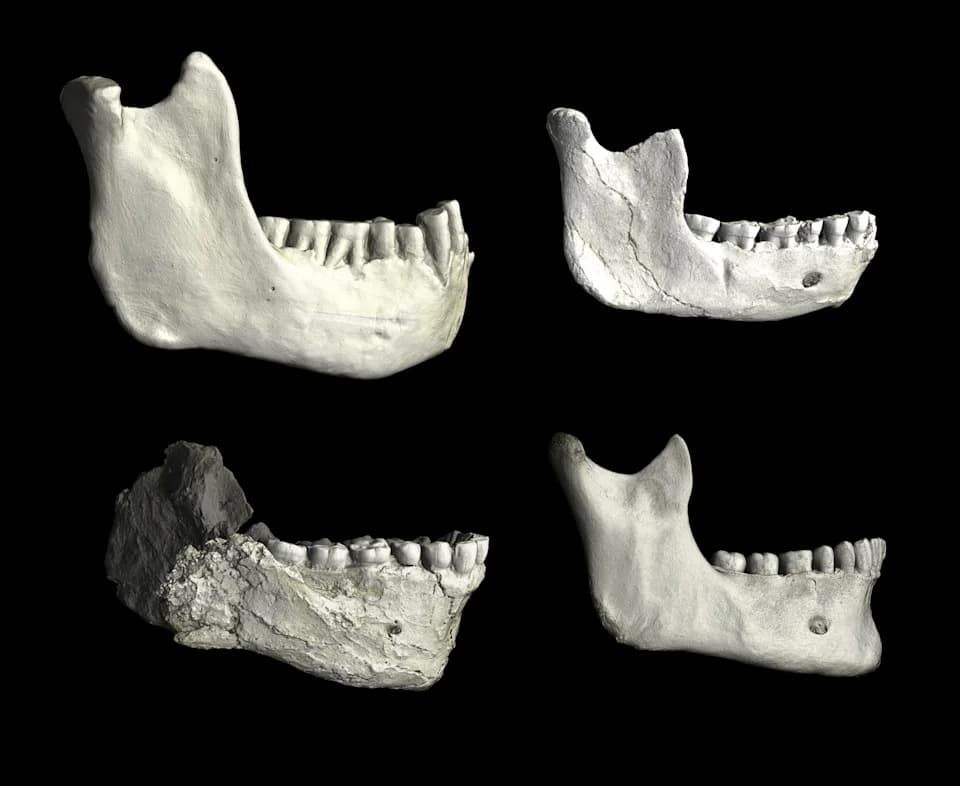
New analysis of the nearly complete StW 573 skull (“Little Foot”) suggests its anatomy does not fully match the fragmentary type specimen for Australopithecus prometheus (MLD 1) or known Australopithecus africanus specimens. Jesse Martin’s re‑examination—accounting for taphonomic distortion—noted differences at the asterion, sagittal crest, occipital protuberance, and nuchal plane. Because MLD 1 is incomplete, Little Foot cannot be confidently assigned to A. prometheus; the specimen may represent a distinct hominin, though Martin defers any formal naming to the original excavation team.
Rethinking 'Little Foot': New Analysis Suggests 3‑Million‑Year‑Old Skull May Not Match Known Australopithecus Species
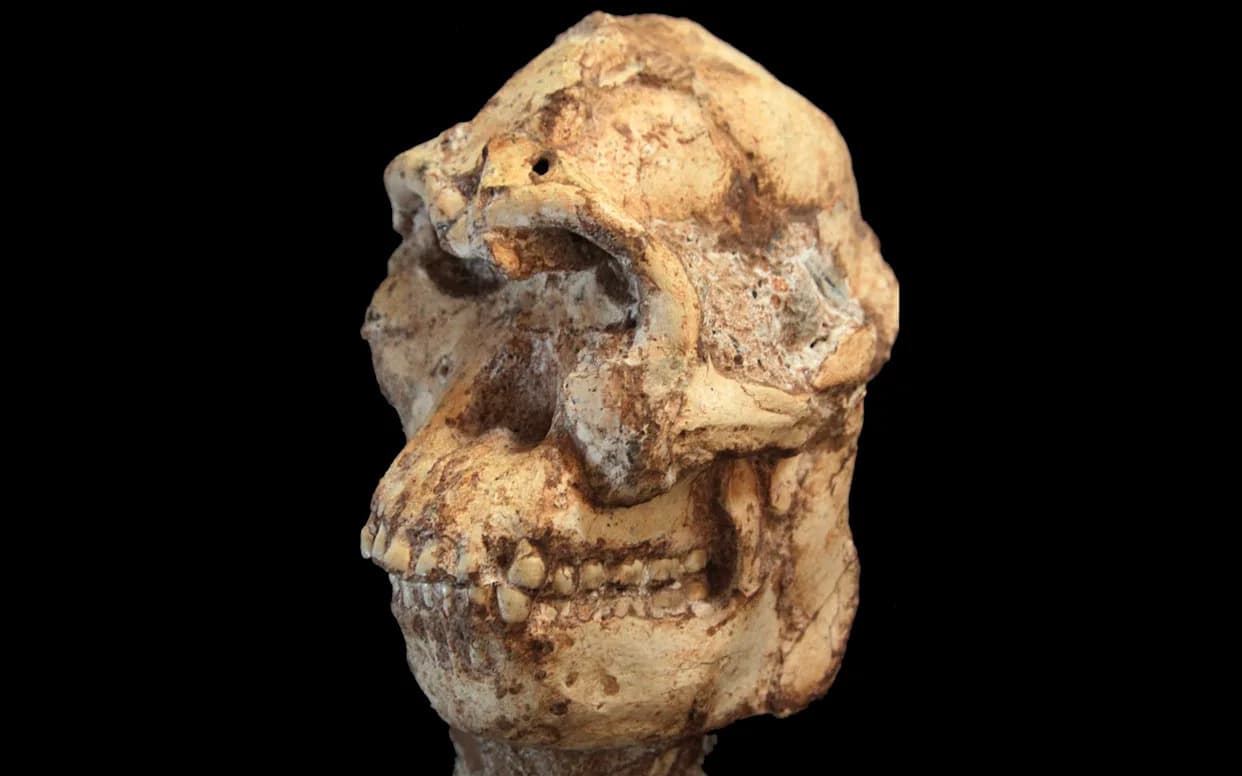
This Skull Doesn’t Match Any Known Human AncestorWits University
The nearly complete hominin skull StW 573—better known as “Little Foot”—has long been a focal point in debates about early human evolution. First recovered from South Africa’s Sterkfontein Caves in 1998, Little Foot was widely assigned to Australopithecus prometheus. A fresh reanalysis, however, finds its anatomy does not cleanly match the fragmentary type specimen for A. prometheus or typical Australopithecus africanus specimens, raising the possibility that it represents a different, previously unrecognized hominin.
Background
Paleoanthropologist Ronald Clarke and his team discovered Little Foot (StW 573) in 1998. The specimen has been dated to between about 3 million and 1.95 million years old and—because of perceived similarities—was assigned to Australopithecus prometheus. That assignment has been controversial: some researchers argued the skull might instead fall within the variation of A. africanus, another species documented in Sterkfontein and elsewhere in South Africa.
What the New Analysis Shows
Archaeologist Jesse Martin (La Trobe University) re-examined StW 573 and compared it both to the MLD 1 specimen (the fragmentary type material for A. prometheus) and to multiple A. africanus specimens. Crucially, Martin’s team explicitly accounted for taphonomic deformation—the physical and chemical changes that can alter bones between death and fossilization—before assessing morphological similarities and differences.
The reanalysis highlights several anatomical distinctions that make Little Foot difficult to place with confidence in either A. prometheus or A. africanus. Notable differences include:
- a distinct notch at the asterion (the meeting point of three cranial sutures),
- a slightly different placement and morphology of the sagittal crest,
- a pronounced occipital protuberance projecting from the nape of the neck, and
- a longer, more convex nuchal plane on the occipital bone.
Limits of the Type Specimen
MLD 1—the type specimen for A. prometheus—is an occipito‑parietal fragment that preserves only a few diagnostic features (notably limited information on cranial capacity, a sagittal crest, and some parietal bone morphology). Because MLD 1 is so incomplete, earlier attributions of Little Foot to A. prometheus relied on partial and potentially ambiguous similarities.
Implications
Martin concludes that Little Foot does not show sufficient morphological overlap with available A. prometheus material to justify a confident assignment to that species. The alternative—that StW 573 belongs to A. africanus—also seems unlikely based on the comparisons. Together, these findings leave open the possibility that Little Foot represents a distinct hominin taxon, which would have implications for how we understand hominin diversity in southern Africa during the Pliocene.
“Logically, to be considered the same species, MLD 1 and StW 573 should share a unique suite of primitive and derived characters that distinguish them from all other known hominin taxa,” Martin writes. “Problematically, the type specimen of A. prometheus (MLD 1) is an occipito‑parietal fragment that preserves only limited diagnostic morphology.”
Next Steps
Martin and colleagues stopped short of formally naming a new species. As he notes, it is more appropriate that the research team who excavated and studied Little Foot for decades lead any formal taxonomic revision. Future work to resolve the issue should include additional comparative studies, high‑resolution CT imaging, and more thorough assessments of deformation and intraspecies variation across southern African hominins.
Why It Matters
Whether Little Foot is reassigned, recognized as a new species, or kept within an existing taxon, clarifying its identity will refine timelines and models of hominin evolution in Africa. A different species assignment could increase recognized diversity among early hominins and affect interpretations of locomotion, diet, and brain evolution in the Pliocene epoch.
Help us improve.