New research in PeerJ finds that Tyrannosaurus rex often continued growing into its mid-to-late 30s. Examination of 17 leg bones revealed faint annual growth lines visible under cross-polarized light that were missed previously. The revised growth curve indicates many T. rex reached at least 8.8 tons and stopped substantial growth between about 35 and 40 years, though some faint rings may reflect slowdowns rather than full stops.
T. rex Kept Growing Into Its Late 30s, Study of 17 Leg Bones Suggests
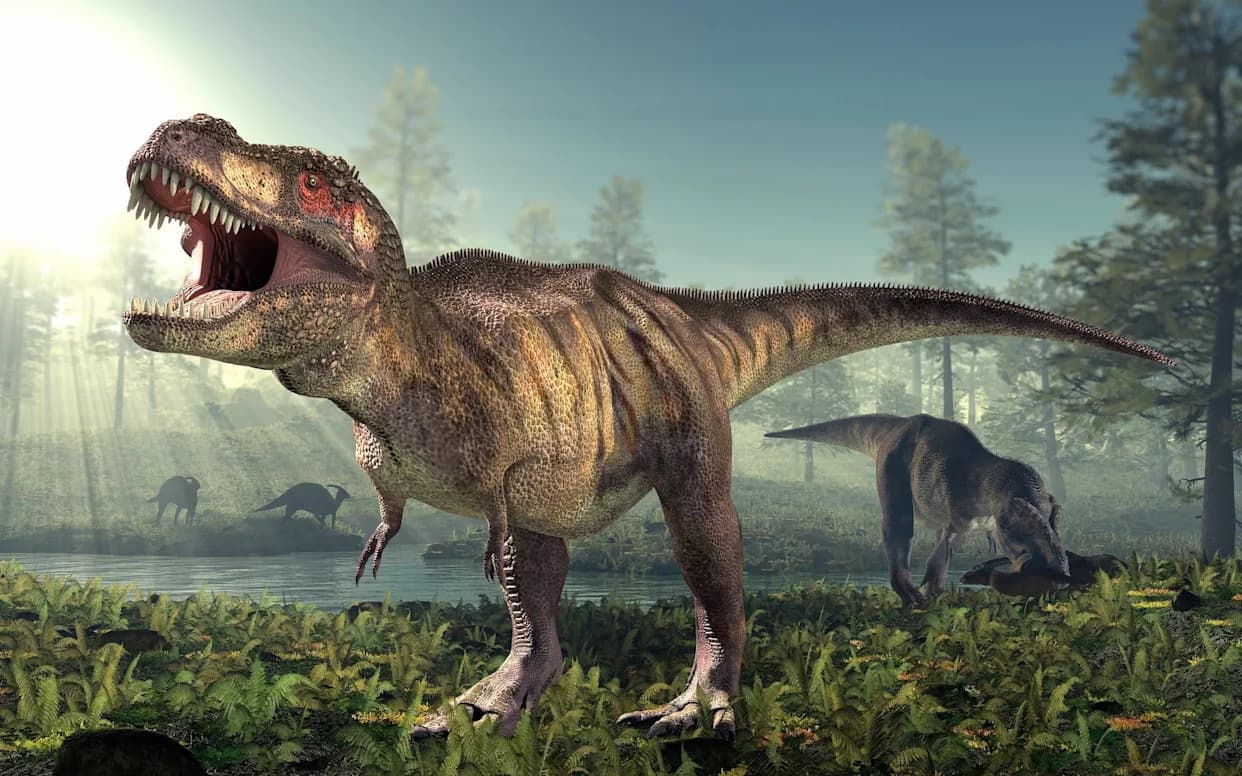
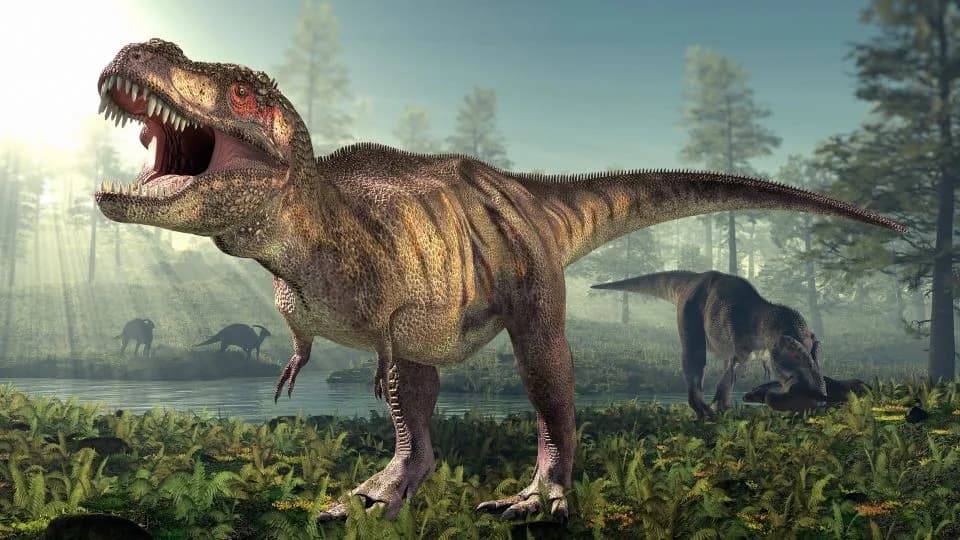
Artist’s rendering of a Tyrannosaurus rex.
New analysis of Tyrannosaurus rex leg bones indicates the iconic predator continued growing well into its mid-to-late 30s, later than previously believed. The results, based on 17 specimens and published in PeerJ, show faint growth lines that were missed in earlier studies and that push the age at which many T. rex stopped substantial growth to roughly 35–40 years.
What the Researchers Found
Paleontologists traditionally estimate dinosaur ages by counting concentric growth rings in bone—similar to counting tree rings. Holly Woodward and colleagues re-examined T. rex femora and tibiae and discovered that some annual lines are much fainter and become visible only under cross-polarized light. Those subtle markers add years to many animals' life histories.
By combining specimens that represent different life stages and "nesting" the partial growth records mathematically, the team reconstructed a more complete growth curve for T. rex. Their analysis suggests many individuals reached at least 8.8 tons and continued substantial growth until about 35–40 years of age—older than prior estimates that placed full size around 20–25 years and lifespan near 30 years.
How This Changes Our Picture Of T. rex
The faint rings may indicate brief slowdowns in growth rather than absolute, permanent stops, but either interpretation lengthens the species' growth trajectory. Earlier work, including a widely cited 2004 study and a 2024 paper describing "explosive" teenage growth, emphasized a rapid adolescent growth spurt; the new findings suggest that growth continued more gradually for a longer period in many individuals.
"It took the prince a lot longer to grow into the king," says Steve Brusatte of the University of Edinburgh, who was not involved in the study.
The authors note important caveats: bone remodeling can erase early growth records, and fossils of juvenile Tyrannosaurus remain rare. More juvenile specimens and wider sampling will help refine the timeline. Still, many specialists call the new growth curve a major advance for understanding tyrannosaur life history.
Editor’s Note (1/14/26): This article was edited after posting to correct the description of growth rings that are plainly visible.
Help us improve.