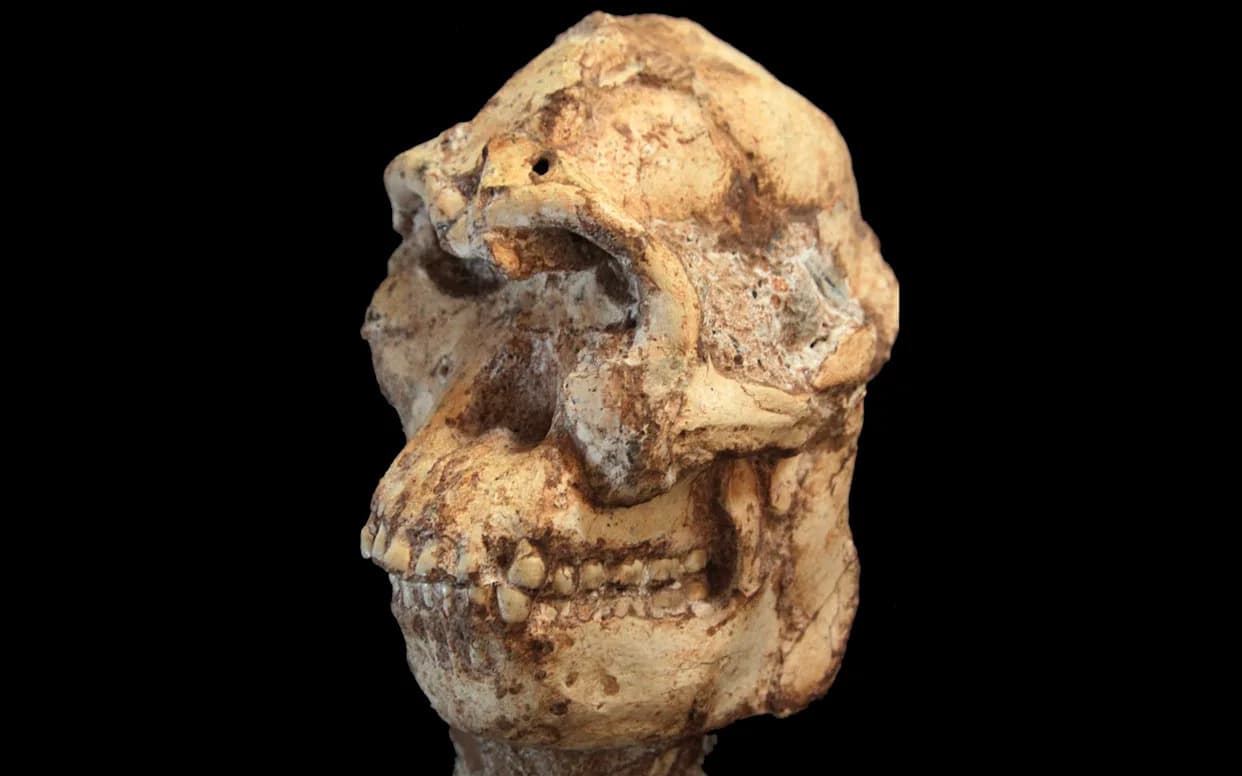
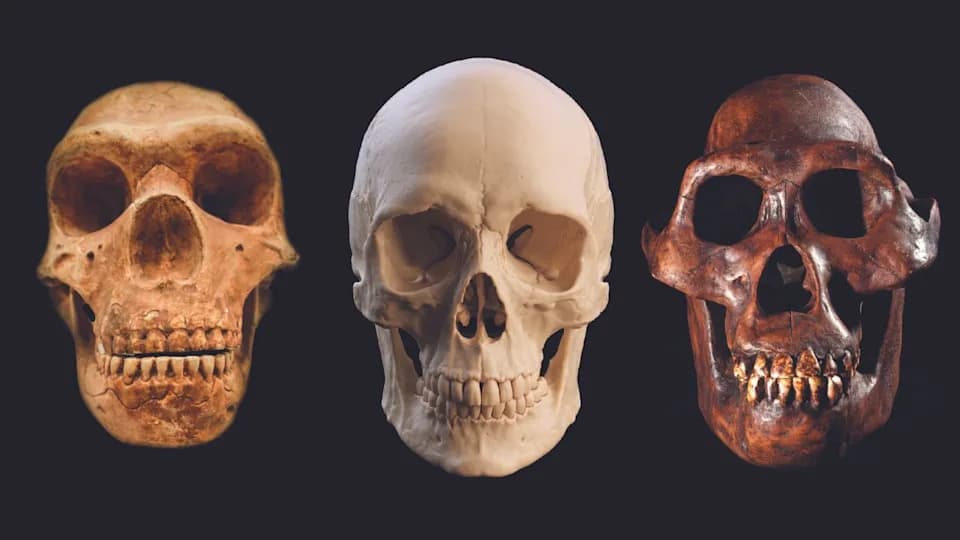
New research using 3D scans and geometric morphometrics finds femoral features in Sahelanthropus tchadensis consistent with bipedal locomotion, suggesting this seven-million-year-old ape may be one of the earliest members of the human lineage. The evidence includes a pronounced femoral tubercle, femoral torsion, and gluteal muscle anatomy similar to early hominins. While the findings push back the emergence of upright walking, the fossil record remains limited and debate continues among experts.
Seven-Million-Year-Old Ape May Be Earliest Bipedal Ancestor, Study Suggests
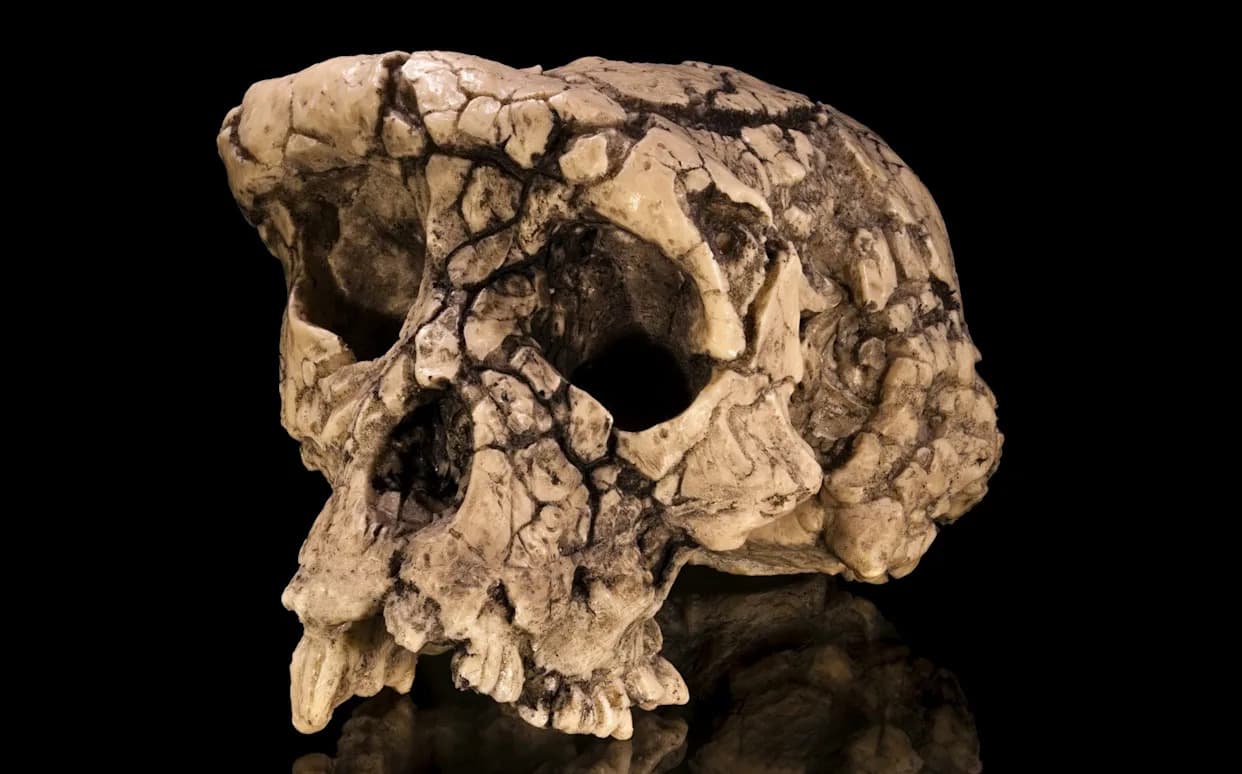
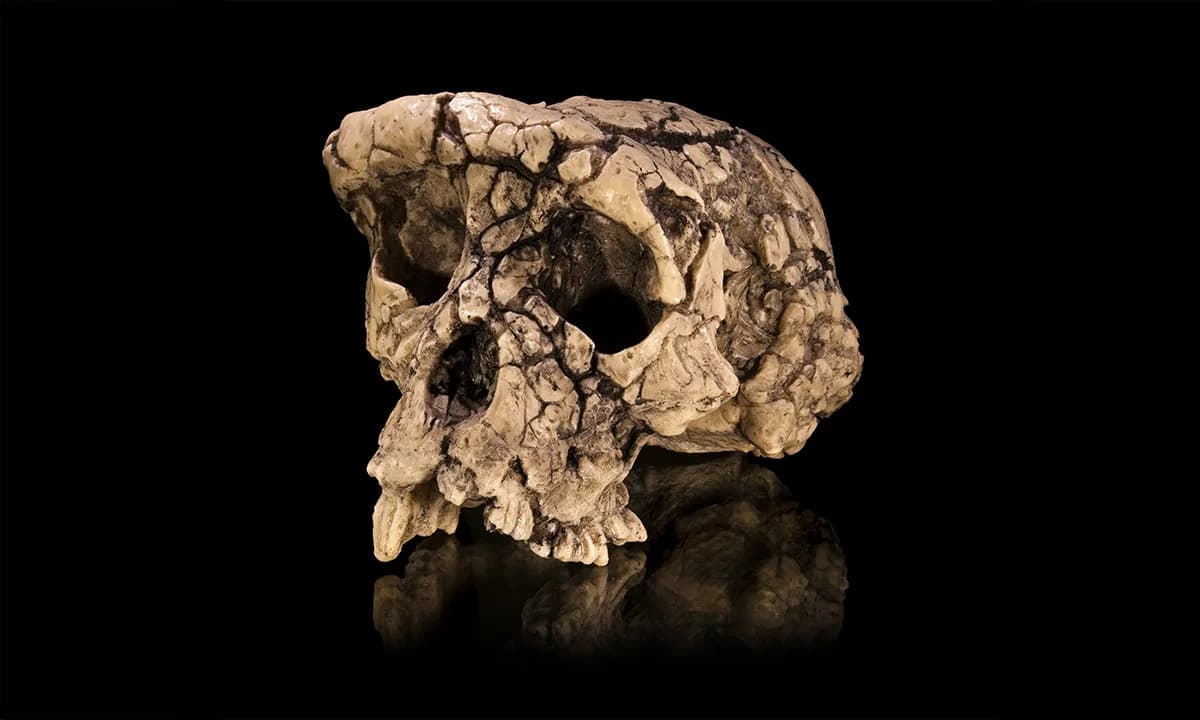
Cast of the Sahelanthropus tchadensis holotype cranium - Didier Descouens
New analyses of fossils attributed to Sahelanthropus tchadensis — a seven-million-year-old ape from Chad — suggest it may have been capable of walking on two legs and could represent one of the earliest members of the human lineage. The research, led by anthropologists at New York University and published in Science Advances, combines 3D scans and geometric morphometric analysis of femoral remains with comparisons to other primates and early hominins.
What the Study Found
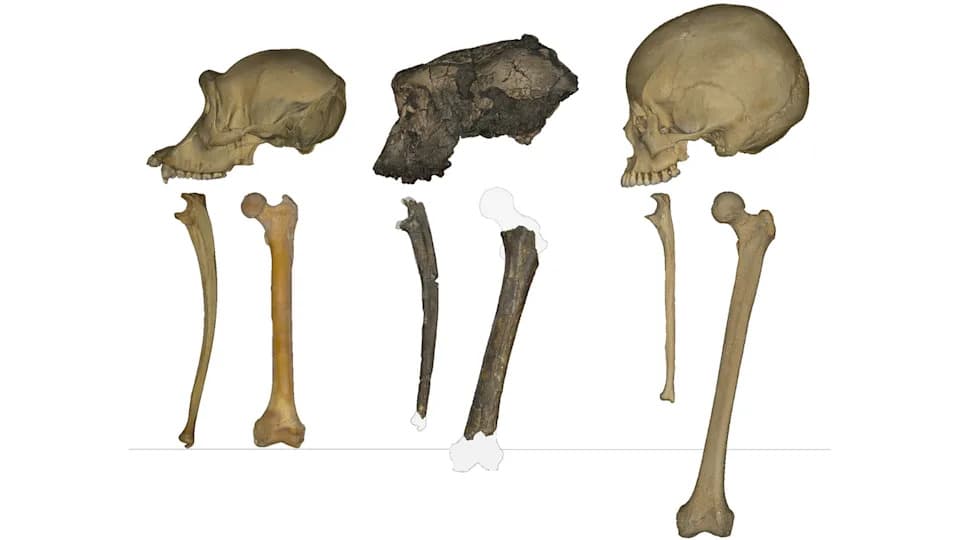
The team identified three femoral features that support bipedal locomotion: a pronounced femoral tubercle (the attachment site for the iliofemoral ligament), natural torsion in the femur that helps orient the leg forward for efficient stride, and gluteal muscle morphology consistent with early hominins that stabilizes the pelvis during upright walking. They also report relatively long femora compared with forearm bones, a limb proportion more typical of hominins than of arboreal apes.
Methods
Researchers used 3D geometric morphometrics, a technique that maps coordinate points on fossil surfaces and quantitatively compares shape and orientation with other fossil and modern specimens. The analysis aimed to test competing interpretations of Sahelanthropus locomotion, including earlier claims based on skull orientation and later studies emphasizing femoral curvature.
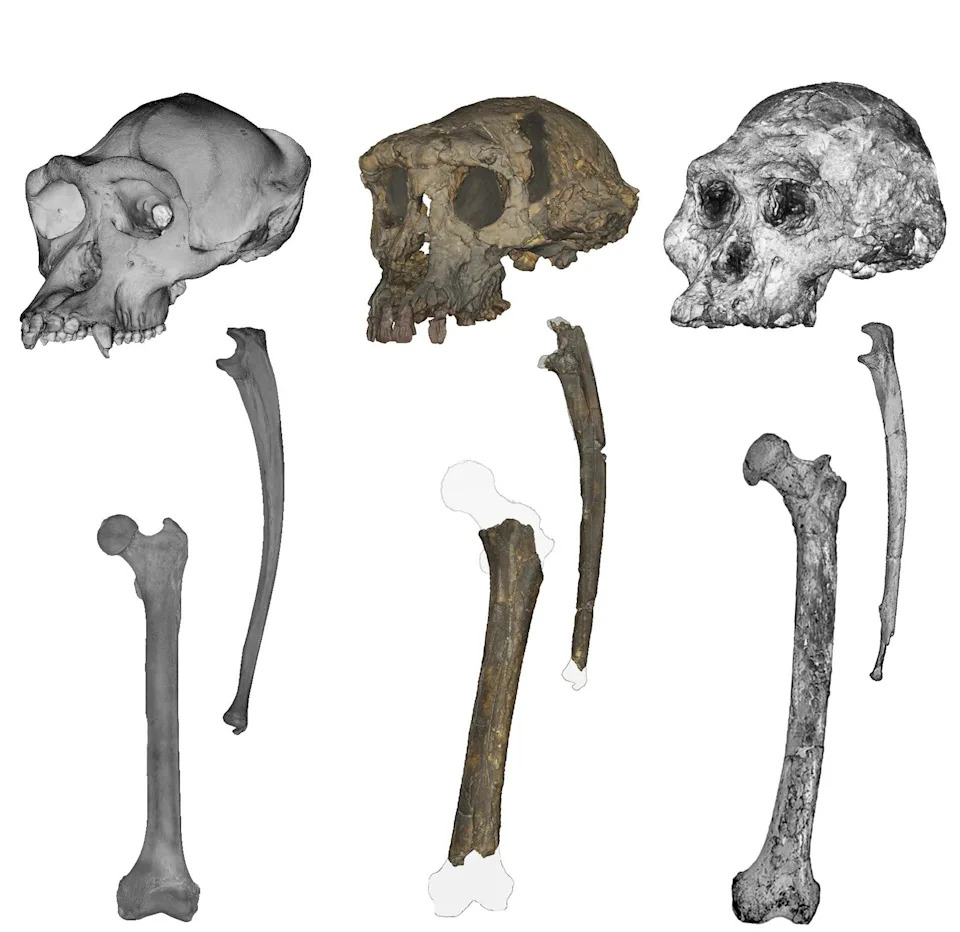
Crania, ulnae, and femora of (left to right): a chimpanzee, Sahelanthropus, and Australopithecus - Scott Williams/NYU and Jason Heaton/University of Alabama Birmingham
Context and Controversy
Sahelanthropus, nicknamed Toumai (meaning "hope of life" in Dazaga), was recovered from Chad's Djurab Desert and was initially described in 2002. Its skull shows a relatively flat face and small canine teeth—traits that align it more closely with the human lineage than with modern chimpanzees. Earlier arguments for bipedality focused on the centered position of the foramen magnum (the skull opening for the spinal cord). Critics pointed out that the femoral curvature and other features could indicate retained quadrupedal or knuckle-walking behavior.
Scott Williams, Associate Professor of Anthropology at New York University and lead author, said: "Sahelanthropus tchadensis was essentially a bipedal ape with a chimpanzee-sized brain that likely spent time in trees but was adapted to using bipedal posture and movement on the ground."
Implications
If these femoral traits are accepted as indicators of habitual or at least facultative bipedalism, Sahelanthropus would push back the appearance of upright walking in the human lineage by roughly two million years relative to Ardipithecus. That said, the study does not close the debate: the fossil record is fragmentary, functional interpretations vary among researchers, and additional specimens will be needed to confirm how representative these femora are for the species as a whole.
Publication: The study is published in Science Advances. The researchers emphasize that their findings strengthen the case for early bipedal adaptations but acknowledge ongoing scientific discussion.
Help us improve.