Researchers at the University of Vienna report that sea anemones use BMP shuttling, with Chordin acting as a shuttle, to create graded signals that pattern their bodies. This mechanism, previously associated with bilaterians, suggests the BMP–Chordin system could be ancestral and may have evolved before the Cnidaria–Bilateria split some 600–700 million years ago. The study does not rule out independent evolution, but it broadens our understanding of how ancient body‑patterning mechanisms may be shared across distant animal groups.
Sea Anemones Use an Ancient BMP–Chordin Blueprint to Pattern Their Bodies

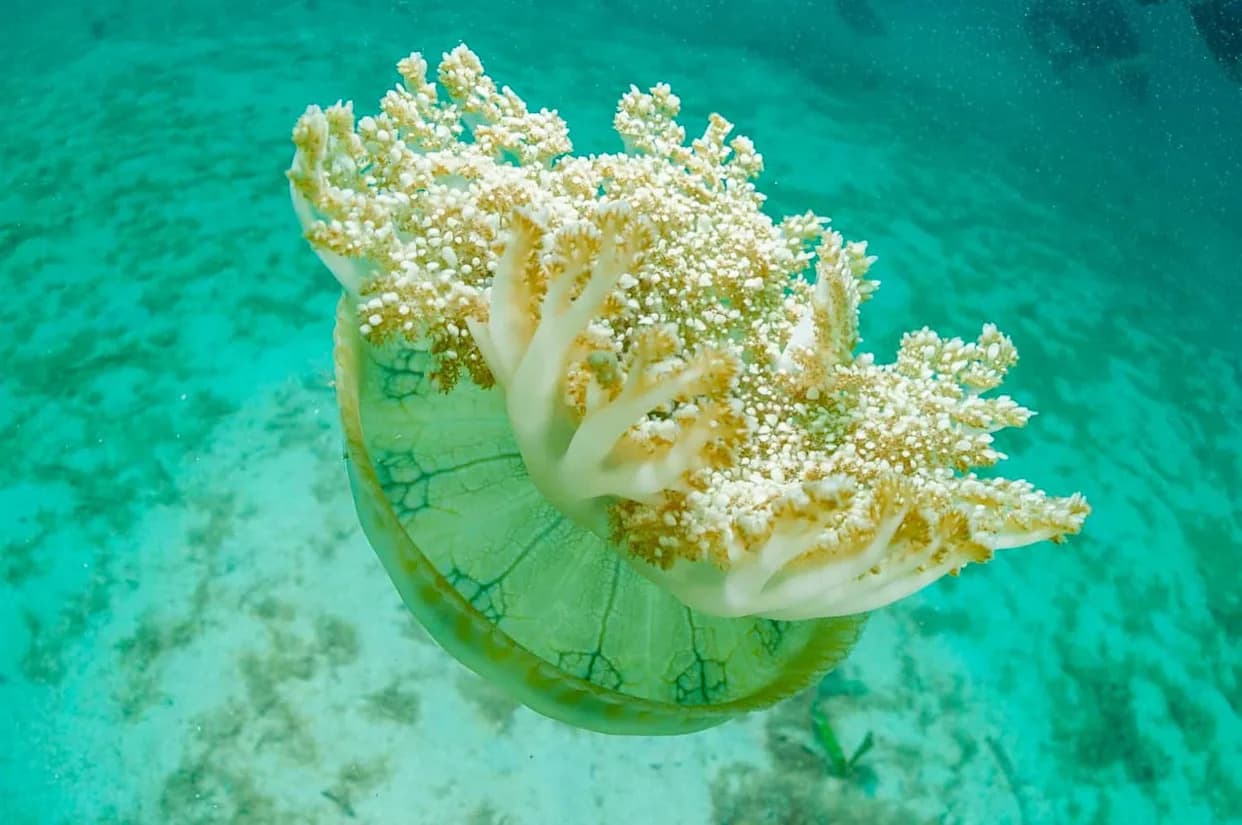
Our Body’s Blueprint Can Be Found in... Anemones?gremlin - Getty Images
Researchers have discovered that sea anemones, members of the Cnidarian phylum, use a body‑patterning mechanism long associated with bilaterally symmetric animals. The finding blurs the line between radial and bilateral development and suggests that the molecular logic for laying out a body axis may be far older and more conserved than previously thought.
What the researchers found
A team at the University of Vienna reported in Science Advances that sea anemones employ bone morphogenetic protein (BMP) shuttling to establish positional information during development. In many bilaterians, BMP molecules act as signals whose concentrations are shaped by inhibitors such as Chordin. Chordin can also act as a shuttle, moving BMPs and creating graded concentration fields that tell embryonic cells what tissues to form.
The Vienna group found that Chordin in sea anemones likewise functions as a BMP shuttle, producing graded BMP signals that pattern the animal's body axis in ways that resemble bilaterian development. This parallels examples in flies and frogs, even though not all bilaterians depend on Chordin-mediated shuttling.
How BMP gradients work
BMP concentration gradients provide positional cues: low BMP levels are associated with central nervous system precursors in many bilaterians, intermediate levels with mesodermal or organ precursors, and higher levels with outer body coverings. By shaping these gradients, Chordin and related inhibitors help convert molecular signals into a coordinated body plan.
Why this matters
Because Cnidaria and Bilateria diverged very early in animal evolution—likely around 600 to 700 million years ago—the discovery raises the possibility that BMP–Chordin shuttling predates that split and therefore represents an ancestral patterning mechanism. Alternatively, similar solutions could have evolved independently in distant lineages; the study does not rule out convergent evolution.
Not all bilateria use Chordin-mediated BMP shuttling; frogs do while some fish do not. Still, shuttling appears repeatedly across distant animals, making it a strong candidate for an ancestral patterning mechanism — David Mörsdorf, lead author
We cannot entirely exclude independent evolution of bilateral plans, but if the last common ancestor of Cnidaria and Bilateria was bilaterally symmetric, it likely used Chordin to shuttle BMPs and form a back-to-belly axis — Grigory Genikhovich, senior author
Open questions
The study expands our view of how ancient and conserved the molecular logic of body patterning might be, but it also raises new questions: exactly how conserved are the downstream responses to BMP gradients across phyla, which ancestral genes were present in the earliest animals, and whether shifts in the mechanism contributed to later anatomical diversity.
The results were published in Science Advances by the University of Vienna team, and they invite renewed study of early animal evolution and the developmental mechanisms that shaped it.
Help us improve.