On Dec. 16, 2025, the Trump administration announced plans to dismantle the National Center for Atmospheric Research (NCAR), prompting alarm from scientists and industry. NCAR, created by the NSF in 1960, produces integrated models used for aviation safety, hurricane forecasting, flood monitoring, wildfire behavior and space-weather warnings. Experts warn that breaking up the center could weaken life-saving early warnings and economic resilience—its tools save aviation roughly $27 million a year, reduce hurricane-track errors by up to 30%, and support the National Water Model for 2.7 million stream locations.
Planned Dismantling of NCAR Could Weaken U.S. Early-Warning Systems and Threaten Public Safety

A view of the National Center for Atmospheric Research in Boulder, Colorado. . | Credit: Sandra Baker/Alamy
On Dec. 16, 2025, the Trump administration announced plans to dismantle the National Center for Atmospheric Research (NCAR), one of the world's foremost weather and climate research institutions. Russell Vought, director of the White House Office of Management and Budget, told USA Today that NCAR is "one of the largest sources of climate alarmism in the country." The announcement has prompted urgent concern from NCAR leaders, scientific partners and industry stakeholders about risks to public safety, economic resilience and national infrastructure.
What NCAR Does
Founded by the National Science Foundation (NSF) in 1960, NCAR converts vast streams of observational data—from satellites, aircraft and ground sensors—into advanced models and forecasts. Those products underpin operational warnings and decisions across aviation, emergency management, utilities and private weather firms.
Key Capabilities
- Aviation Safety: NCAR research contributes to safer air travel. Experts note there has not been a commercial airline crash caused by sudden, sharp wind changes in more than 25 years.
- Hurricane Forecasting: GPS dropsondes developed and used in NCAR-affiliated programs reduced hurricane-track forecast errors by up to 30%.
- Hydrology: NCAR's WRF-Hydro system powers the National Water Model (NWM), which monitors flood risk for more than 2.7 million stream locations.
- Wildfire and Air Quality: The Wildland Fire model simulates how fires create local weather; the FINN model tracks toxic smoke transport for health and emergency planning.
- Space Weather: NCAR's High Altitude Observatory (HAO) forecasts geomagnetic storms and other space-weather events that can disrupt power grids, GPS and communications.
Potential Impacts of Dismantling
NCAR leaders and research partners warn that breaking apart the center or transferring stewardship of its projects could erode integrated modeling capabilities that save lives and money. Holly Gilbert, NCAR's interim deputy director, told Live Science:
"The research we do here directly applies to protecting the public."
Economic and operational impacts cited by experts include:
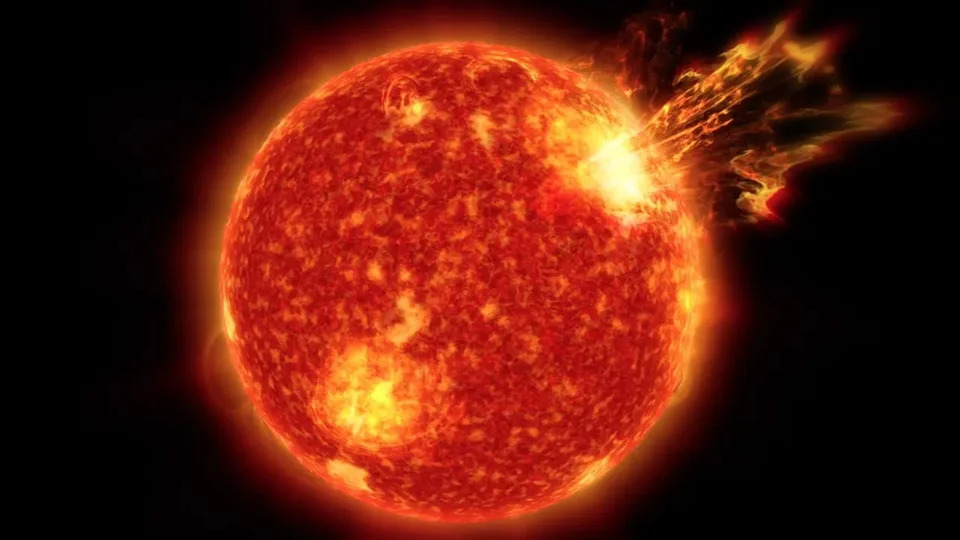
NCAR's High Altitude Observatory captures data on the sun's behavior, which can help us predict space weather and geomagnetic storms and protect infrastructure from their effects. | Credit: NASA's Goddard Space Flight Center/Genna Duberstein
- Estimated savings to the national aviation system of about $27 million annually from models and tools NCAR provides.
- Forecast improvements from dropsondes and related systems that economists estimate can save up to $2 billion per major hurricane by optimizing protective actions and avoiding unnecessary evacuations.
- Reduced capacity to predict complex, multi-hazard incidents (for example, simultaneous wildfire behavior, drought impacts and toxic-smoke transport) if integrated expertise is dispersed.
Voices From Science and Industry
Daniel Swain, a climate scientist and NCAR research partner, told Live Science that early warnings enabled by NCAR models are critical to preventing loss of life and property. Nicole Austin of the Reinsurance Association of America emphasized that NCAR's long-term hazard studies and real-time data help insurers assess risk and support faster community recovery after disasters. Peter Neilley of The Weather Company said private forecasting operations "greatly benefit" from NCAR's science and technology.
NSF Response and the Case for Integration
The NSF said it "is reviewing the structure of the research and observational capabilities" at NCAR and will "explore options to transfer stewardship" of some strategic projects to focus on seasonal forecasting, severe storms and space weather. NCAR leaders argue that the center's unique value is its integrated, system-level approach: treating the atmosphere, oceans, land and water as interconnected components rather than separate silos.
As Gilbert put it: "Risks to public health and safety are inherently complex and multidisciplinary... It would be so costly to pull these pieces apart." Researchers caution that fragmenting NCAR could impair the nation's ability to anticipate and manage highly complex, multi-hazard emergencies.
What Comes Next
The NSF review may lead to restructuring or transferring programs, but stakeholders say any changes should preserve integrated modeling, shared computational resources and long-standing partnerships with universities, industry and federal agencies. Policymakers will face choices about balancing budget and organizational priorities against demonstrated public-safety and economic benefits tied to NCAR's work.
Bottom line: Dismantling or significantly fragmenting NCAR risks weakening integrated forecasting and early-warning systems that protect lives, critical infrastructure and the economy.
Help us improve.