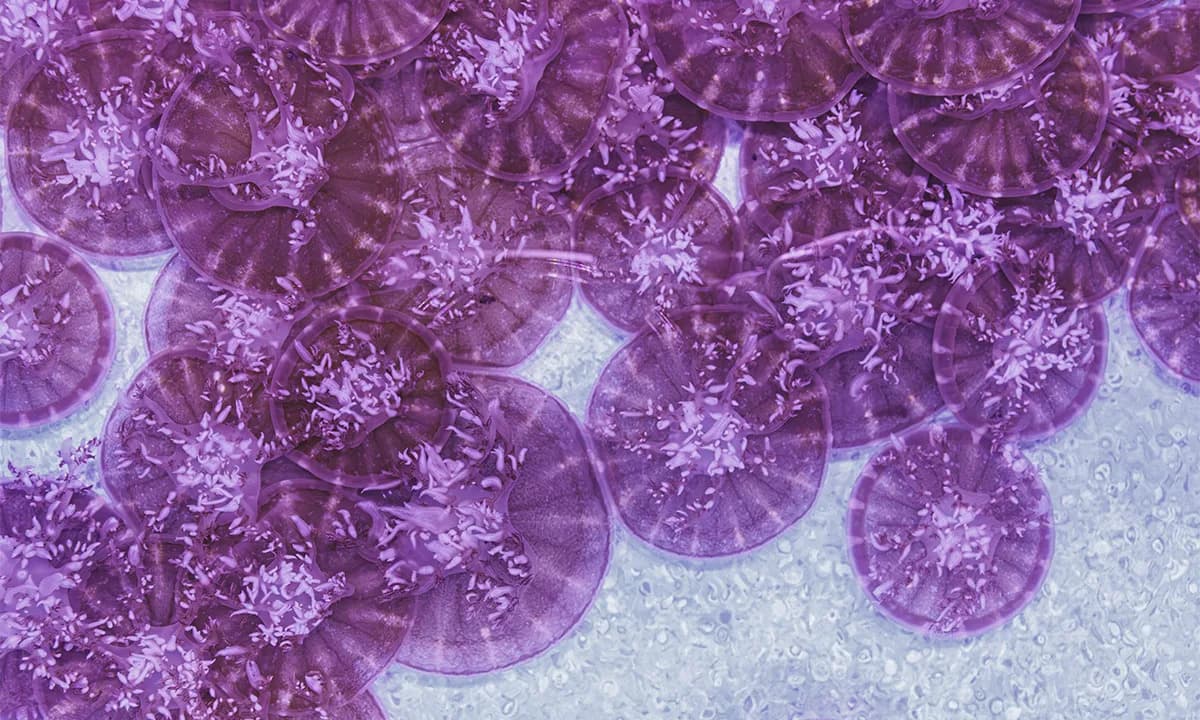
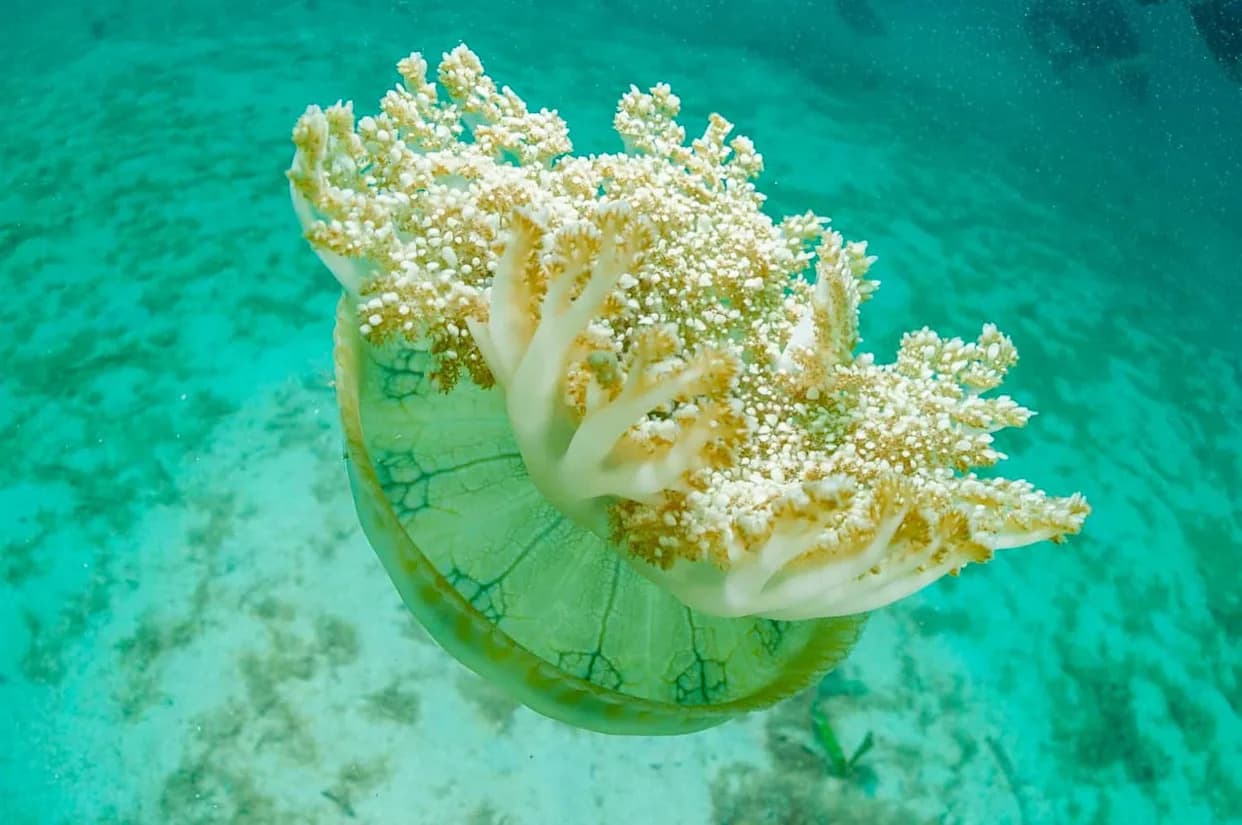
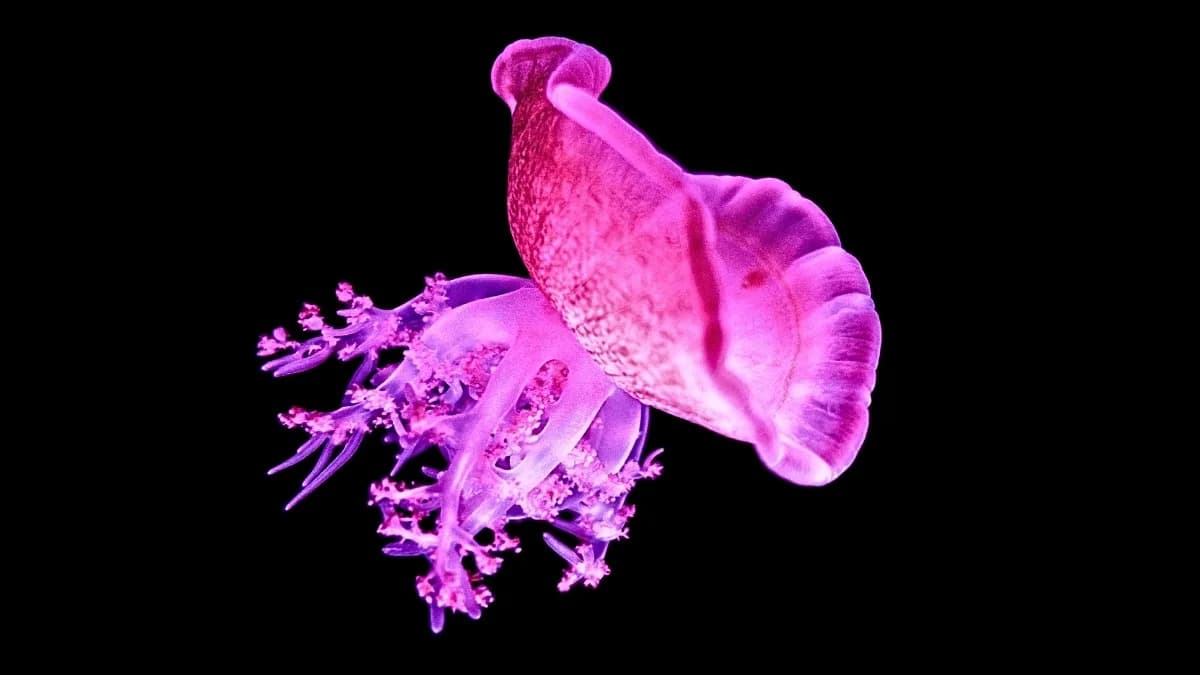
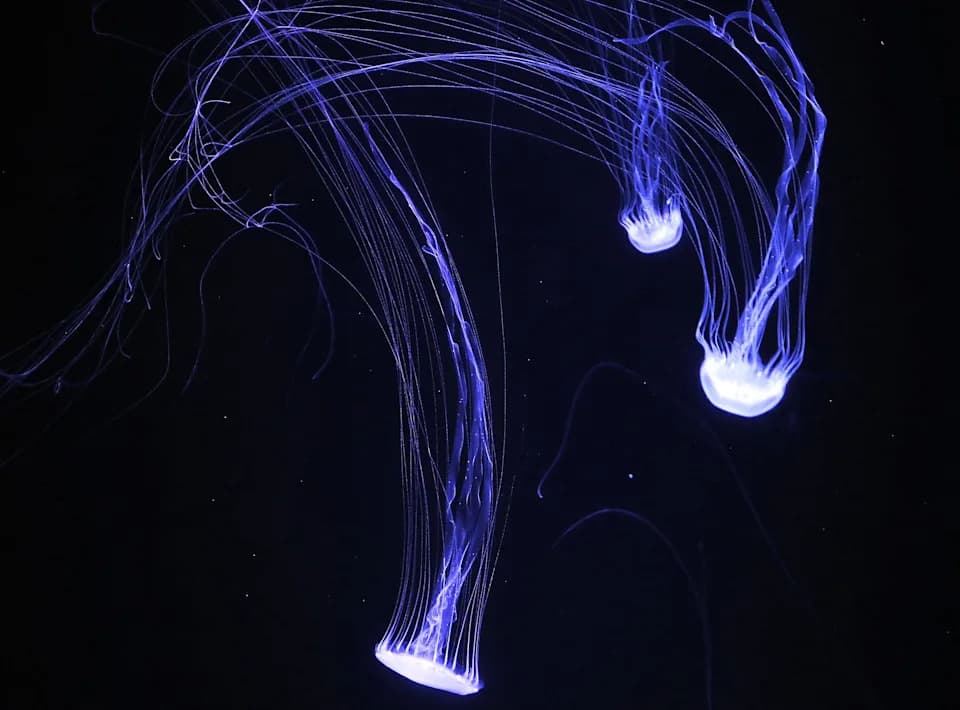
Researchers report in Nature Communications that jellyfish and sea anemones—animals without centralized brains but with distributed neurons—enter sleep-like states resembling aspects of human sleep. Jellyfish typically rest about eight hours a day (often at night), while sea anemones sleep for roughly one-third of the day. The animals increased sleep after experimentally induced neuronal damage, supporting the idea that sleep provides an ancient, conserved window for cellular maintenance such as DNA repair and neuronal health.
Jellyfish and Sea Anemones Sleep Like Humans — A Clue to Sleep’s Deep Evolutionary Roots
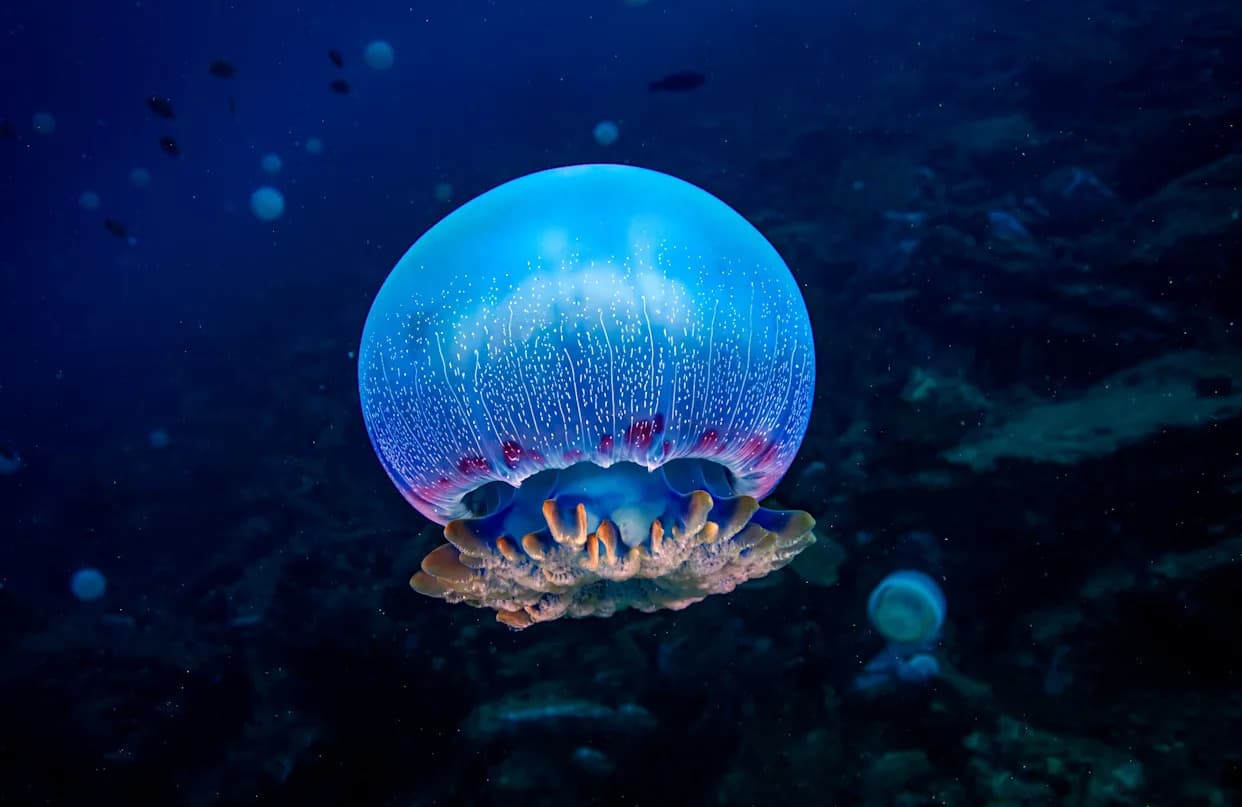
Jellyfish and sea anemones are surprising sleepers. Although these animals evolved without a centralized brain, they possess networks of interconnected neurons across their bodies—and, as a new study shows, they enter sleep-like states that resemble human sleep in important ways.
Sleep Without a Brain
The study, published in Nature Communications, examined sleep behavior and neuronal maintenance in cnidarians (the group that includes jellyfish and sea anemones). Researchers found that jellyfish routinely enter a quiescent, sleep-like state for roughly eight hours a day, usually at night, while sea anemones appear to spend about one-third of each day in similar states.
What This Suggests About Sleep
These findings support the idea that sleep evolved long before complex brains and may serve a fundamental maintenance role across animal life. The authors report evidence that sleep provides a restorative window: it helps with DNA repair and preserves neuronal health, functions previously observed in animals with centralized nervous systems and in humans.
“This confirms that sleep allows a window for key housekeeping tasks,” says Philippe Mourrain, an associate professor of psychiatry and behavioral sciences at Stanford University, who studies sleep but was not involved in the new work.
Experimental Evidence
To probe sleep’s function, the researchers induced additional neuronal damage in these animals and observed that the animals increased their sleep afterwards. That response parallels findings in other species, suggesting a conserved relationship between cellular repair needs and sleep drive.
Why It Matters
These results add to a growing body of evidence that sleep’s restorative functions—such as supporting DNA repair and maintaining neuronal health—are ancient and widespread. Showing these functions in animals without a centralized brain narrows the evolutionary window for when sleep and its core benefits may have emerged.
Study Source: Nature Communications. The research reinforces the notion that sleep is a fundamental biological process, not just a feature of animals with complex brains.
Help us improve.