The Late Ordovician mass extinction ~445 million years ago removed roughly 85% of marine species and unfolded in two climate-driven pulses. New research in Science Advances shows that surviving jawed vertebrates persisted in isolated refugia where they diversified and later dispersed. The authors propose a recurring “diversity-reset” pattern in which evolution refills emptied ecological roles, helping explain why jawed fishes ultimately dominated marine ecosystems.
How a Mass Extinction Cleared the Way for Jawed Fishes and the Age of Vertebrates
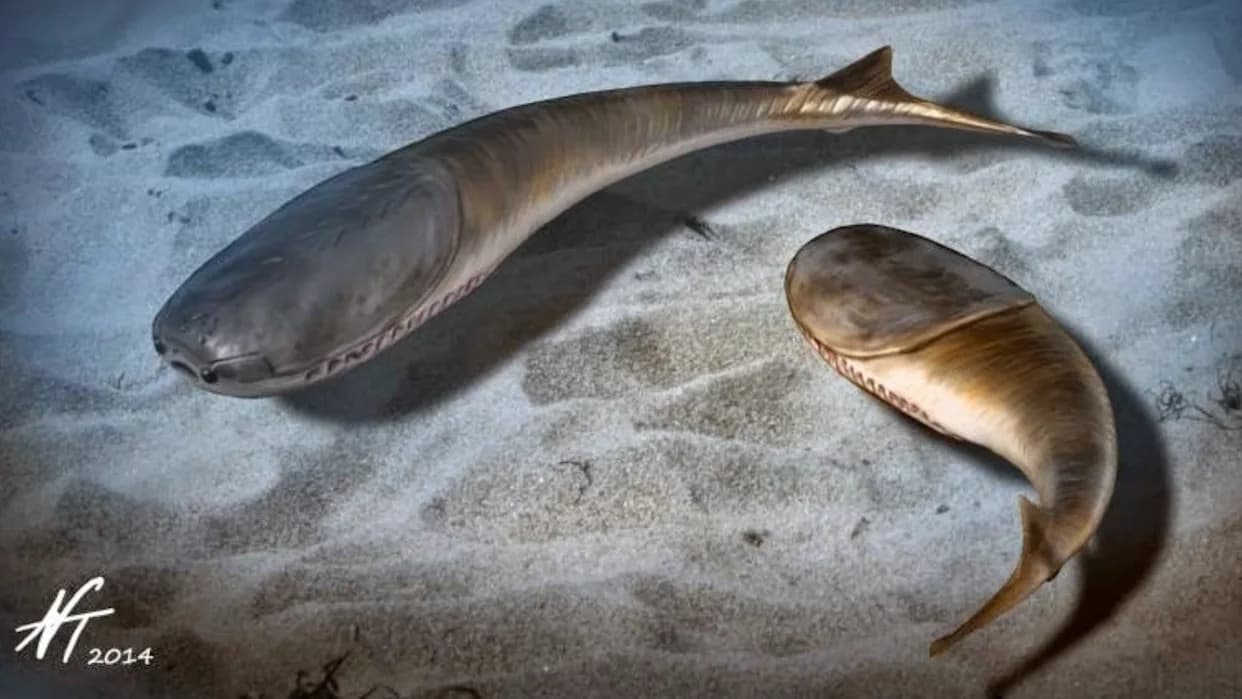
A pair of 'Sacabambaspis' fish, around 14 inches (35 centimeters) in length, which had distinct, forward-facing eyes and an armored head. No fossils of animals like 'Sacabambaspis' from after the Late Ordovician Mass Extinction event have been discovered.
About 445 million years ago Earth underwent a dramatic transformation when vast ice sheets spread across the southern supercontinent Gondwana and drew down sea levels. This environmental upheaval triggered the Late Ordovician mass extinction (LOME), Earth’s first major mass die-off, which altered ocean chemistry, plunged climates into near-glacial conditions, and eliminated roughly 85% of marine species.
A Two-Stage Crisis and Ecological Opportunity
The extinction unfolded in two principal pulses. First, a rapid shift from a warm greenhouse world to an icehouse state contracted shallow seas as glaciers advanced. A few million years later, melting ice caps produced warmer, sulfur-rich and oxygen-poor waters that caused a second wave of losses among cold-adapted marine life. Rather than erasing all life uniformly, these events left pockets of survivors isolated in refugia — localized biodiversity hotspots separated by deep ocean expanses.
Refugia, Fossils, and the Rise of Gnathostomes
New research published in Science Advances compiled an extensive paleontological database from the Ordovician–early Silurian interval to reconstruct these refugial ecosystems. The authors show that in many refugia early jawed vertebrates (gnathostomes) held a consistent advantage. Confined to geographically small areas with many vacant ecological roles after the extinctions, these jawed fishes diversified into multiple niches over millions of years, a pattern analogous to adaptive radiations like Darwin’s finches.
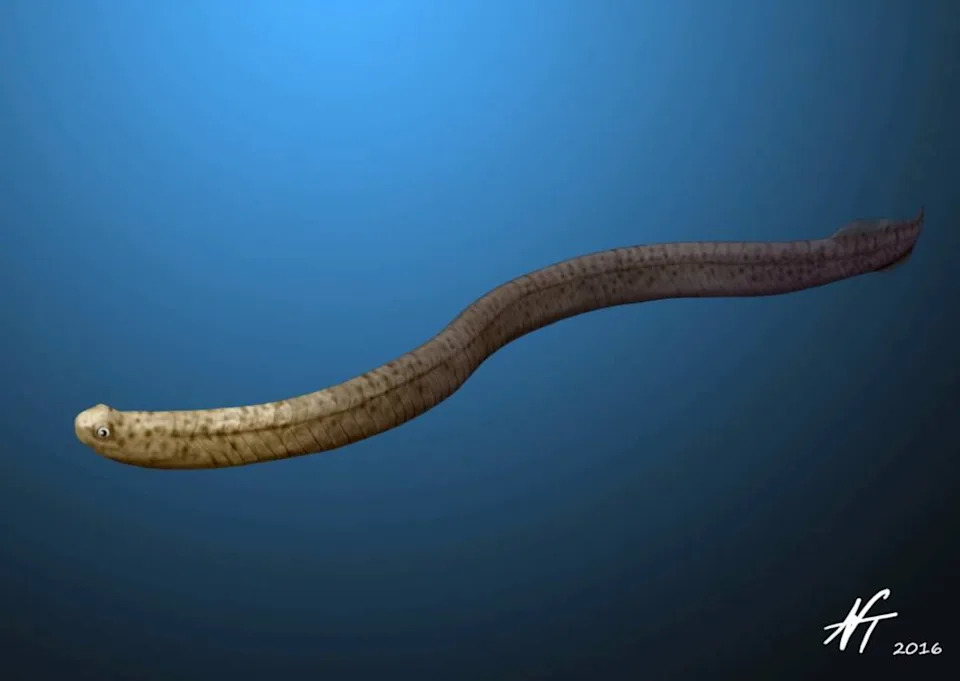
APromissumconodont, which range from about 2 to 20 inches (5 to 50 centimeters) in length and named after unusual, cone-like teeth fossils, and which are hypothesized to be the ancestors of modern lampreys and hagfishes. Very few conodont species survived the Late Ordovician Extinction Event.Image: Nobu Tamura
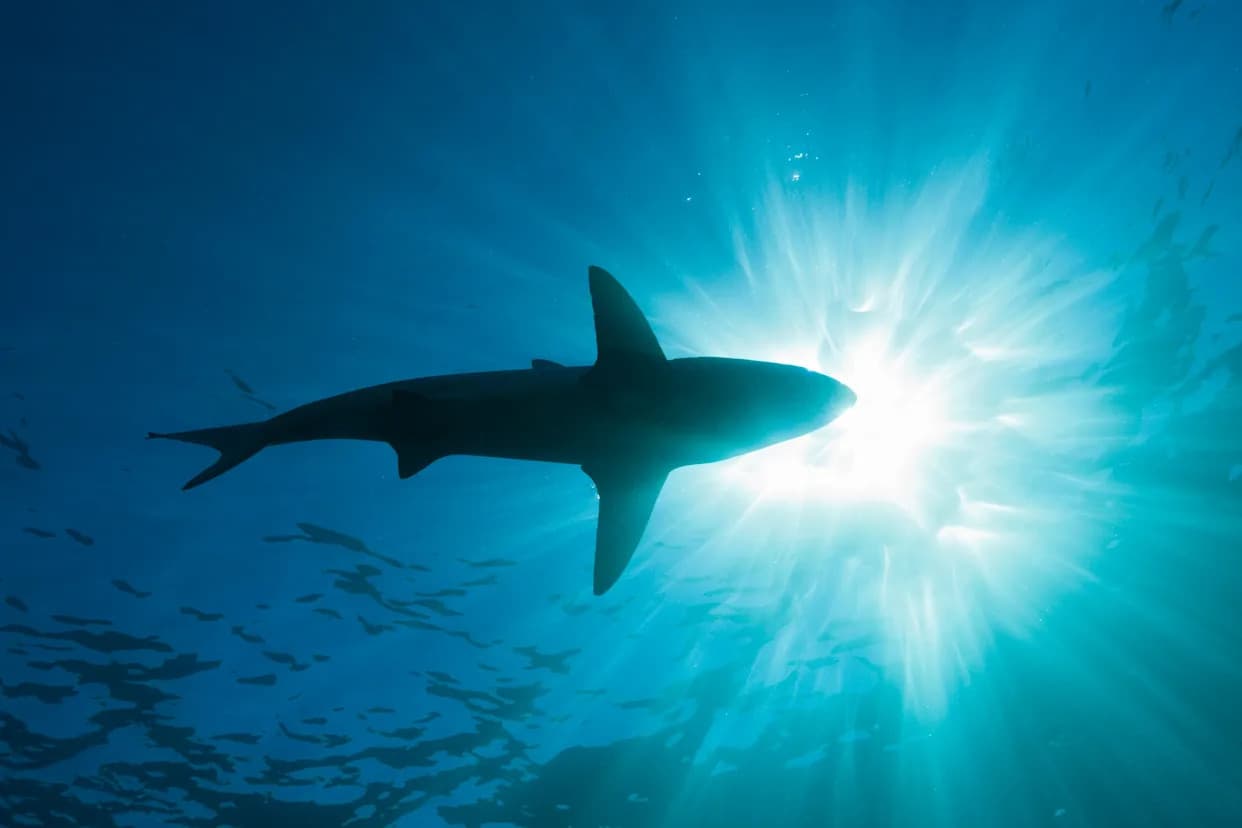
Notably, deposits in what is now South China preserve some of the first full-body jawed fish fossils related to modern sharks. These populations remained concentrated in stable refugia long enough to evolve traits allowing them to disperse across open ocean barriers and colonize new ecosystems.
A Recurring 'Diversity-Reset'
Rather than uniformly wiping the planet clean, the Late Ordovician extinction appears to have triggered a reset: early vertebrates moved into ecological vacancies left by extinct conodonts, arthropods, and other groups, rebuilding similar ecosystem architectures with different lineages. The authors describe this repeating pattern across the Paleozoic as a “diversity-reset cycle,” where convergent evolutionary processes restore ecosystem function after severe environmental disruption.
“We have demonstrated that jawed fishes only became dominant because this event happened,” said Lauren Sallan, co-author and evolutionary biologist at the Okinawa Institute of Science and Technology. “Revealing these long-term patterns and their underlying processes is one of the exciting aspects of evolutionary biology.”
While jawless fishes remained diverse in broader seas for tens of millions of years, gnathostomes’ success in refugia set the stage for a long-term shift in marine ecosystems—one that ultimately shaped the lineage leading to modern fishes and other vertebrates.
Help us improve.