Donald Trump failed to meet his campaign pledge to halve U.S. household energy bills within his first year: average electricity bills rose 6.7% in 2025 compared with 2024, adding about $116 per household. The increases were especially acute in some states (Washington, D.C. +23%, Indiana +17%, Illinois +15%) and were compounded by a 5.2% rise in natural gas prices. Experts cite rising electricity demand (including AI/datacenter growth), blocked renewable projects, policy shifts favoring fossil fuels, grid constraints and weather for the higher costs; the political fallout is likely to be a key issue ahead of upcoming elections.
Trump’s Pledge To Halve Energy Bills Fell Short As U.S. Electricity Costs Rose Nationwide
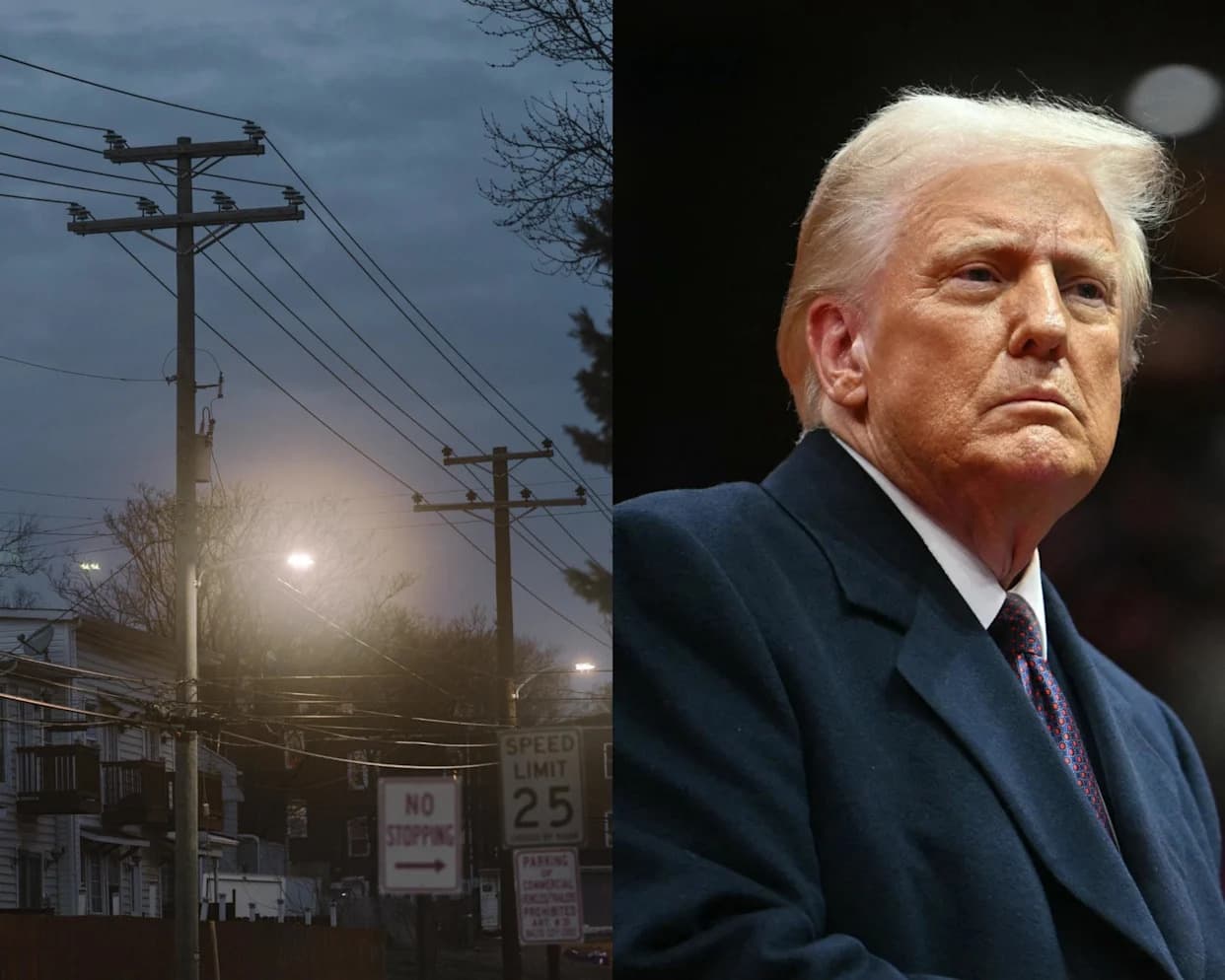
Donald Trump promised in 2024 that electricity prices in the US would be halved in 12 months if he were elected.Composite: Thalia Juarez; Jim Watson/The Guardian; AFP via Getty(Composite: Thalia Juarez; Jim Watson/The Guardian; AFP via Getty)
Donald Trump did not deliver on his high‑profile 12‑month pledge to cut Americans’ energy bills in half. Instead, household electricity costs increased across much of the United States in 2025, driven by rising demand, constrained clean‑energy deployment and policy choices that favored fossil‑fuel production.
Key Figures
An analysis of Energy Information Administration (EIA) data shows the average U.S. household electricity bill was 6.7% higher in 2025 than in 2024 — roughly $116 more per household over the year. Some states experienced much larger increases: Washington, D.C. (23%), Indiana (17%) and Illinois (15%). Natural gas prices rose about 5.2% on average, adding further pressure to household energy costs.
Why Bills Rose
Experts and advocates point to several converging causes:
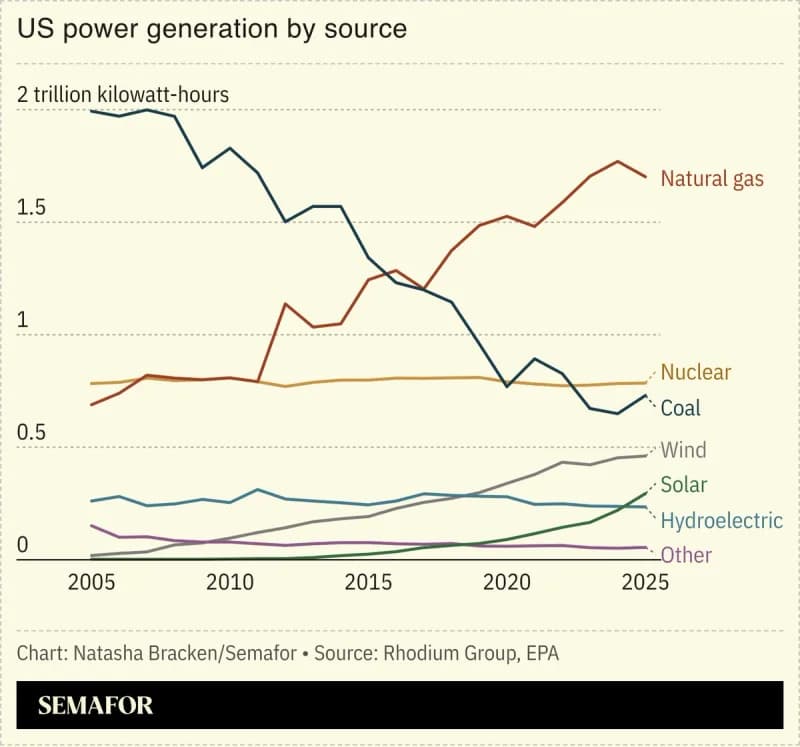
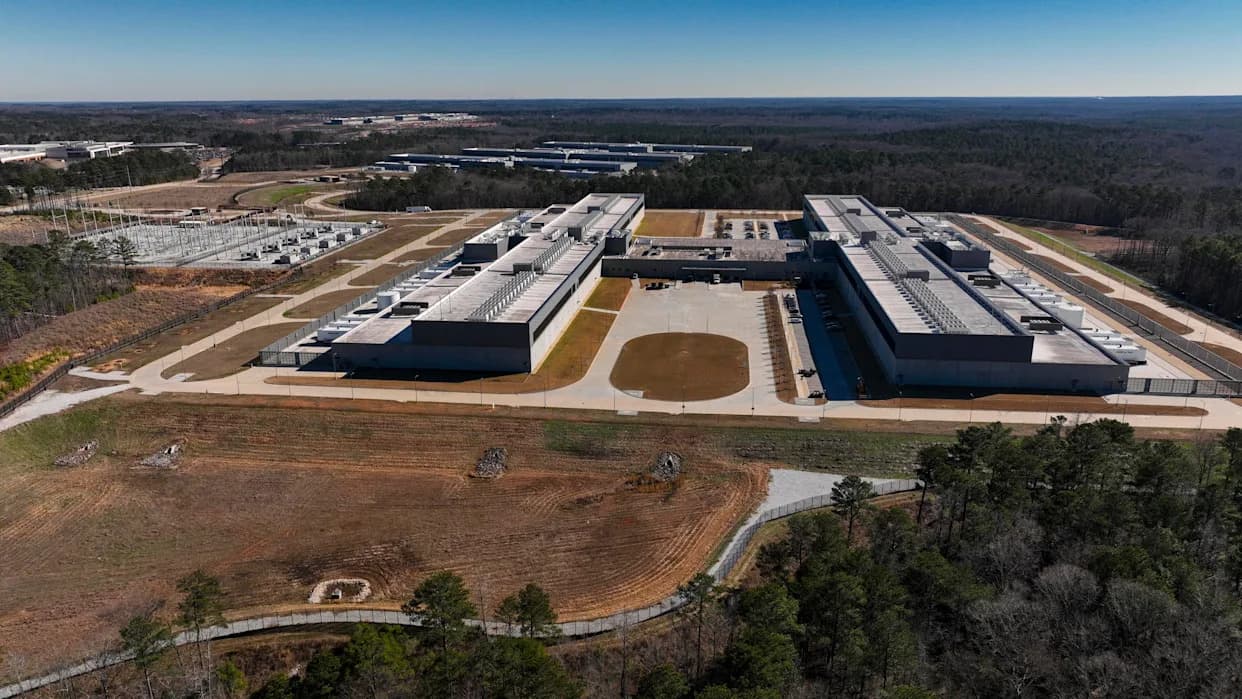
- Rising demand — growth in electricity use, including from expanding data centers and artificial intelligence applications, has pushed up consumption.
- Constrained supply — the administration has blocked or delayed multiple renewable projects (including an action in December halting construction on five East Coast wind farms) and signaled opposition to new wind and solar deployments.
- Policy choices — steps to expand oil and gas production, keep older coal plants operating and increase liquefied natural gas exports can raise domestic energy prices or limit investment in cleaner, cheaper generation.
- Infrastructure and weather — transmission upgrades, regional grid constraints and extreme weather events have added local cost pressures.
Household Impact
Rising bills have tangible consequences. Disconnection rates for non‑payment have climbed in some states — New York’s disconnection rate rose roughly fivefold year‑over‑year — forcing families to cut back on other essentials. The National Energy Assistance Directors Association (NEADA) reports electricity costs are a major source of stress for more than one in three Americans.
“Instead of reducing electric bills by 50%, the president’s actions have raised the cost of home energy for all Americans,” said Mark Wolfe, executive director of NEADA, noting that middle‑income families are increasingly affected.
NEADA data and other estimates show heating costs were also up: colder-than-expected winter weather pushed heating spending about 9.2% higher year‑on‑year, with the average household forecast to pay roughly $995 this winter — about $84 more than last winter.
Political Context
Trump repeatedly promised during the 2024 campaign: “I will cut the price of energy and electricity in half ... 12 months from January 20.” Amid rising bills, the White House has defended its energy agenda, calling lower prices a top priority and arguing that some Democratic‑led states have higher costs than Republican‑led states. The administration also says policies to increase domestic oil and gas production support economic growth.
Critics counter that removing incentives for energy efficiency, eliminating tax credits for home upgrades, and targeting assistance programs for low‑income households have worsened the affordability crisis. A proposed rollback of a federal program supporting low‑income families would affect millions who rely on help to heat and cool their homes.
Looking Ahead
Gasoline prices have fallen — retail pump prices dropped about 6% in the past year, partly due to global oil market dynamics — but electricity remains a growing political and economic flashpoint ahead of the midterms. Analysts warn that unless supply (including clean energy build‑out and grid upgrades) catches up with demand, household energy costs are likely to remain elevated.
Expert view: "We are using more electricity than we did 12 months ago and the infrastructure isn’t keeping pace," said Abe Silverman of Johns Hopkins University, describing demand growth as outpacing supply expansion.
Sources: Energy Information Administration (EIA) data; National Energy Assistance Directors Association (NEADA); public statements by the White House and the president.
Help us improve.