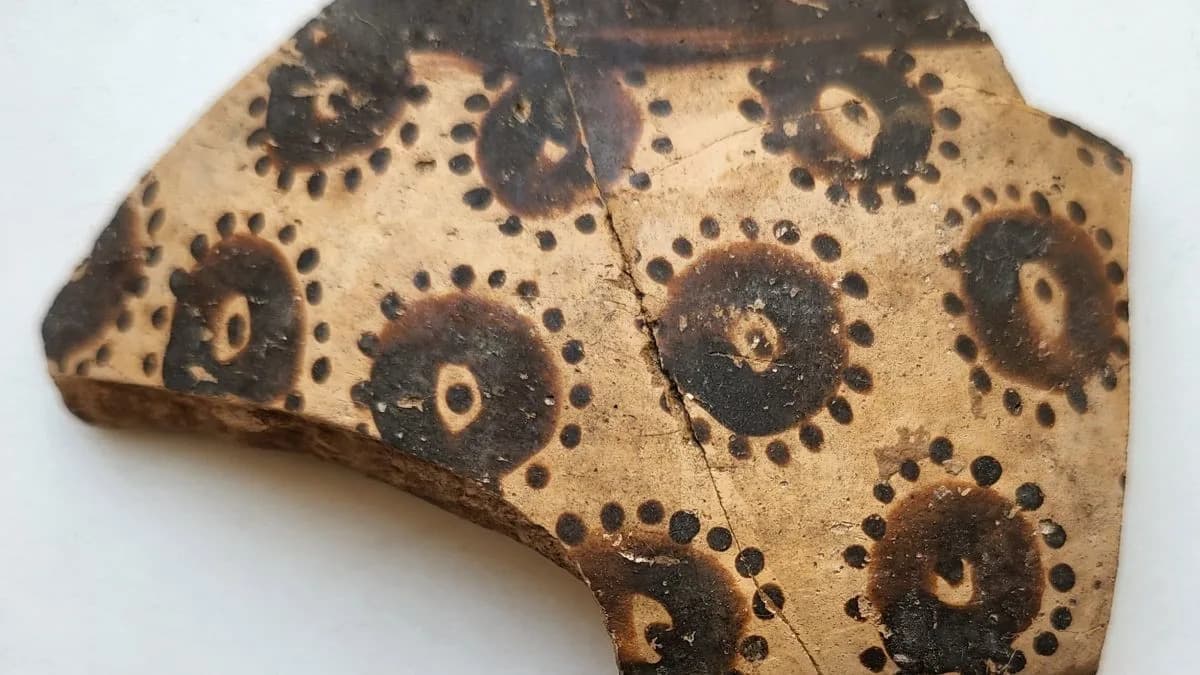
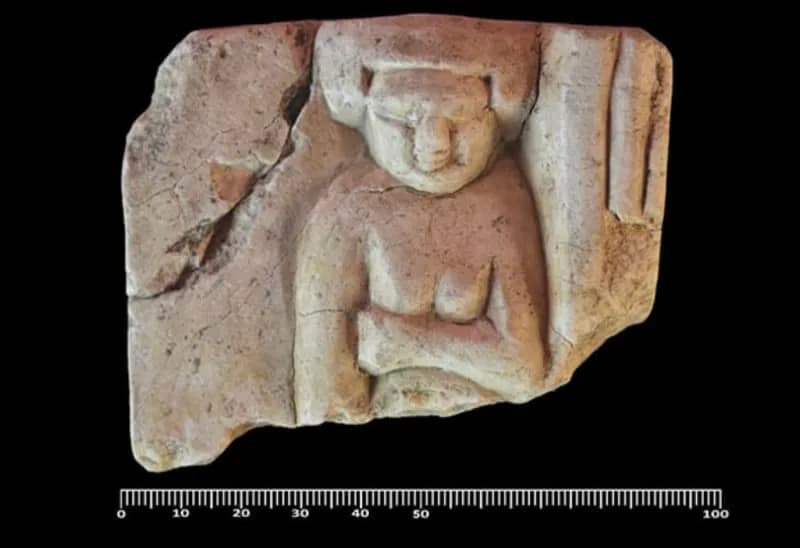
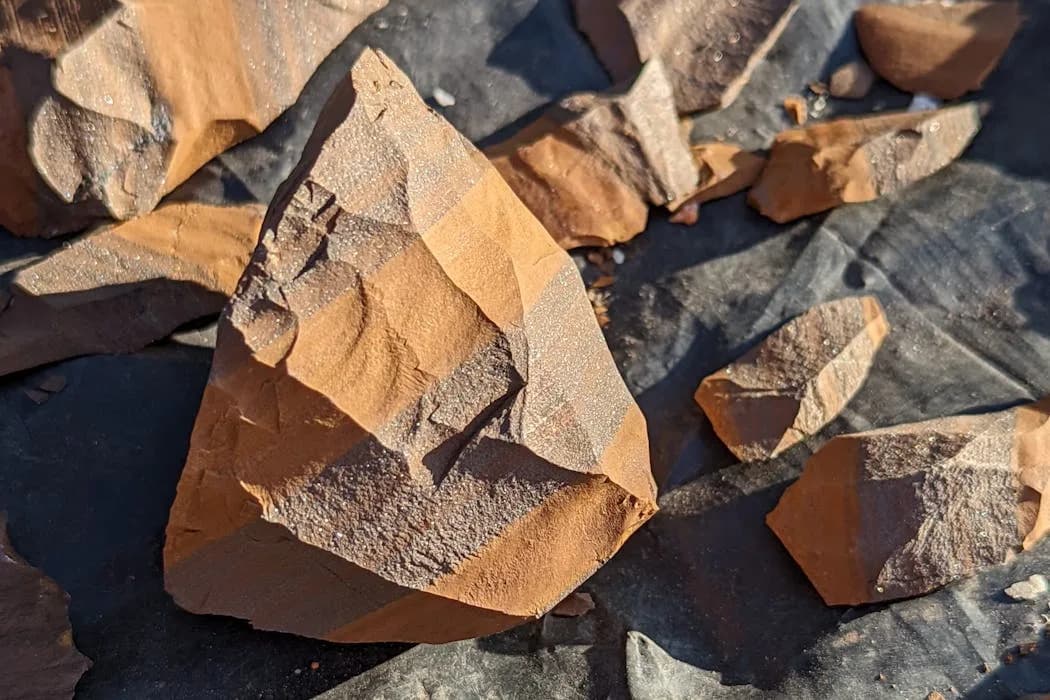
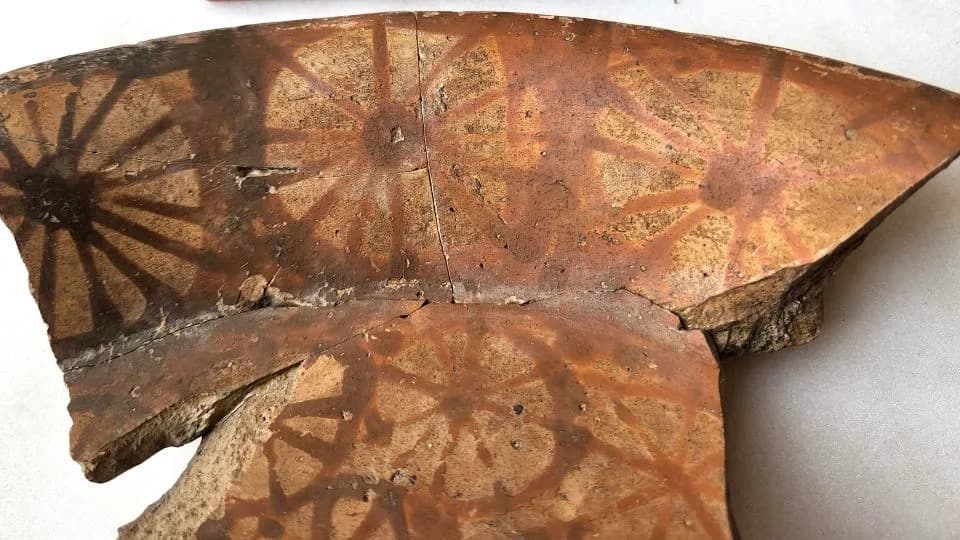
The Israel Antiquities Authority has launched a national project to trace the origins of ancient pottery by creating mineral and chemical "fingerprints" for production kilns. Led by Dr. Anat Cohen Weinberger and Prof. Alexander Fantalkin, the program uses petrography (30-micron thin sections) and Neutron Activation Analysis to build kiln profiles. Those profiles will feed a digital "kiln atlas" that researchers can use to assign provenance to pottery found without kilns, improving reconstructions of trade, migration and technological exchange.
Israel Launches National Project to ‘Fingerprint’ Ancient Pottery Using Scientific Analysis
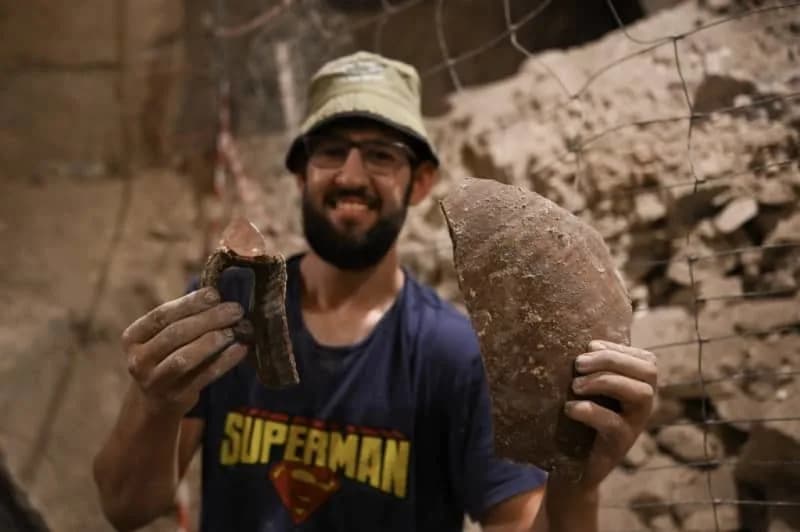
Israelis families display pieces of pottery found while volunteering at an excavation at Tel Maresha at the Beit Guvrin-Maresha National Park on Aug. 6, 2023. (photo credit: Yoav Dudkevitch/TPS-IL)
The Israel Antiquities Authority (IAA) has launched a nationwide research initiative to identify where ancient ceramic vessels were produced by creating distinctive mineral and chemical “fingerprints” for production kilns. The project will analyze thousands of pottery finds from excavations across Israel and compile the results into a searchable digital kiln atlas for future provenance research.
Project Goals and Leadership
The joint effort is led by Dr. Anat Cohen Weinberger of the IAA and Prof. Alexander Fantalkin of Tel Aviv University. Organizers aim to establish a reference library of kiln profiles so that archaeologists can determine a vessel's place of manufacture even when the kiln itself is absent from a dig.
“In most excavations, we find large quantities of pottery, but not the kiln where it was produced,” Dr. Cohen Weinberger said. She called this gap “one of the central challenges” in pottery research and said the new database will help distinguish local manufacture from imported wares.
Methods: Petrography And Neutron Activation Analysis
The initiative combines two complementary scientific techniques:

A sign warning of archaeological diggings, in the Beit Guvrin-Maresha National Park, December 18, 2025. (credit: YOSSI ALONI/FLASH90)
- Petrography: Ultra-thin (about 30-micron) sections of ceramic are examined under a polarizing microscope to identify mineral grains and rock fragments. Petrography connects raw materials to local geology and reveals aspects of the potter’s “recipe.”
- Neutron Activation Analysis (NAA): Minute samples are irradiated in a nuclear reactor so analysts can measure elemental composition, including rare trace elements. NAA provides precise chemical fingerprints that can be compared across samples.
When combined, petrographic and chemical data create a distinctive profile for each production site. Those kiln profiles will serve as reference points: pottery found at distant sites can be matched to the database and attributed to likely production centers.
National Kiln Atlas And Research Infrastructure
The IAA’s digital technologies division is building a public-facing “kiln atlas” to consolidate the accumulated data and make it accessible to researchers. The atlas is intended as long-term research infrastructure for studying production, trade, population movements, technological diffusion, and regional connections across time.
Dr. Mechael Osband, head of the Petrography Laboratory at the Zinman Institute (University of Haifa), who is not affiliated with the IAA project, described the initiative as “unique with no parallel in other regions” and predicted it will significantly improve understanding of ancient economic and social networks.
By turning archaeological ceramics into scientifically comparable datasets, the project promises to transform how scholars reconstruct ancient production systems and exchange networks, resolving long-standing questions about provenance and interaction in the past.
Help us improve.