Researchers around the world used archaeology, genetics, imaging and materials science in 2025 to answer questions that have lingered for decades — and in some cases centuries. These studies not only resolved long-standing mysteries but also reshaped how we think about human movement, technology and disease in the past.
New Clues from Rapa Nui and Pompeii
Archaeological work at a quarry of unfinished statues on Rapa Nui (Easter Island) provided clearer evidence of how seafaring Polynesians carved and transported the island’s massive heads. Detailed analysis of tool marks and stoneworking techniques supports theories of staged carving and ingenious transport methods.
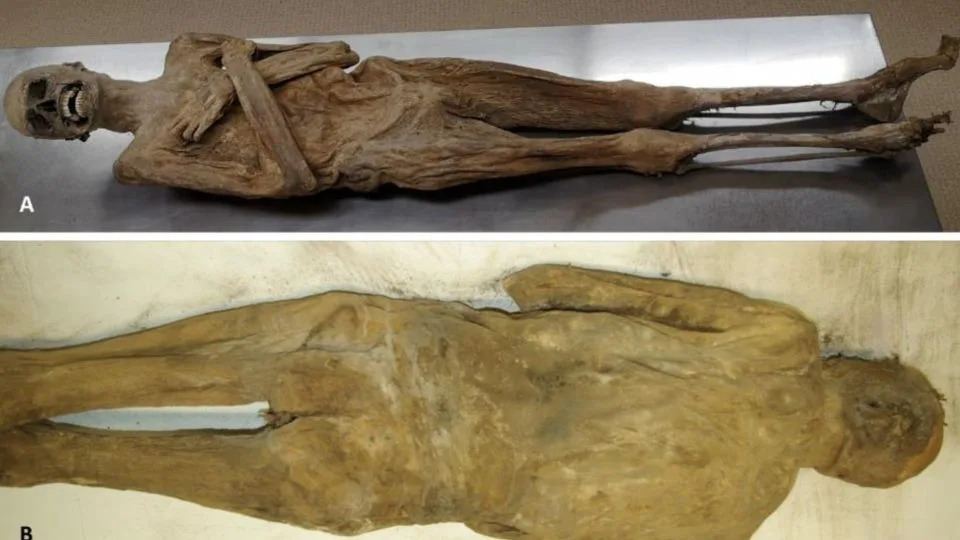
The mummy's external appearance from the front (A) and back (B) showed no incisions on the body. - Courtesy Andreas Nerlich
Meanwhile in Pompeii, excavations revealed a previously unknown stone staircase. Conservators say the feature could help reconstruct the city’s pre-eruption skyline and offer fresh context for how neighborhoods and rooftops were arranged before the AD 79 eruption of Mount Vesuvius.
The Peruvian “Band of Holes” and a New Hypothesis
Combining microbotanical analysis with extensive aerial drone imagery, researchers proposed a new hypothesis for the creators of Peru’s enigmatic “band of holes” — roughly 5,200 pits scattered across Andean terrain. The integrated data point toward organized human activity rather than purely natural processes, although debate continues about the holes’ precise function.
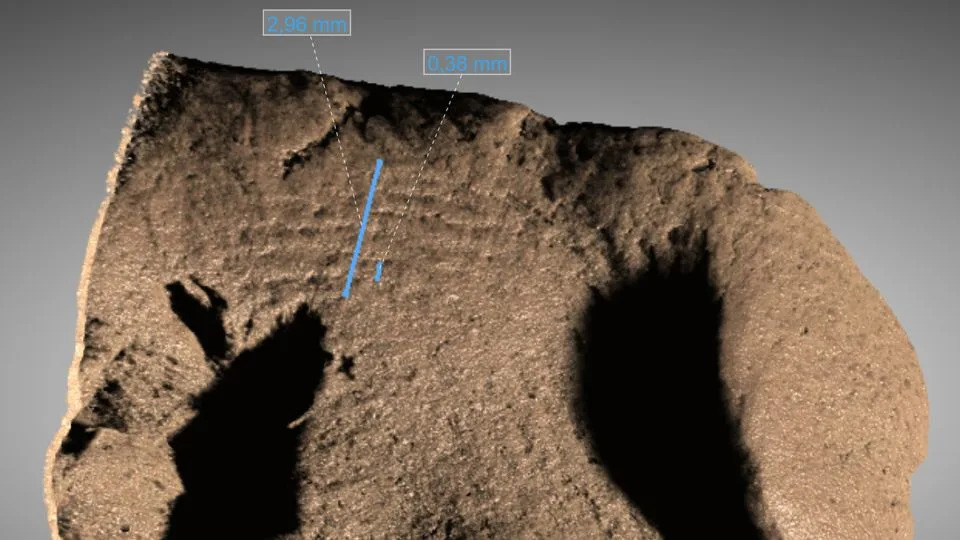
A partial human fingerprint was found on tar fragments. A high-resolution X-ray tomography scan of the fingerprint region is shown. - Sahel Ganji/Lund University
The ‘Air-Dried Chaplain’ Identified
Renovation-related removal of a water-damaged crypt enabled CT scans, radiocarbon dating and tissue analysis of a remarkably well-preserved 18th-century body in a small Austrian village church. The remains were identified as Franz Xaver Sidler von Rosenegg, a former monk and later parish vicar at St. Thomas am Blasenstein. Researchers documented an undocumented air-drying embalming method and proposed new ideas about his cause of death, while explaining an unusual glass object found with the remains.
Hjortspring Boat: Distance and a Rare Fingerprint
The Hjortspring boat — excavated in the 1920s from a Danish bog and long thought to be a local craft — was reanalyzed this year. Materials analysis suggests the vessel traveled farther than previously believed, implying the attack it carried may have been premeditated. Scientists also recovered tar residue containing a partial human fingerprint, a rare find for this period that could one day link the ship to an individual.
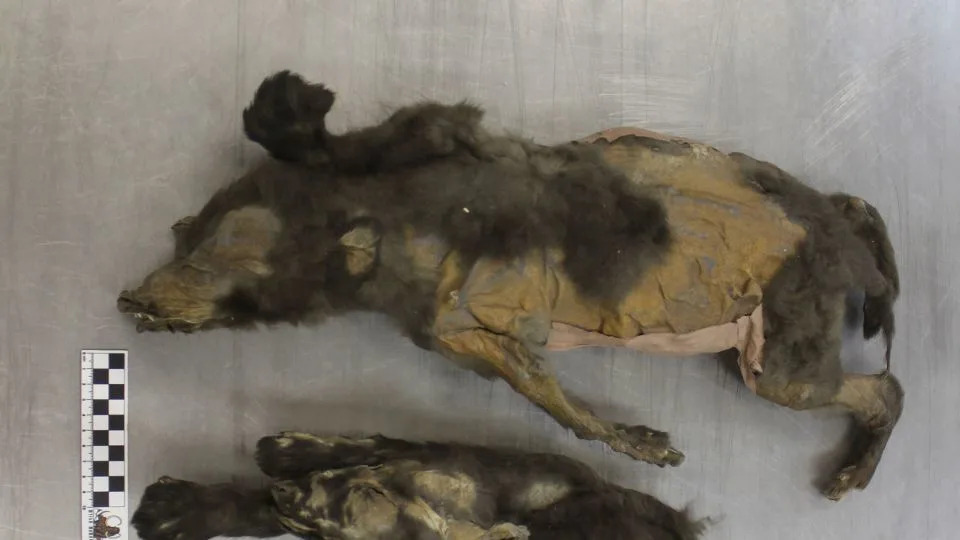
The well-preserved remains of 14,000-year-old wolf cub siblings were found in northern Siberia in 2011 and 2015. - Sergey Fedorov/North-Eastern Federal University
Shackleton’s Endurance Reassessed
New structural analyses of the polar explorer Ernest Shackleton’s ship, HMS Endurance, indicate that the vessel sank in 1915 primarily because of structural weaknesses rather than solely because of a broken rudder. Evidence suggests Shackleton was aware of the ship’s issues before the expedition.
Ancient Pups Were Wild Wolves
The so-called Tumat Puppies — two pups preserved for more than 14,000 years and recovered in Siberia — were long candidates for early domestication evidence. Genetic and chemical analyses published this year indicate they were wolf cubs that did not interact with humans, complicating timelines for dog domestication and human–canid relationships.
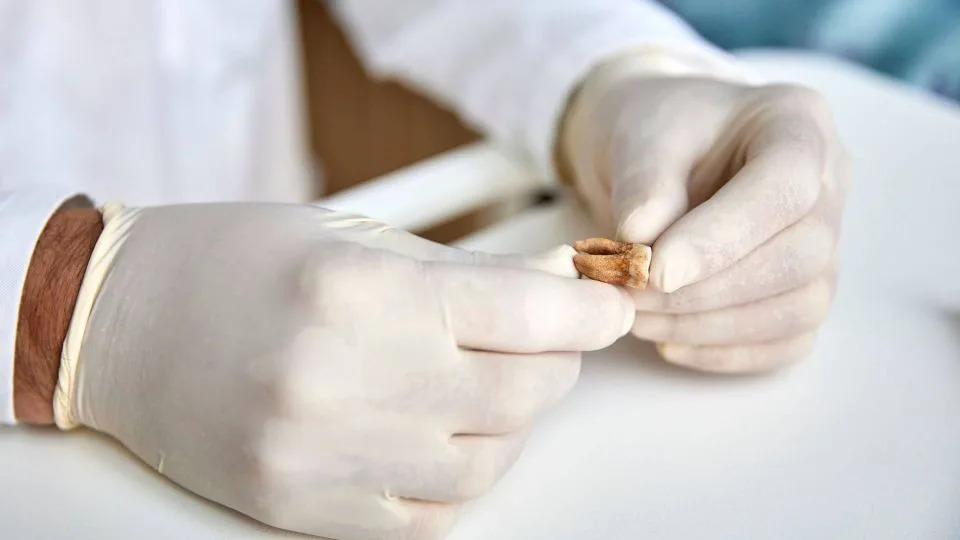
A tooth used for ancient DNA analyses during the study of Napoleon's army. - Claudio Centonze/European Commission
Hidden Pathogens in Napoleon’s 1812 Campaign
Teeth from soldiers who fell during Napoleon’s disastrous 1812 invasion of Russia were analyzed for ancient DNA. In addition to typhus, researchers detected Salmonella enterica and Borrelia recurrentis, the agents of paratyphoid and relapsing fevers, suggesting multiple infectious diseases likely contributed to the army’s catastrophic losses.
Other Notable 2025 Discoveries
Scientists also announced several other breakthroughs this year: identification of the previously unknown volcano responsible for a massive 1831 eruption that briefly cooled the planet; evolutionary research tracing the modern potato’s deep origins to an ancient genetic encounter involving a wild tomato ancestor; and a decoded scribal error that reshapes our understanding of the medieval epic the Song of Wade, showing it was less monster-filled than earlier reconstructions suggested.
Taken together, these studies show how modern methods — from genomic sequencing and radiocarbon dating to drone mapping and materials science — can illuminate the past in surprising ways.