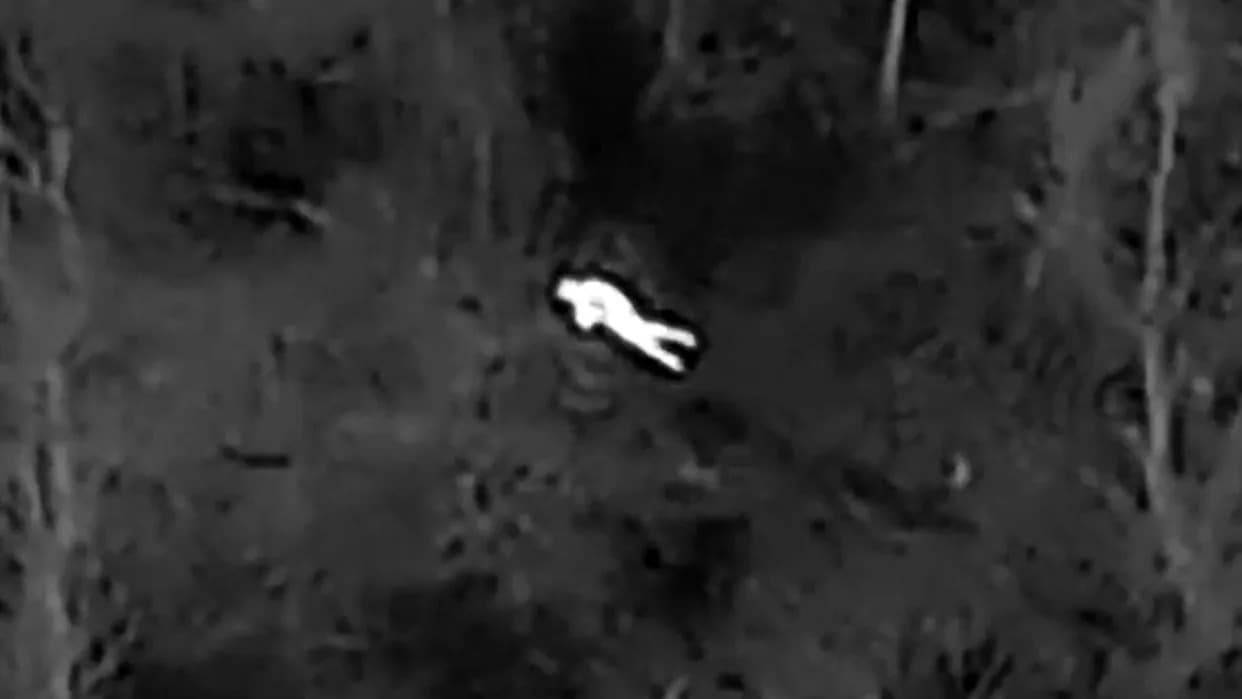
Australian researchers tested drones fitted with thermal cameras to monitor body temperature and breathing in 14 adult bottlenose dolphins, collecting over 30,000 images. Drone-derived temperatures and breath-rate signals generally matched readings from handheld infrared thermometers and rectal probes, with about 32 feet identified as an effective flight height. The study—published in the Journal of Thermal Biology—notes that results come from animals in human care and recommends further validation for wild populations.
How Thermal Drones Can Monitor Dolphin Health—Without Stressing Them
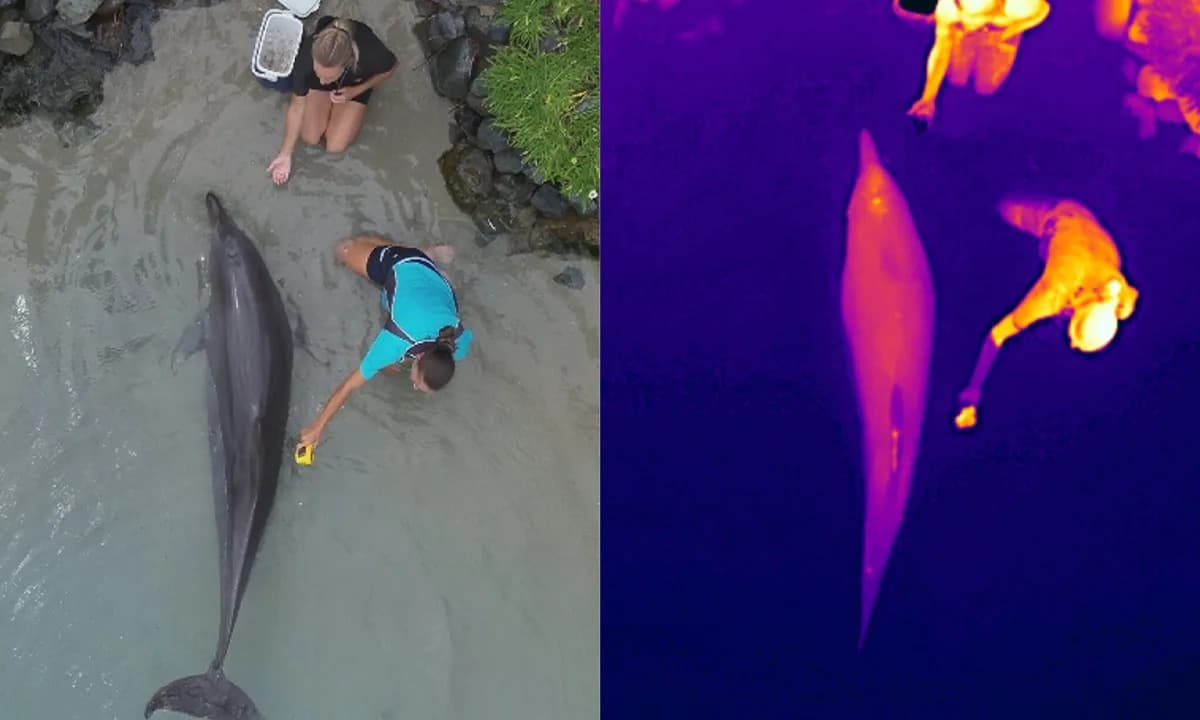
Lead image: C White/CEBEL (Flinders University)
Researchers in Australia have demonstrated that drones equipped with thermal cameras can noninvasively measure dolphin body temperature and breathing rates, offering a promising alternative to hands-on techniques that can stress animals. Over two field seasons the team collected more than 30,000 thermal images of 14 adult bottlenose dolphins kept at Sea World Australia and compared airborne readings with handheld infrared thermometers and direct rectal probes to test accuracy.
Study Design and Methods
The scientists flew drones at multiple altitudes and camera angles, sampling temperature at blowholes, bodies and dorsal fins while also detecting breaths by tracking short, repeatable temperature shifts as air moved through the blowhole. They evaluated many flight heights and angles and found that a drone altitude of roughly 32 feet (about 10 meters) produced the most consistent thermal signals for this setup.
Results
Overall, drone-derived surface temperatures and breath-rate estimates aligned well with values obtained using handheld infrared thermometers and rectal probes. The study reports that thermal drones can generate reliable physiological data while avoiding the stress and logistical challenges associated with close-contact methods like rectal thermometry and electrocardiograms.
According to the authors, noninvasive tools such as thermal drones enable efficient, repeatable monitoring that can help detect health issues earlier and support conservation efforts.
Caveats and Next Steps
The researchers emphasize important caveats: the animals in this study were in human care, which may affect how readily they tolerate drones. Wild dolphins have shown mixed responses to drones in previous studies, so future work should validate and adapt protocols for free-ranging populations and for different species, locations, and behavioral contexts.
Why It Matters
Early detection of abnormal body temperatures or altered breathing patterns could provide critical warning signs of illness or injury long before mass mortality events occur. By offering a scalable, less invasive option for repeated monitoring, thermal drones could become a valuable component of marine mammal health surveillance and conservation planning—especially as coastal ecosystems face increasing human-driven stressors.
Help us improve.