Researchers propose a thought experiment suggesting advanced alien civilizations might use patterned flashes of light — like fireflies — as beacons or signals. The team analyzed the timing patterns of more than 150 pulsars as a proxy and found no clear artificial signals, though some temporal similarities were noted. The paper warns against anthropocentric assumptions in SETI and urges new observational strategies; it is a preprint on arXiv and not yet peer reviewed.
Could Aliens Be Signaling Like Fireflies? New Study Proposes Flashing Beacon Hypothesis

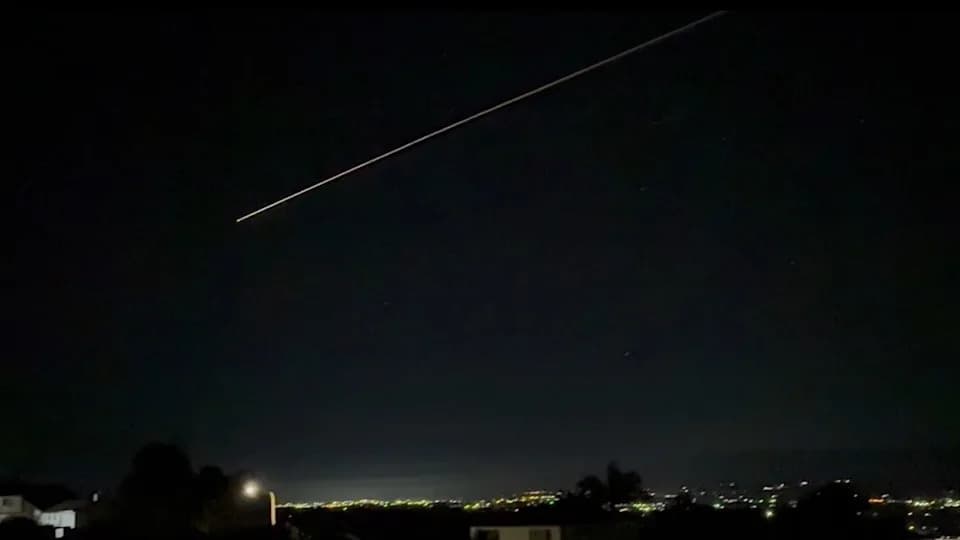
A new paper suggests that alien civilizations may communicate in ways that we do not currently expect, such as periodically flashing like fireflies. However, there is currently no evidence to support this theory. | Credit: Trevor Williams via Getty Images
Advanced extraterrestrial societies might communicate using patterned flashes of light — much like fireflies — a new preprint suggests. While provocative, the idea is presented as a thought experiment and does not offer direct evidence of alien signaling.
What The Paper Proposes
The authors outline a scenario in which an extraterrestrial civilization uses repeated, patterned bursts of visible or near-visible light as either specific communication or a broad "here we are" beacon. They point out that many natural objects in the sky produce repeating luminous signals and that an engineered flashing beacon could plausibly be hidden among them unless observers look with the right assumptions and tools.
How The Team Tested The Idea
As a practical test, the researchers examined the temporal patterns of more than 150 pulsars — rapidly rotating neutron stars that emit precise beams of electromagnetic radiation — treating them as a proxy for what artificial flashing signatures might resemble. They found no definitive artificial signals in this sample, but they did note some structural similarities between pulsar emission patterns and the kinds of repeating signals fireflies use on Earth.

Researchers argue that regularly repeating firefly-like flashes of light from alien civilizations may currently be going under the radar. This photo shows stars in the "cosmic fireflies" galaxy Abell 2163, which was unrelated to the new study. | Credit: ESA/Hubble & NASA
Why This Matters
The paper argues that very long-lived civilizations might move away from pervasive, omnidirectional radio leakage and toward more directed, high-bandwidth communication methods (for example, lasers or concentrated optical beacons) that are harder for distant observers to detect. On Earth, the shift toward satellite and highly directed communications already makes our planet appear more "radio quiet" from afar, the authors note.
Caveats And Next Steps
This work is explicitly framed as a thought experiment meant to broaden the scope of SETI and related research by reducing anthropocentric bias — the tendency to assume alien technologies mirror human choices. The paper is posted on arXiv (Nov. 8) and is under consideration at Proceedings of the National Academy of Sciences (PNAS), but it has not yet been peer reviewed. The authors encourage researchers to develop observational strategies and signal-detection algorithms tailored to repeating optical or multiwavelength flashes.
"Communication is a fundamental feature of life across lineages and manifests in a wonderful diversity of forms and strategies," said co-author Estelle Janin of Arizona State University. "Taking non-human communication into account is essential if we want to broaden our intuition and understanding about what alien communication could look like."
Bottom Line: The idea that aliens might 'flash' to communicate is an intriguing and testable hypothesis that urges SETI to expand its search paradigms. It is interesting scientifically but remains speculative until observational evidence emerges.
Help us improve.