UCSF researchers identified four transcription factors — E2F3, EZH2, STAT3, and ZFX — that can push aged cells toward a more youthful state. Boosting one factor in old mouse livers reduced fat and scarring and improved glucose tolerance, while adjusting all four in human fibroblasts increased proliferation and cellular energy. The study used computational screening of young versus old cells to shortlist candidates, but experiments were short-term and limited to a few cell types; long-term safety, including cancer risk linked to EZH2, remains uncertain.
Blueprint to Revive Old Cells: Four Transcription Factors Shift Cells Toward Youth
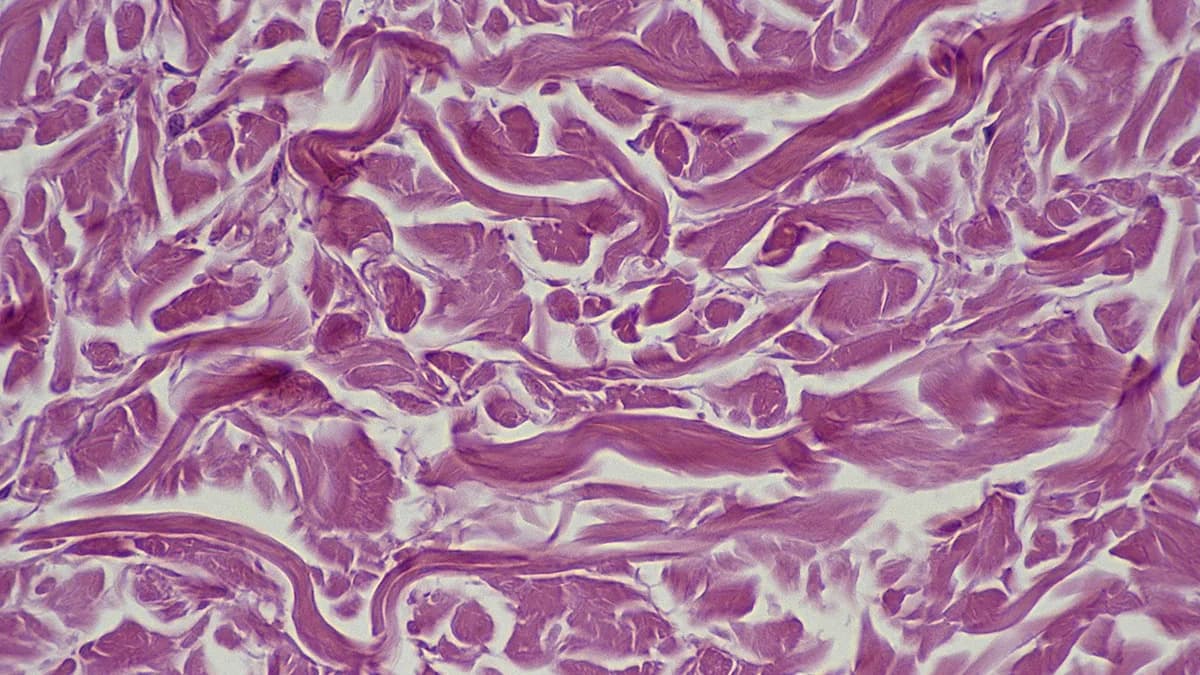
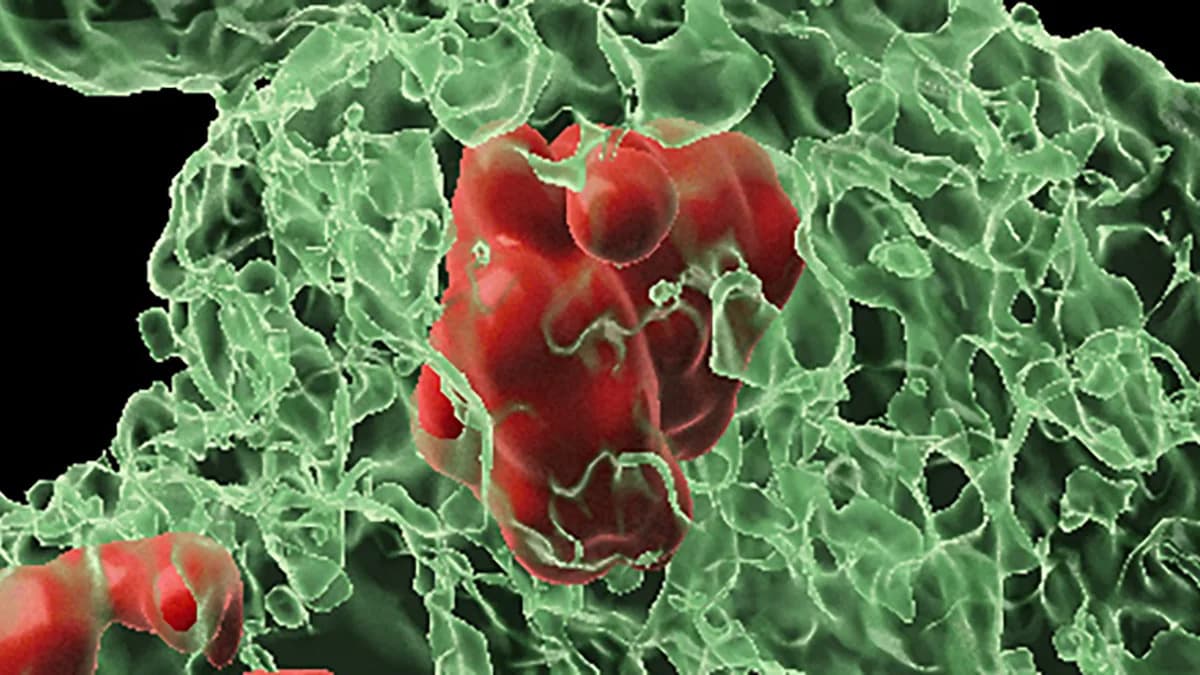
Dense fibrous connective tissue
Many of the body's repair and maintenance processes decline with age, including tissue regeneration. A new study from researchers at the University of California, San Francisco (UCSF) describes a promising method to reactivate youthful cellular programs by changing the activity of specific transcription factors.
What the Study Found
The team identified four transcription factors — E2F3, EZH2, STAT3, and ZFX — that, when modulated, push aged cells toward a younger state. In elderly mice, increasing production of one of these factors in liver cells reduced fat accumulation and scarring and improved glucose tolerance, all signs of improved organ health.
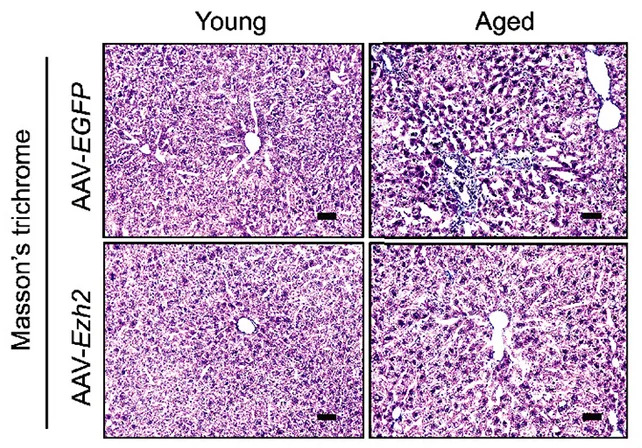
Increasing the expression of EZH2 (bottom row), one of four transcription factors identified, reduced liver scarring (blue stain) in older mice compared to controls (top row). (Sengstack et al.,PNAS, 2026)
Human Cells in the Lab
In parallel experiments using human fibroblasts grown in culture, the researchers adjusted the levels of all four transcription factors. The treated fibroblasts showed multiple markers of rejuvenation, including higher rates of cell division and increased cellular energy, indicating a more youthful state.
How They Did It
The researchers began by comparing gene-expression patterns in young and old human fibroblasts using computational models to identify age-related differences. From that analysis they shortlisted roughly 200 candidate transcription factors, then systematically toggled each one on and off to test effects on cellular youthfulness. This screening led them to the final four factors tested in detail.

Audition now for ScienceAlert's Casting Call
By altering gene expression using the transcription factors we identified, old fibroblasts behaved as if they were younger, and improved the health of old mice, says biochemist Hao Li.
Significance and Caveats
The fact that these proteins produced similar effects in two species and across different cell types suggests there may be a broadly applicable molecular blueprint for reactivating youthful states in aged cells. However, the findings are preliminary. Experiments to date involve only a few cell types and short timeframes: mouse experiments lasted only several weeks.
Long-term safety is unknown. For instance, increased activity of EZH2 has been previously linked to cancer, so careful evaluation of dosing, timing, and unintended consequences will be essential before any clinical application. The study does not demonstrate whole-body rejuvenation, limb replacement, or lifespan extension.
Still, with global populations aging, approaches that could preserve or restore tissue function warrant further investigation. The research has been published in PNAS.
Our work opens up exciting new opportunities to understand and ultimately reverse aging-related diseases, says biochemist Janine Sengstack.
Help us improve.