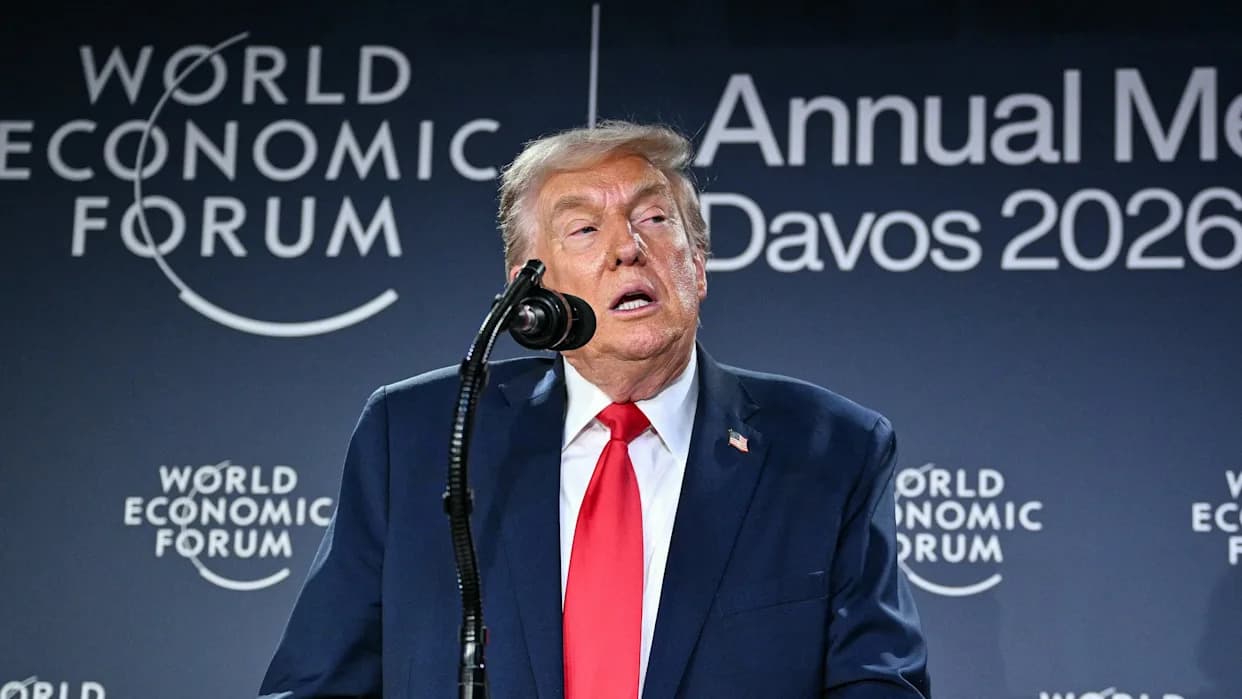
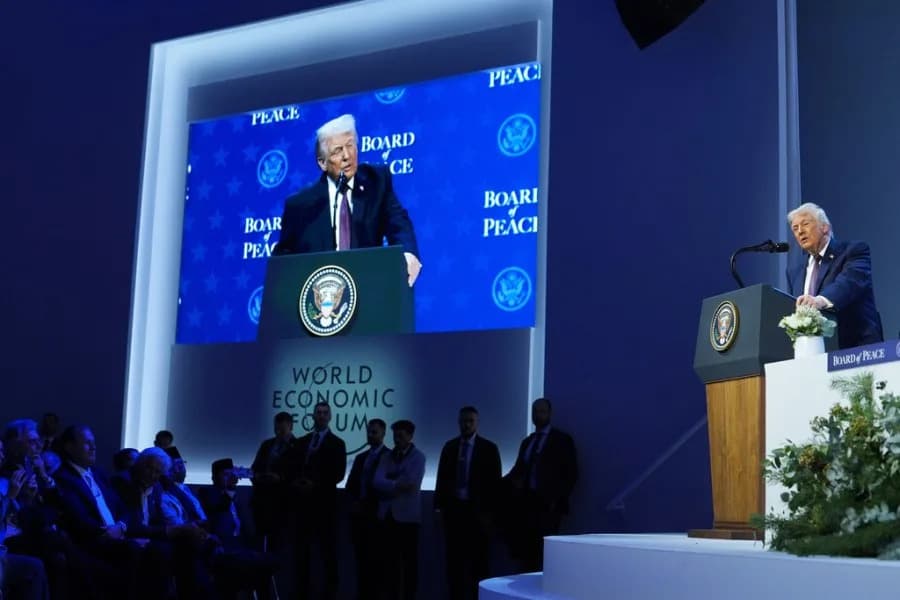
The 2026 Davos meeting was dominated by President Donald Trump, whose Greenland comment strained transatlantic trust and prompted calls for faster EU decision-making. Market and trade tensions rose after U.S. tariff threats, renewing CEO concerns about predictability and driving talk of diversifying trade. AI dominated tech conversations, balancing optimism about growth with union demands for protection and retraining, while energy debates split between calls to boost oil output and arguments for large-scale solar deployment. Defence discussions included relief over no military move on Greenland and controversial claims about a covert sonic weapon.
Five Key Takeaways From Davos 2026: Trump, Trade Tensions, AI Hype and Energy Divides
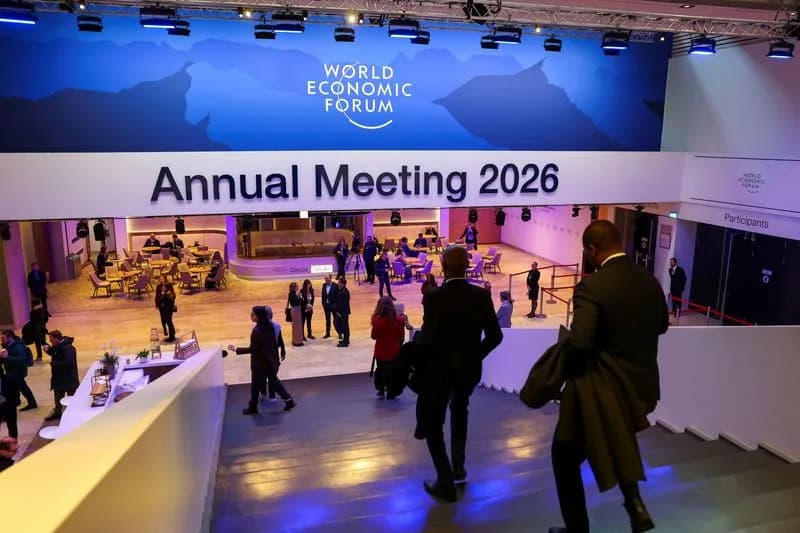
People walk on the last day of the 56th annual World Economic Forum (WEF) meeting in Davos, Switzerland, January 23, 2026. REUTERS/Denis Balibouse
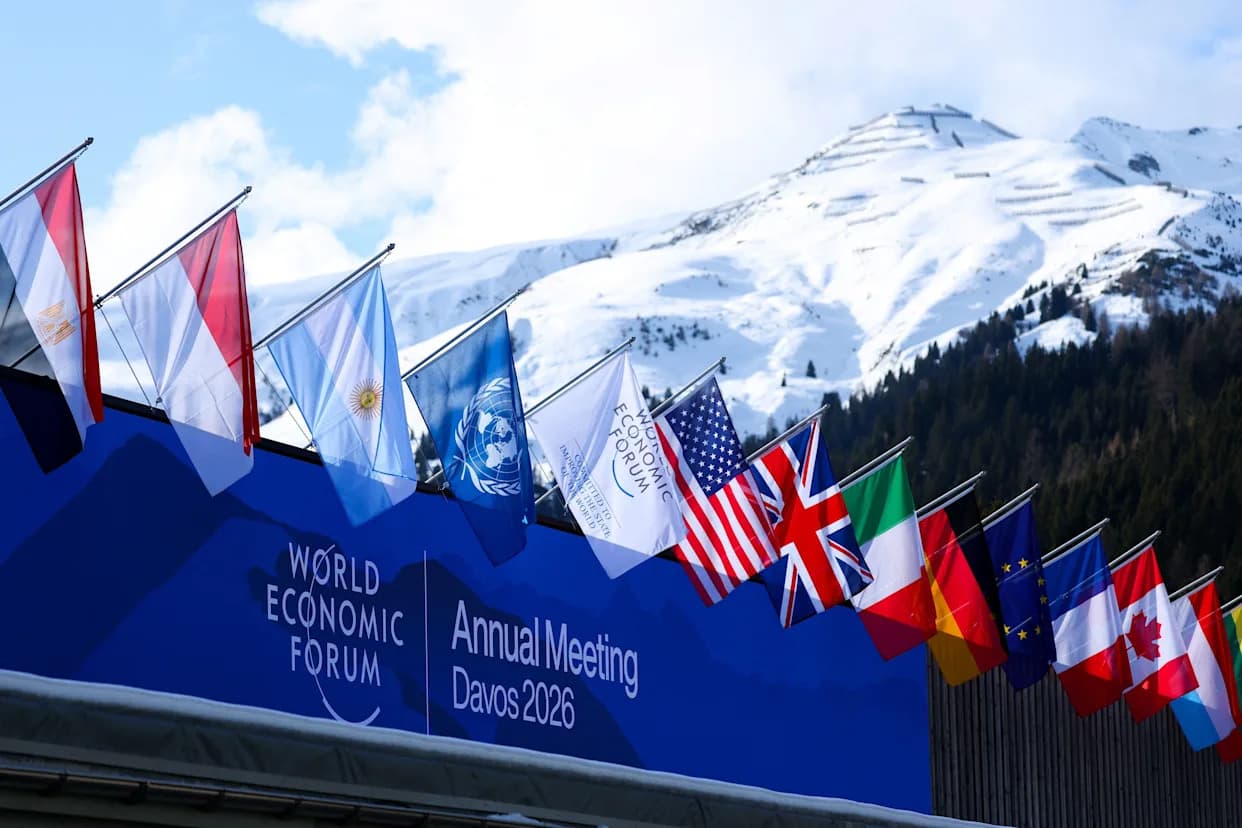
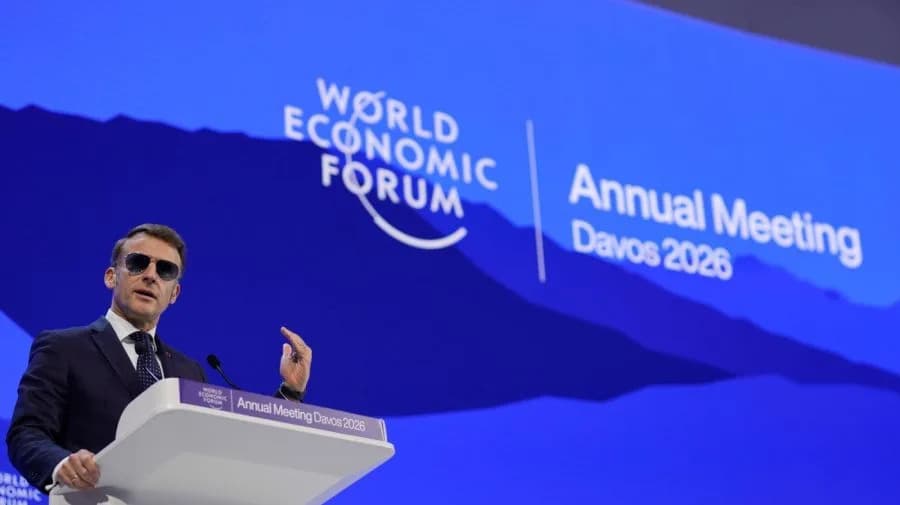
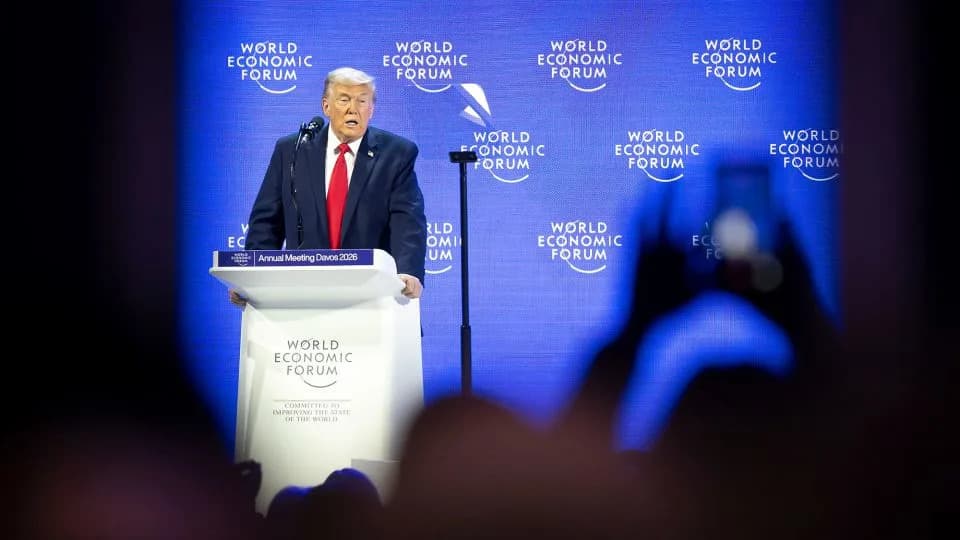
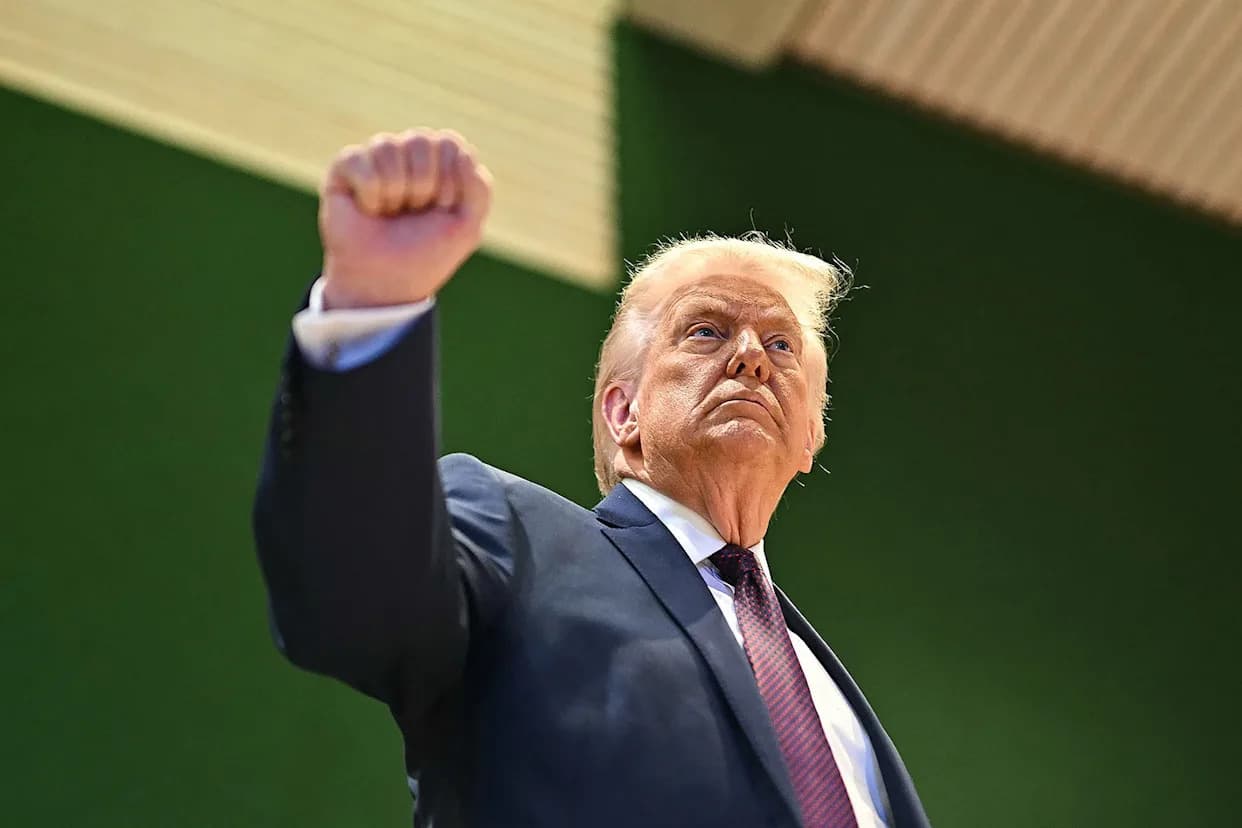
World leaders and corporate executives left Davos on Jan. 23 after a World Economic Forum annual meeting that was dominated by U.S. President Donald Trump’s interventions and rhetoric. The sessions ranged from tense geopolitical exchanges to bullish — and cautious — conversations about artificial intelligence, markets and energy policy.
Geopolitics
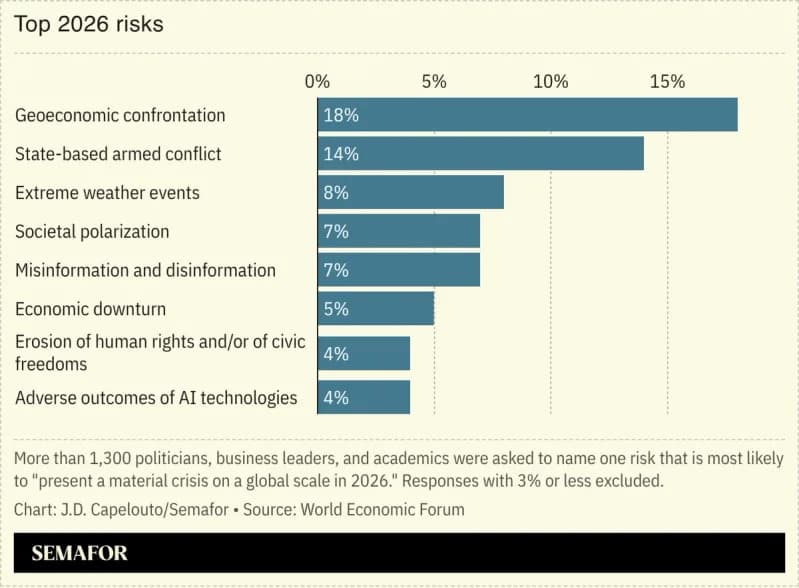
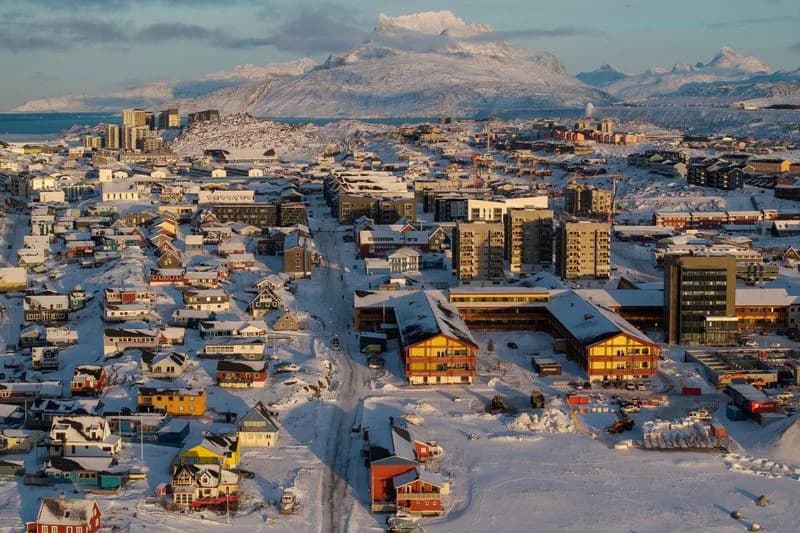
Europe pushed back strongly after Mr. Trump’s offhand remark about acquiring Greenland, treating it as a red line on territorial sovereignty. Many participants credited European resistance — and the market turmoil that followed — with persuading the U.S. president to back away. Still, the episode strained transatlantic trust and prompted calls for faster European decision-making in future crises. "There are efforts to advance European decision-making. We are probably too slow," one EU official said.
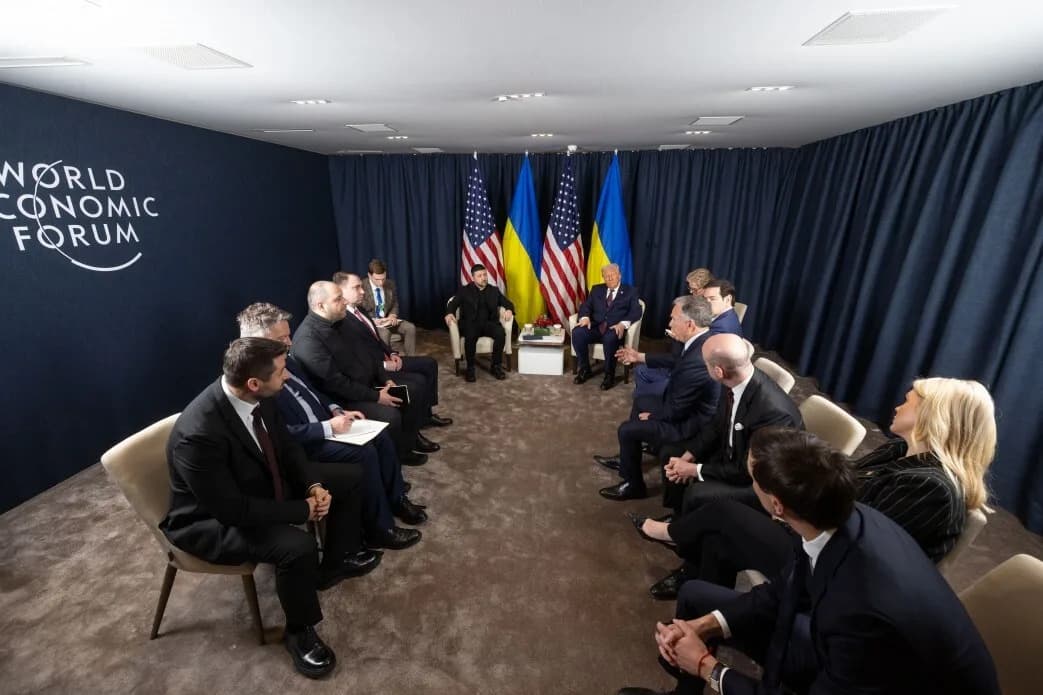
Ukraine remained a central, if unresolved, concern. President Volodymyr Zelenskiy arrived for talks after the Greenland episode, but a comprehensive peace deal remained elusive, with territorial issues still outstanding. In another sign of shifting diplomatic engagement, Kirill Dmitriev, an envoy for Russian President Vladimir Putin, attended meetings with U.S. officials at the USA House — the first Russian official visit to Davos since Russia’s 2022 invasion of Ukraine — though he did not formally participate in the Forum.
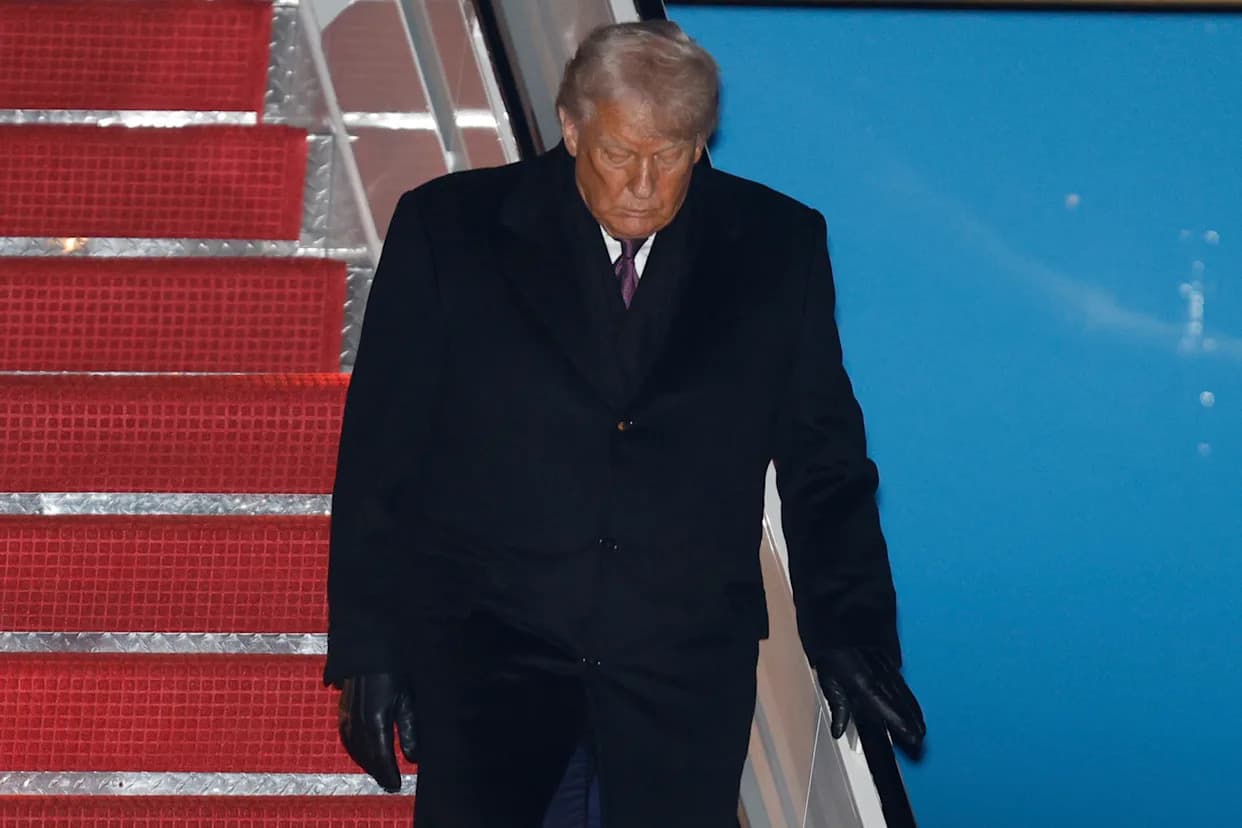
Attendees debated the consequences of possible U.S. actions in the Middle East, including whether a strike on Iran could unfold and what the aftermath would be. Delegates repeatedly highlighted President Trump’s unpredictability as a defining feature of the week.
Macroeconomics and Markets
Tensions over Mr. Trump’s trade threats — including warnings of tariffs against European allies tied to the Greenland dispute — revived CEO concerns about predictability and the rules that underpin global commerce. "When you talk to CEOs today, what do they want? Stability, predictability, and the rule of law. I would say it's in short supply," Canadian Finance Minister François-Philippe Champagne said.
Executives at financial firms signaled hope for stronger activity but said they were preparing for disruption from U.S. policy shifts, geopolitics, AI and fintech innovations. JPMorgan CEO Jamie Dimon warned that a proposal to cap credit card interest rates would be an "economic disaster," while other bankers said they were engaging with Washington on affordability measures. Crypto executives promoted stablecoins and blockchain as potential disruptors, though bankers remain split between experimentation and caution. Investors also wrestled with questions about the Federal Reserve’s independence and bubble risks in AI and other assets.
Artificial Intelligence
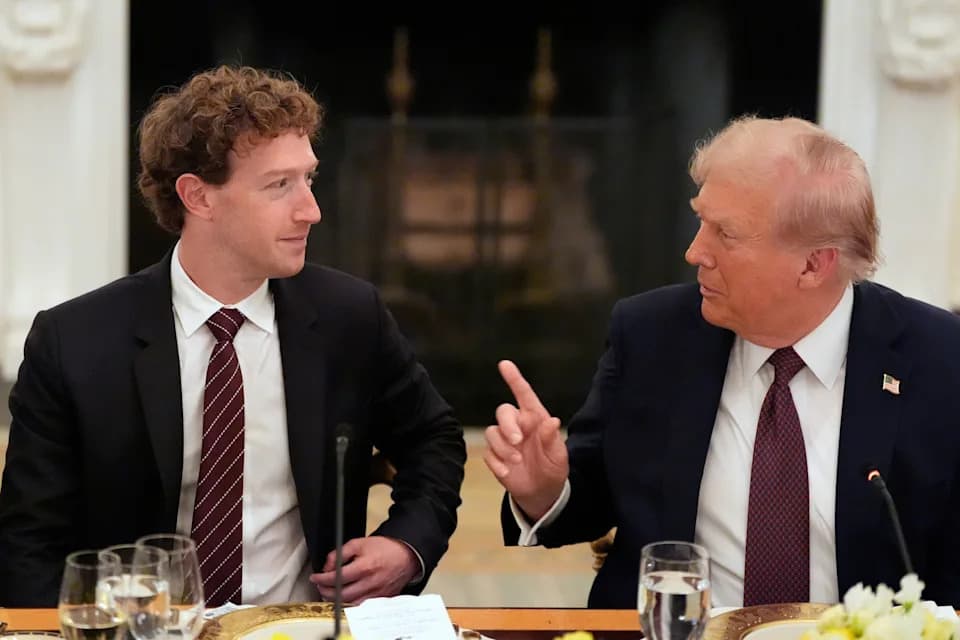
Tech companies turned out in force, with rare in-person appearances by Tesla CEO Elon Musk and Nvidia’s Jensen Huang. Anthropic set up temporary office space along Davos’s main street to boost enterprise sales, and many executives said earlier skepticism about AI valuations had softened.
On jobs: Business leaders predicted some roles would disappear while new ones would emerge; several suggested AI could be used as an "excuse" to justify layoffs rather than the sole cause. Union leaders, however, warned that AI risks accelerating job loss and inequality and called for regulation and retraining programs.
Energy
Big Oil returned to the spotlight as the Trump administration signaled support for more fossil-fuel production and paused some wind projects. U.S. Energy Secretary Chris Wright told a panel he believed global oil production must more than double to meet rising demand — a view that challenges many analysts who expect demand to peak within two decades.
The administration’s pivot pleased many in the oil industry, but not everyone sided with that approach. Elon Musk argued the U.S. could meet all its electricity needs with large-scale solar deployment, noting that a small portion of Nevada, Utah or New Mexico could provide nationwide power. Musk also warned that high tariffs on solar equipment make deployment unnecessarily expensive.
Defence
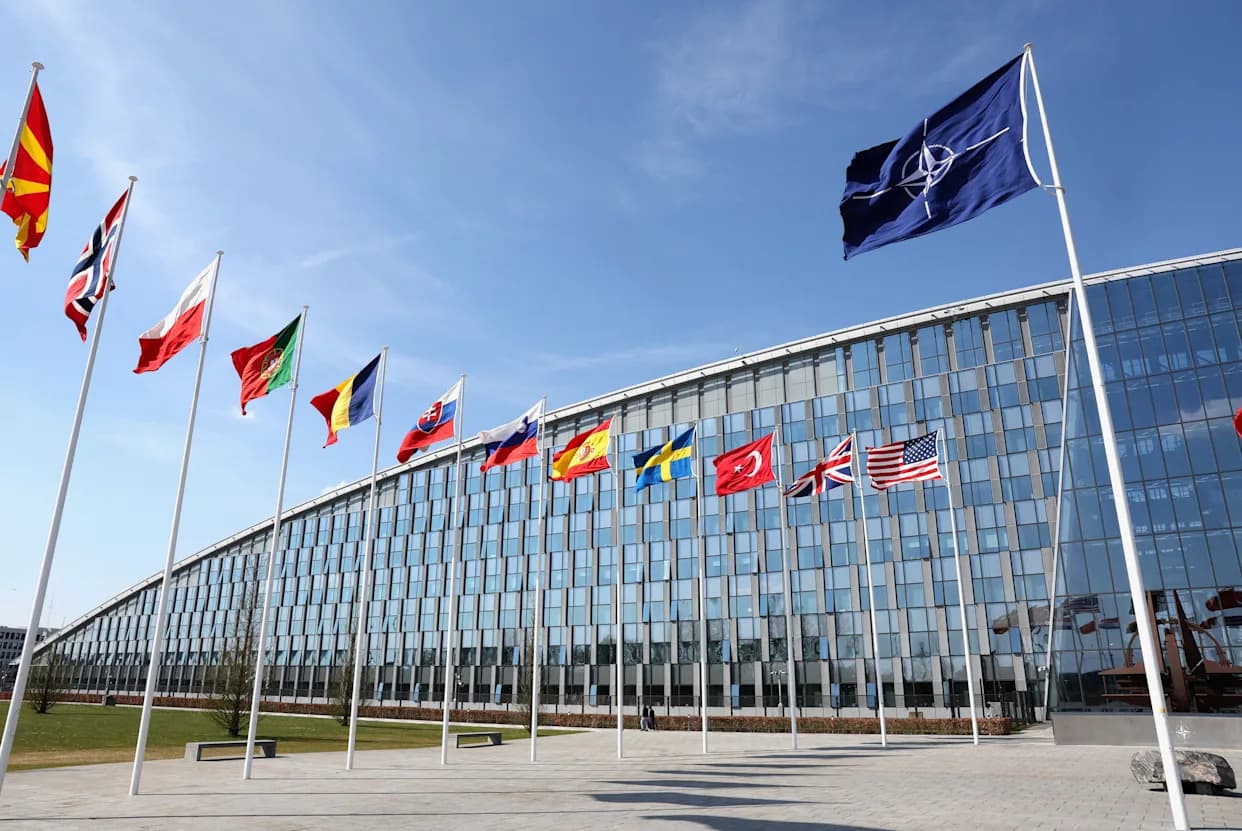
Delegates expressed relief after Mr. Trump said there was no military solution to his Greenland demands. Still, some executives predicted increased defence spending and related projects in Europe and the U.S. Mr. Trump also described a covert "sonic" weapon he claimed had been used in the capture of Venezuela’s Nicolás Maduro, a claim the Kremlin said Russian security services were investigating.
Reporting compiled from Davos by Reuters correspondents; edited for clarity and flow.
Help us improve.