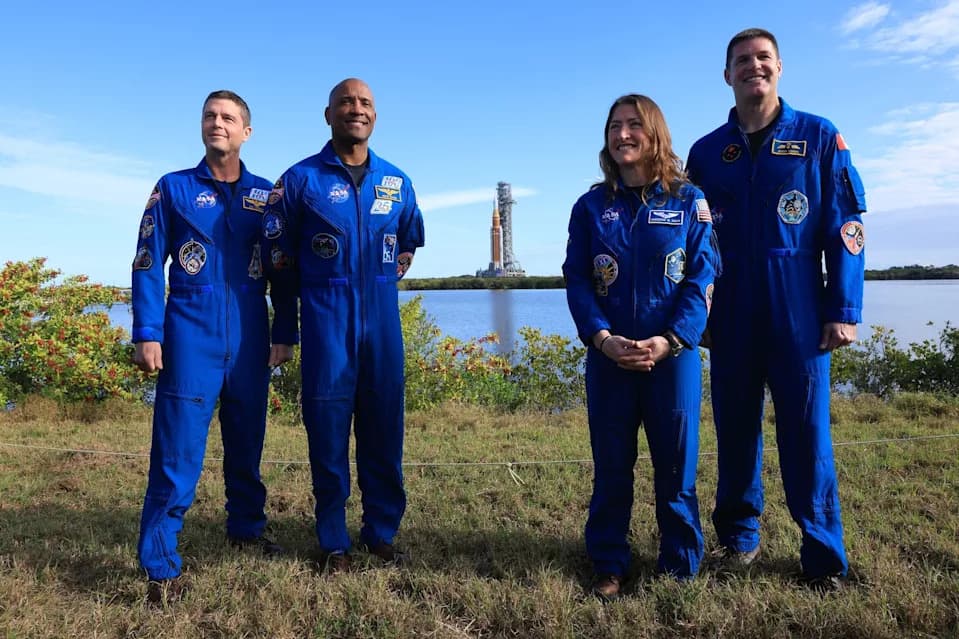
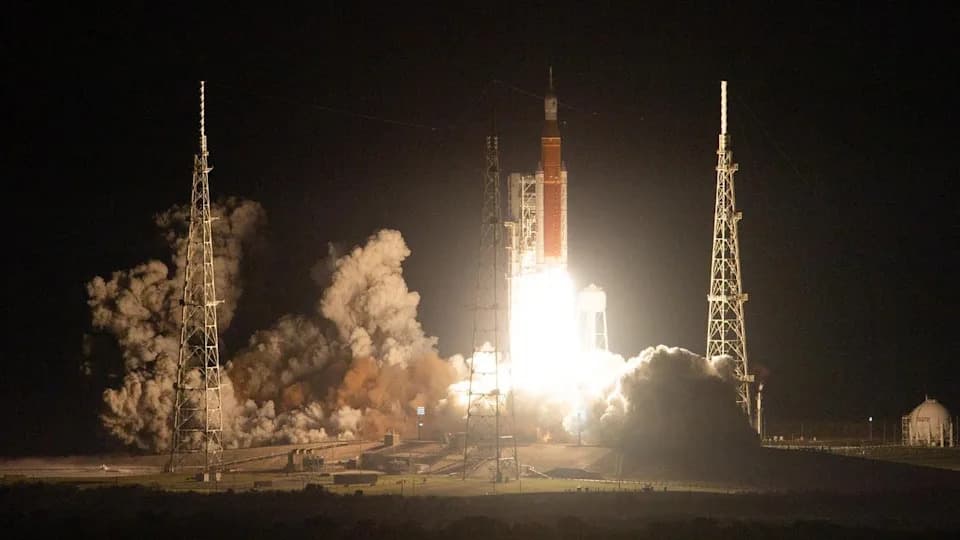
Artemis II is a planned 10-day crewed mission that will send four astronauts aboard Orion to circle the moon and travel more than 4,000 miles beyond the lunar far side, possibly the farthest humans have been from Earth. The flight includes historic firsts for Victor Glover and Christina Koch and will test human-health studies and spacecraft systems. Artemis II prepares the way for Artemis III (planned for 2027), which targets the lunar South Pole, and for a future lunar orbital outpost to support sustained exploration.
Revisiting Apollo as Artemis II Prepares to Carry Humans Around the Moon
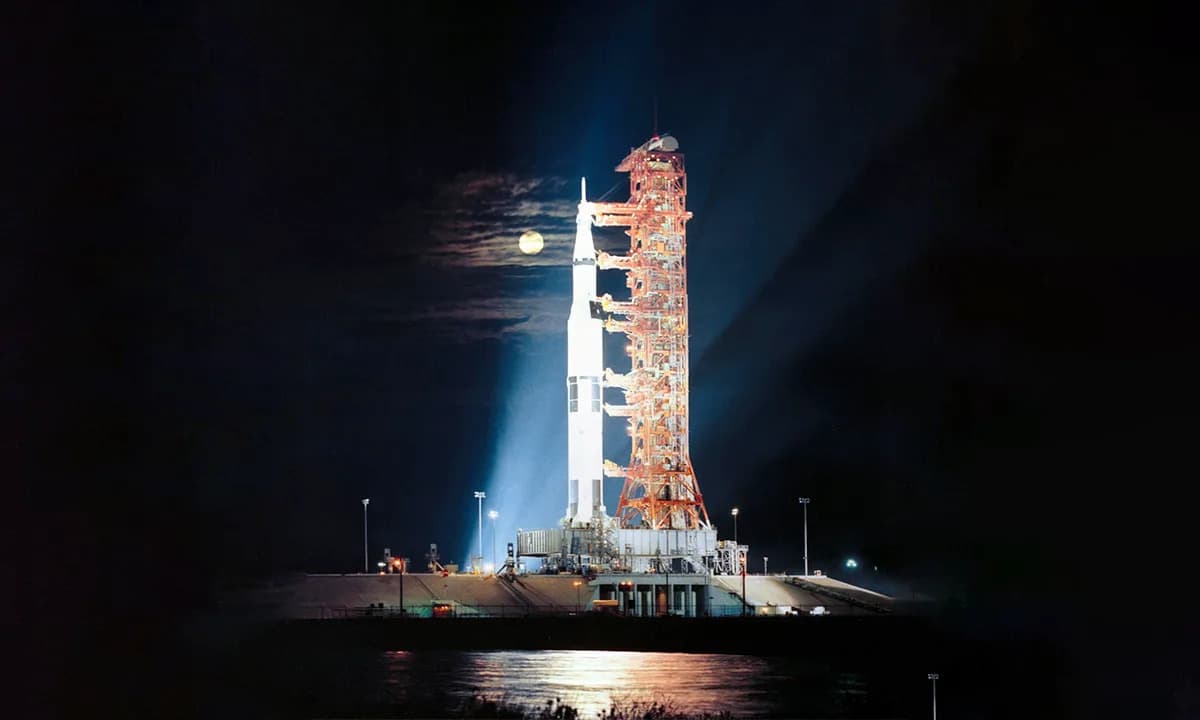
S72-54813 (November 1972) --- Searchlights illuminate this nighttime scene at Pad A, Launch Complex 39, Kennedy Space Center, Florida, showing the Apollo 17 (Spacecraft 114/Lunar Module 12/Saturn 512) space vehicle during prelaunch preparations. Credit: NASA.(S72-54813 (November 1972) --- Searchlights illuminate this nighttime scene at Pad A, Launch Complex 39, Kennedy Space Center, Florida, showing the Apollo 17 (Spacecraft 114/Lunar Module 12/Saturn 512) space vehicle during prelaunch preparations. Credit: NASA.)
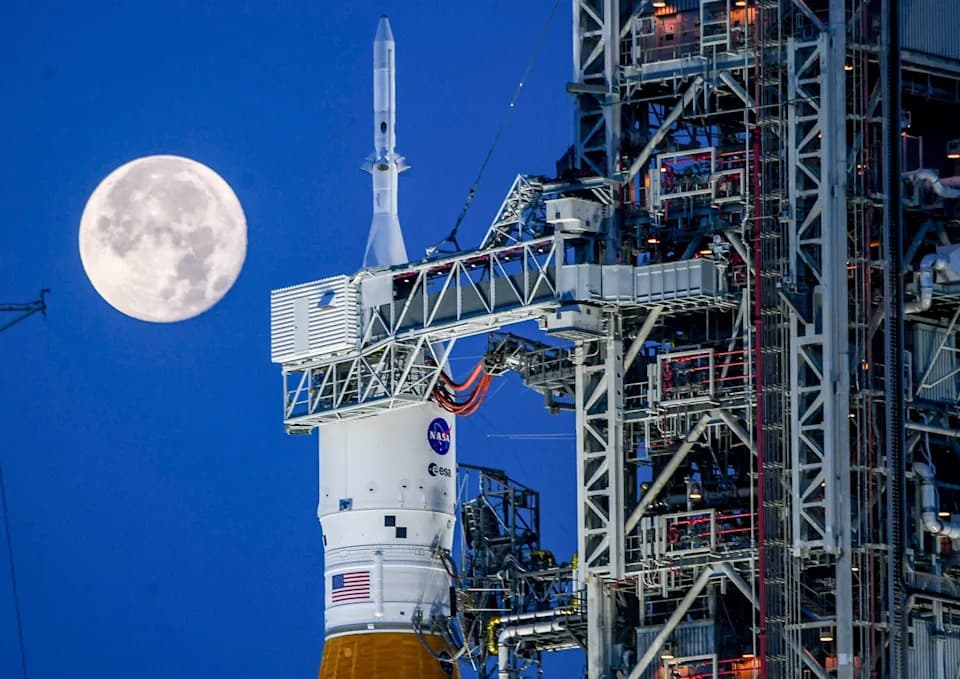
Next month, NASA is poised to fly the first crewed mission around the moon in more than 50 years. Artemis II is a roughly 10-day crewed flyaround that could launch as early as February 6, carrying four astronauts aboard the Orion spacecraft on a mission that will not yet attempt a lunar landing.
Mission Overview
During the flight, Orion is expected to travel more than 4,000 miles beyond the moon’s far side — a distance that would make this the farthest humans have ever been from Earth. The crew will perform a suite of tests and observations designed to advance human deep-space operations and prepare for future surface missions.
Historic Firsts and Experiments
The flight will include notable milestones: pilot Victor Glover is expected to become the first person of color to travel beyond low-Earth orbit, and mission specialist Christina Koch will be the first woman to do so. While in transit, the crew will run experiments to study how spaceflight affects human physiology, test spacecraft systems, and make new observations of lunar terrain — possibly even viewing previously unseen stretches of the moon’s far side.
Why Artemis II Matters
Artemis II is a stepping stone for later Artemis missions that aim to return humans to the lunar surface and establish sustainable operations. Artemis III, currently planned for 2027, aims to land astronauts near the lunar South Pole, a region of great scientific interest because its permanently shadowed areas may harbor frozen water — a critical resource for future exploration.
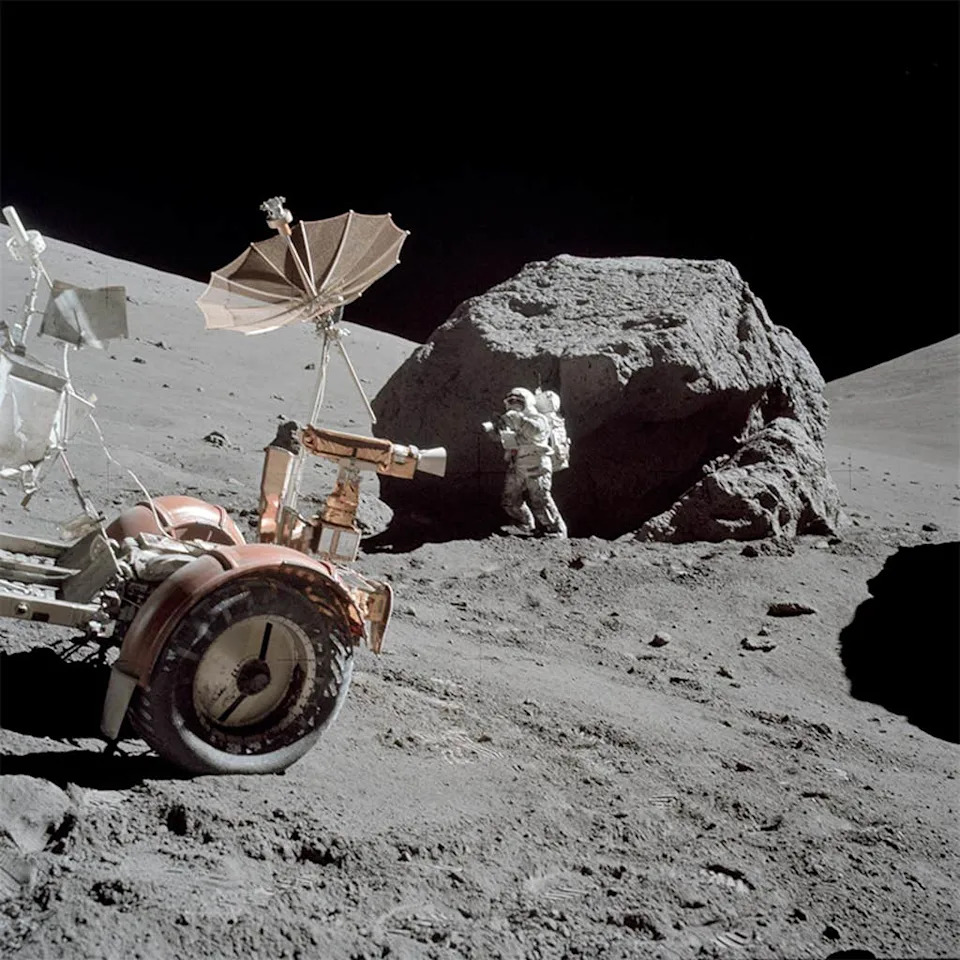
A GEOLOGIST GOES TO SPACE:Harrison Schmitt studying a boulder on the moon during the Apollo 17 mission.Image by NASA.
Long-Term Goals
The Artemis program also anticipates an orbital lunar outpost — commonly referred to as the Gateway — that would support scientific research, provide logistics and staging for surface missions, and potentially serve as a waypoint for missions to Mars. Those prospects remain goals for future missions rather than immediate realities.
Lessons From Apollo
Next month’s mission builds directly on lessons from the Apollo era. Humans last walked on the moon during Apollo 17 in 1972. That mission conducted geological surveys, collected surface samples and completed a range of scientific experiments that shaped our understanding of the moon as a rocky body with an interior and composition broadly similar to Earth’s.
Apollo 17 And Harrison Schmitt
The Apollo 17 crew included geologist Harrison Schmitt, who remains the most recent living person to have set foot on the lunar surface and is the only professional geologist ever to walk on the moon. Unlike many earlier moonwalkers, Schmitt had not been a pilot before his assignment; he completed a 53-week flight training program at Williams Air Force Base in Arizona to prepare for the mission. On the lunar surface he explored the Taurus–Littrow Valley and collected more than 240 pounds of rock samples to return to Earth for detailed study.
As Schmitt set out on his first lunar rover excursion he said, "It’s a good geologist’s paradise if I’ve ever seen one!"
Lead image: NASA
Originally published by Nautilus.
Help us improve.