UNSW researchers used CRISPRi to screen nearly 1,000 non-coding DNA regions in cultured astrocytes and validated about 150 functional enhancers that regulate genes linked to Alzheimer's disease. These enhancers sit in genomic regions commonly labeled as junk DNA but act as regulatory switches that alter gene expression. The experimentally confirmed enhancers can train AI models to find more regulatory elements and help map gene-control circuits in brain cells. While this does not yield immediate therapies, it provides crucial molecular wiring diagrams to guide future research.
Junk DNA May Contain 'Switches' That Let Alzheimer's Take Hold — UNSW Identifies ~150 Astrocyte Enhancers

brain with dna overlaid
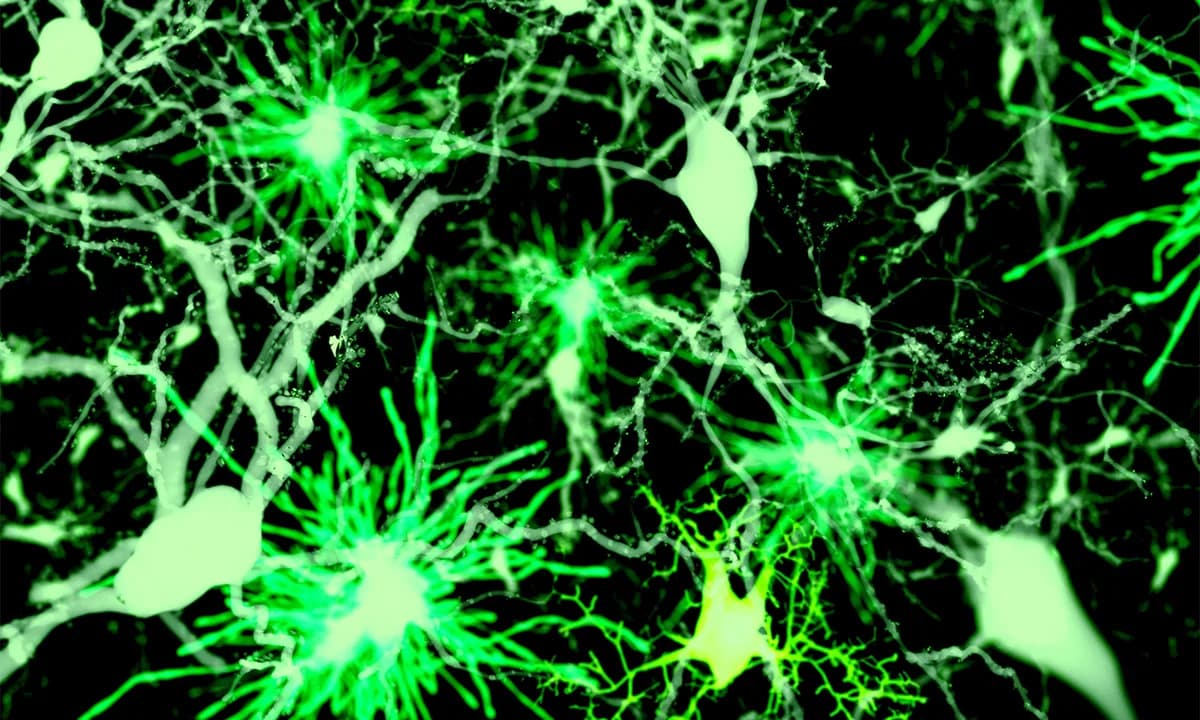
Researchers at the University of New South Wales (UNSW) report that regulatory "switches" in non-coding or so-called junk DNA may play a key role in how Alzheimer's disease develops. The team experimentally validated roughly 150 functional control elements, called enhancers, in astrocytes — the brain cells that support neurons commonly damaged in Alzheimer's.
Study Overview
The investigators used CRISPRi, a gene-silencing tool that represses targeted DNA regions without permanently cutting the genome, to screen nearly 1,000 candidate non-coding regions in cultured human astrocytes. By turning off each candidate region and measuring resulting changes in gene expression, the researchers identified which regions act as true enhancers and mapped the genes they regulate.
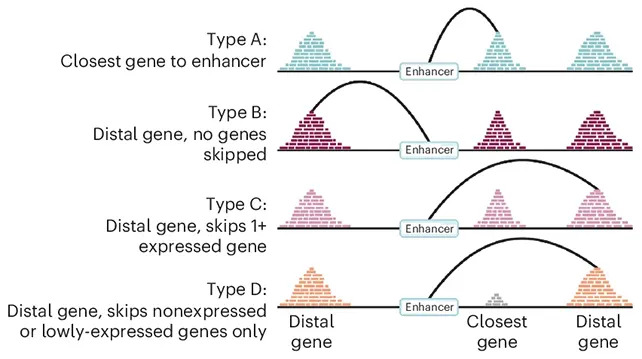
Enhancers are not necessarily near the genes they influence. (Green et al.,Nat. Neurosci., 2025)
Key Findings
About 150 of the screened regions behaved as functional enhancers in astrocytes. A substantial share of those enhancers control genes that have been implicated in Alzheimer's disease, linking non-coding regulatory sequences to known disease-associated genes. Because enhancers can be located far from the genes they affect, demonstrating these long-range regulatory interactions across the genome is an important advance.
Implications And Next Steps
The validated enhancer set provides experimentally confirmed training examples that artificial intelligence models can use to find additional regulatory elements more quickly across different cell types. The authors emphasize that this work supplies a clearer wiring diagram of gene control in astrocytes, which is a prerequisite for developing targeted interventions in the future.

Subscribe to ScienceAlert's free fact-checked newsletter
However, the team cautions that the enhancers were identified in a specific experimental system and are known only to be active in those cultured astrocytes. Further research is needed to determine whether the same enhancers act similarly when astrocytes become reactive or dysfunctional in the human brain during Alzheimer's disease. Alzheimer’s is a complex condition, and astrocyte regulatory changes are one piece of a larger puzzle.
The study appears in Nature Neuroscience and offers a foundational resource for researchers studying gene regulation in brain cells and its contribution to neurodegeneration.
Help us improve.