Scientists analyzed blood, saliva, urine and stool from Maria Branyas, who died at 117 in 2024, and found that many of her cells and her genome appeared biologically younger than her chronological age. The team identified rare genetic variants associated with longevity, a youthful immune and gut microbiome profile, excellent cardiovascular markers and very low inflammation. Surprisingly, Branyas had markedly short telomeres, which the authors suggest might have helped limit cancer risk in her case. The researchers stress that findings from a single individual require validation in larger cohorts.
117-Year-Old’s DNA and Cells Reveal Clues to Exceptional Longevity

A sepia tone portrait of a young woman
Researchers who analyzed biological samples from Maria Branyas — who died in 2024 at the age of 117 and was the world's oldest living person at the time — report that many of her cells and her genome appeared biologically younger than expected for her chronological age. The Barcelona-led team identified rare genetic variants and multiple physiological signatures that may help explain her sustained health into extreme old age.
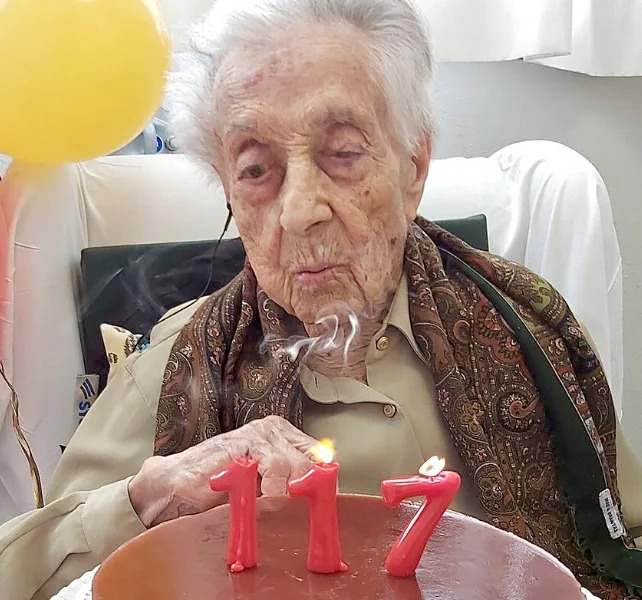
Maria Branyas on her 117th birthday. (Family archive of Maria Branyas Morera/Wikimedia Commons/PD)
What the Study Measured
Scientists at the Josep Carreras Leukaemia Research Institute and collaborators examined blood, saliva, urine and stool samples Branyas provided before her passing. Their analyses covered genetic variants, epigenetic markers, immune function, metabolic biomarkers, cholesterol and triglyceride levels, gut microbiome composition and telomere length.

Subscribe to ScienceAlert's free fact-checked newsletter
Key Findings
Overall, Branyas displayed remarkable markers of health for someone of extreme age: excellent cardiovascular function, very low systemic inflammation, and a metabolic profile with very low levels of so-called 'bad' cholesterol (LDL) and triglycerides alongside high levels of 'good' cholesterol (HDL). Her immune system and gut microbiome carried signatures more typical of much younger cohorts, and the team identified rare DNA variants linked to longevity, immune resilience and preserved brain and heart health.
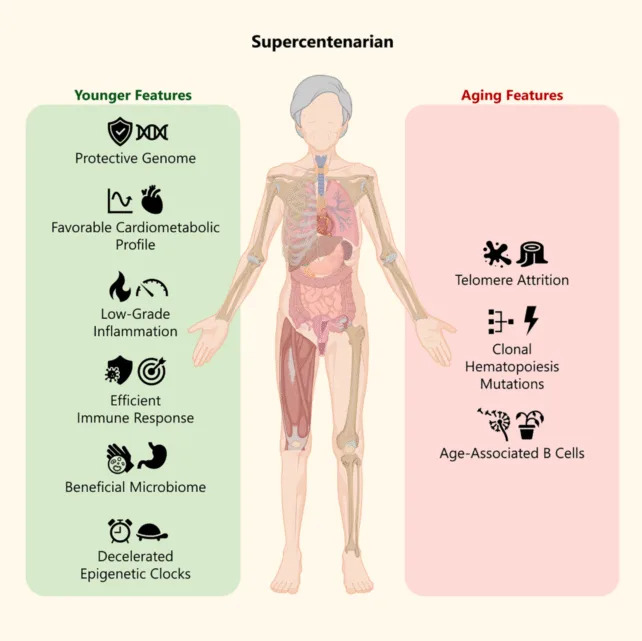
Younger features and aging features of Maria Branyas. (Santos-Pujol et al.,Cell Reports, 2025)
One surprising observation was pronounced erosion of telomeres — the protective caps at chromosome ends. While short telomeres are usually associated with higher mortality risk, the authors note emerging evidence that telomere length may be a poor biomarker among the oldest-old. They propose a hypothesis: in some people, very short telomeres could limit the proliferative capacity of cells prone to malignant transformation, potentially reducing cancer risk.
"Extreme human lifespan, exemplified by supercentenarians, presents a paradox in understanding aging: despite advanced age, they maintain relatively good health," wrote the research team led by epigeneticists Eloy Santos-Pujol and Aleix Noguera-Castells.
Context and Caution
The authors emphasize that this study reports on a single exceptional individual, so conclusions cannot be generalized without larger cohorts. Branyas also led an active life and followed aspects of a Mediterranean-style diet, factors that may have contributed to her wellbeing alongside fortunate genetics. The researchers call for bigger comparative studies of exceptionally long-lived people to validate which biomarkers reliably predict healthy aging and disease resistance.
These results were published in Cell Reports Medicine and offer a rare molecular snapshot of extreme human longevity that could inform future research into biomarkers and strategies for extending healthy lifespan.
Help us improve.