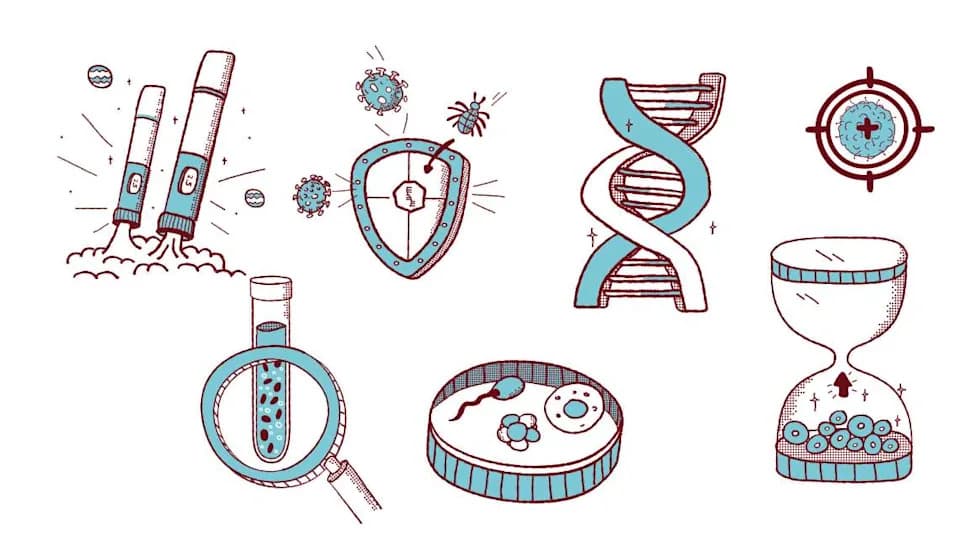
Gameto, founded by Dina Radenkovic, is developing Fertilo, an iPSC‑based therapy that matures eggs in the lab after one or two injections instead of the typical two weeks of hormone shots. Eleven babies have been born after Fertilo so far, and a Phase 3 U.S. trial is underway at 15 clinics. The same cell‑derived approach could inform a menopausal implant called Ameno and broader strategies to address ovarian aging and related long‑term health risks.
A Startup Is Rewriting IVF: How Gameto Uses Stem‑Cell‑Derived Ovarian Cells To Simplify Fertility—and Tackle Ovarian Aging

Dina Radenkovic founded Gameto to address a painful paradox in reproductive medicine: standard IVF requires roughly two weeks of daily hormone injections to mature eggs, a burdensome process that many patients find hard to endure. In December 2022, at age 27, Radenkovic administered a single abdominal injection as part of a clinical trial that would grow to underpin Gameto’s lead therapy, Fertilo.
Fertilo replaces much of the hormonal burden of conventional IVF. Clinicians retrieve immature eggs after just one or two injections, then mature them in the laboratory using living cells engineered to mimic the egg‑nurturing ovarian support cells. The approach builds on the 2012 Nobel Prize discovery of induced pluripotent stem cells (iPSCs) — skin or other adult cells reprogrammed into cells that can become almost any tissue.
In about a year, Gameto reports that 11 babies have been born after treatment with Fertilo, and the company says the therapy is cleared for use in roughly a dozen countries. A Phase 3 clinical trial is currently enrolling across 15 U.S. clinics. If approved by the U.S. Food and Drug Administration, Fertilo would be the first U.S. therapy based on iPSC‑derived cells and the first new IVF drug introduced domestically in more than two decades.
Why It Matters
Beyond making IVF less painful and time‑consuming, Gameto believes its technique could address broader challenges related to ovarian aging. Ovarian function typically begins to decline in the late 20s and accelerates before menopause, and emerging research suggests ovarian health influences long‑term outcomes such as bone density, cardiovascular risk, and cognitive aging.
“The ovaries are far more than just egg factories; they are the canaries in the coal mine,” said Jennifer Garrison, a women’s health researcher at UCSF.
Gameto is also developing a second product, Ameno, an implant under preclinical testing in mice. Ameno aims to use youthful ovarian support cells to deliver tailored hormone regimens that could ease menopausal symptoms and potentially reduce age‑related health risks tied to ovarian decline.
Clinical And Commercial Context
Early clinical results suggest Fertilo produces pregnancy rates comparable with conventional IVF, according to reproductive specialists. But adoption faces typical hurdles: clinicians are cautious about changing established protocols, regulators require large, rigorous trials, and fertility treatments often involve complex reimbursement and liability considerations.
Investors have begun to pour capital into what had been an underfunded area. Gameto has raised about $127 million, and high‑profile backers in the repro‑tech space have accelerated interest in reproductive and menopausal innovation. Still, women’s health remains underfunded overall: in 2023, about 2 percent of venture capital in health went to women’s health, and roughly 4 percent of biopharma R&D focuses on female‑specific conditions.
Real Patients, Real Differences
Patients who took part in early Fertilo trials report substantially fewer side effects and less disruption to work and life during egg retrieval. Stacey Gouter, who has polycystic ovarian syndrome and became pregnant after using Fertilo, said she barely experienced the hormonal side effects typical of conventional cycles. Gaby Romani, another early participant, described Fertilo as much easier than her prior IVF attempt and delivered a daughter this year.
Radenkovic’s personal story is closely woven into the company’s founding. A physician, research scientist and former biotech investor, she partnered with researchers including teams that had been converting iPSCs into ovarian support cells. Gameto licensed cell‑manufacturing technology to scale production and launched trials that led to Fertilo’s conditional clearances in multiple countries.
Outlook And Cautions
Experts say the promise is real but caution that long‑term safety and broad effectiveness must be proven. Fertilo’s Phase 3 trial will be critical to demonstrating whether lab‑matured eggs match conventional IVF results at scale. Regulators, clinicians and patients will also weigh ethical and access questions, including cost, equity and how quickly clinics will adopt a new paradigm.
If validated and widely adopted, Fertilo could reduce the physical and emotional burden of IVF, broaden reproductive options for high‑risk patients, and open a path toward therapies that address ovarian aging itself. For now, the company’s work sits at the intersection of reproductive care, stem‑cell science and aging biology — an area many experts say has been underexplored for too long.
Help us improve.