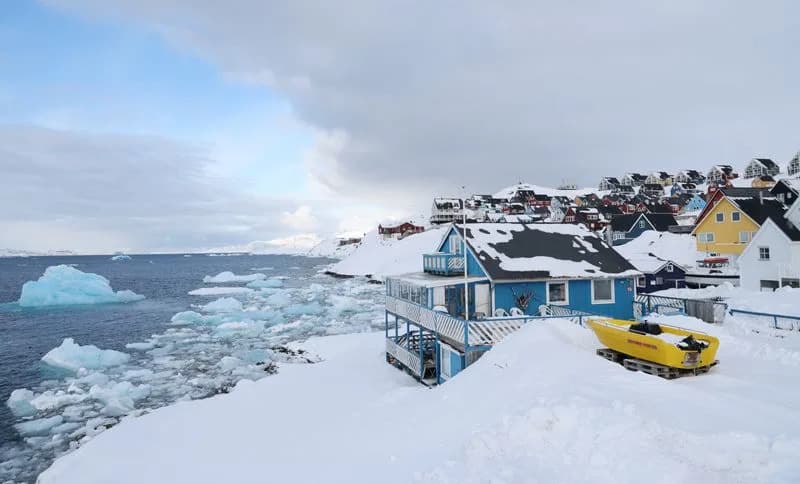
President Trump’s bid to acquire Greenland has created a rare internal strain on NATO by raising the prospect that one member might threaten the territory of another. NATO — founded in 1949 and now comprising 32 members — rests on mutual trust and the collective-defense promise of Article 5, which has been invoked only once (after 9/11). European leaders warn that U.S. efforts to seize or coerce Greenland could trigger an unprecedented crisis the treaty is ill-equipped to address. Any such move would likely provoke political and economic responses from allies and could significantly weaken the alliance.
NATO on Edge: How Trump’s Greenland Ambitions Could Fracture the Alliance
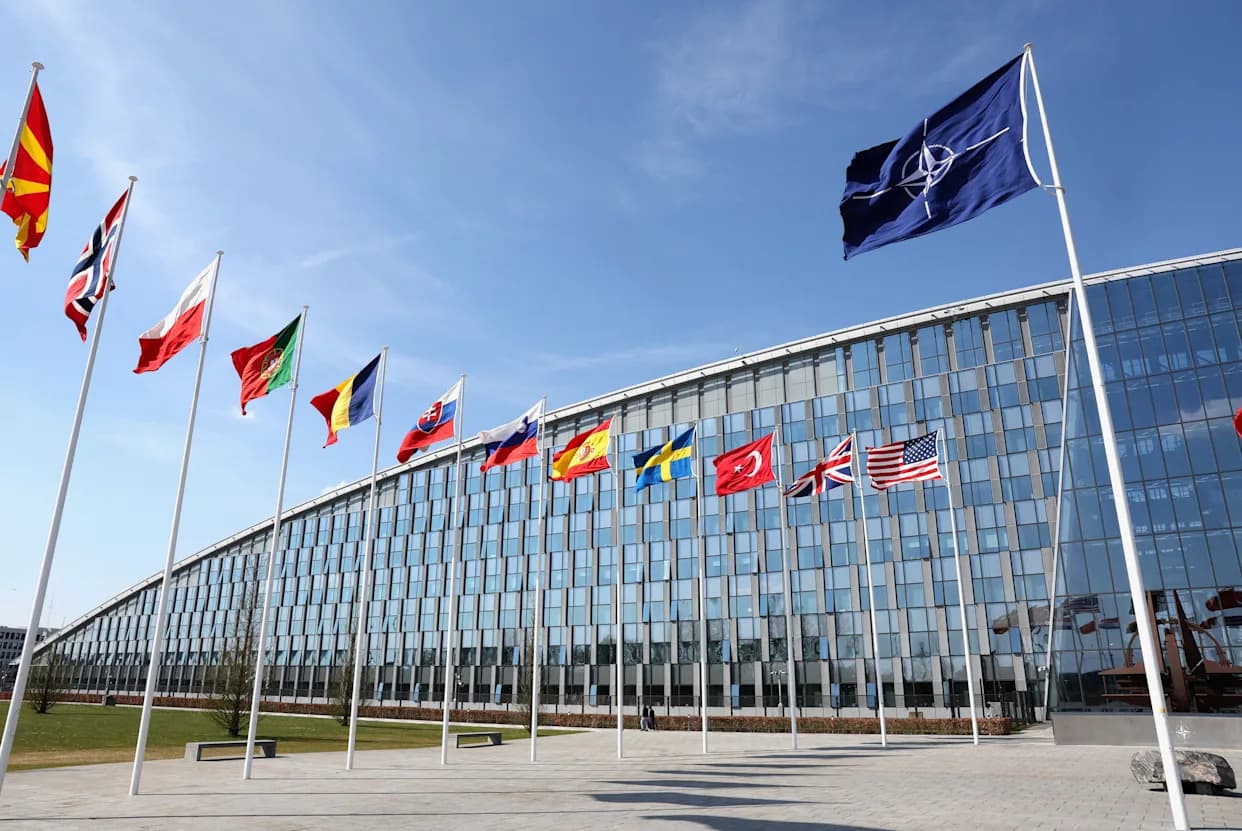
National flags of the alliance's members flutter at NATO headquarters in Brussels.(Yves Herman/Reuters)
President Donald Trump’s public push to secure Greenland — including talk of acquiring the autonomous Danish territory — has exposed a rare, potentially existential strain within NATO. What began as a controversial foreign-policy proposal has raised a critical question: what happens if a leading NATO member threatens the territorial integrity of another?
Why this matters
For more than seven decades NATO has bound the United States and its European partners through a shared promise of collective defense and political solidarity. That compact depends heavily on mutual trust: members must believe that each will honor treaty obligations. Suggestions that the United States might pursue Greenland, or that U.S. leaders might reconsider their commitment to allies, have already frayed that trust and prompted warnings from European capitals.
What Is NATO?
NATO (the North Atlantic Treaty Organization) is a collective-security alliance formed in 1949 to deter large-scale aggression in Europe after World War II. Today it includes 32 member states — the United States and 31 European countries — with Sweden the most recent entrant (March 2024). Canada and the U.S. are the only NATO members outside Europe.
Article 5: The Core Promise
Article 5 of the North Atlantic Treaty is the alliance’s central security guarantee: an armed attack against one member is treated as an attack against all. That pledge has been the primary deterrent against external aggression and has been invoked only once, in response to the Sept. 11, 2001 attacks on the United States.
Why Greenland Could Become a Unique Crisis
Greenland is an autonomous territory within the Kingdom of Denmark. If a NATO member — most notably the United States — attempted to seize or coerce control of Greenland, NATO would face an unprecedented internal crisis: the treaty foresees mutual defense against outside aggressors, not one member attacking another. The legal and political mechanisms to respond to intra-alliance aggression are limited.
Possible Responses and Limits
NATO as an organization lacks a clear enforcement mechanism for the scenario of one member attacking another. Individual members could impose sanctions, suspend cooperation, or pursue diplomatic and economic measures through other institutions such as the European Union or the United Nations. In practice, any response would be deeply political and could range from condemnation and sanctions to a partial unraveling of military cooperation — depending on how nations chose to react.
Consequences for the Alliance
An armed attack by the U.S. on a fellow NATO territory would precipitate an existential test for the alliance. There is no formal expulsion process in the North Atlantic Treaty; members can only withdraw voluntarily. If the U.S. left or were widely sanctioned by partners, NATO could continue but would be substantially weakened without American military and political leadership.
Political Fallout and Leadership Warnings
“It's really the future of NATO that is at stake,” said Anders Fogh Rasmussen, former NATO secretary-general and former Danish prime minister.
Other European leaders have publicly warned that trust is eroding and that the alliance faces a rupture if intra-alliance coercion were pursued. Danish leaders have emphasized that an attack on a fellow NATO territory would shatter the alliance’s cooperative framework.
Bottom Line
The Greenland episode highlights how domestic policy choices and presidential rhetoric can reverberate across decades-old security structures. NATO’s strength depends on predictable, collective behavior among members; when the most powerful member implies it might flout that norm, the alliance must reckon with hard strategic and political choices.
Help us improve.