Scientists applied proteomic analysis to an annotated 1531 medical manual by Bartholomäus Vogtherr and recovered 111 proteins from its pages. Identified residues included plant markers (beech, watercress, rosemary) adjacent to hair-growth recipes and animal collagen potentially from lizards or tortoises near treatments for baldness. Peptides resembling hippopotamus proteins were found beside sections on mouth and scalp ailments, and a lipocalin signature appeared next to a recipe recommending washing a bald head with human feces. The findings suggest readers actively tested remedies and show how molecular traces can illuminate early modern household medicine.
Molecules on the Margins: Proteomics Reveals Lizard Parts, Human Feces and Other Remedies in a 1531 Medical Manual
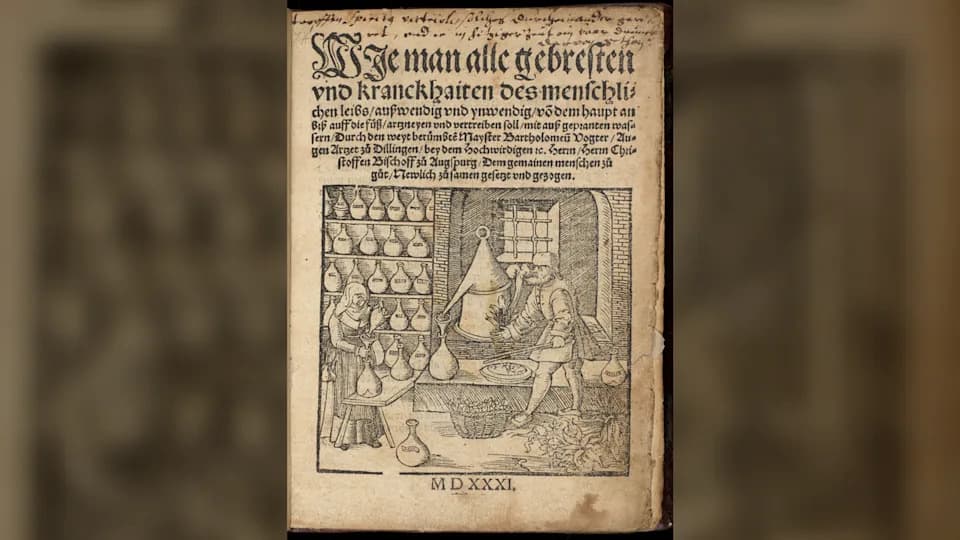
The title page of a collection of Renaissance German medical recipes published in 1531 by Bartholomäus Vogtherr. | Credit: Image provided by The John Rylands Research Institute and Library, The University of Manchester
Researchers have used modern proteomic techniques to read invisible chemical traces left by 16th- and 17th-century readers in a popular Renaissance medical manual, revealing the actual ingredients and hands-on practices folk practitioners tested for everyday ailments.
Background
Two German pamphlets published in 1531 by ophthalmologist Bartholomäus Vogtherr — How to Cure and Expel All Afflictions and Illnesses of the Human Body and A Useful and Essential Little Book of Medicine for the Common Man — collected household remedies for conditions such as hair loss, bad breath and mouth ulcers. An extensively annotated copy held by the John Rylands Research Institute and Library at the University of Manchester preserves marginal notes, smudges and handwriting that suggested readers actively tested and adapted recipes from the text.
How The Study Was Done
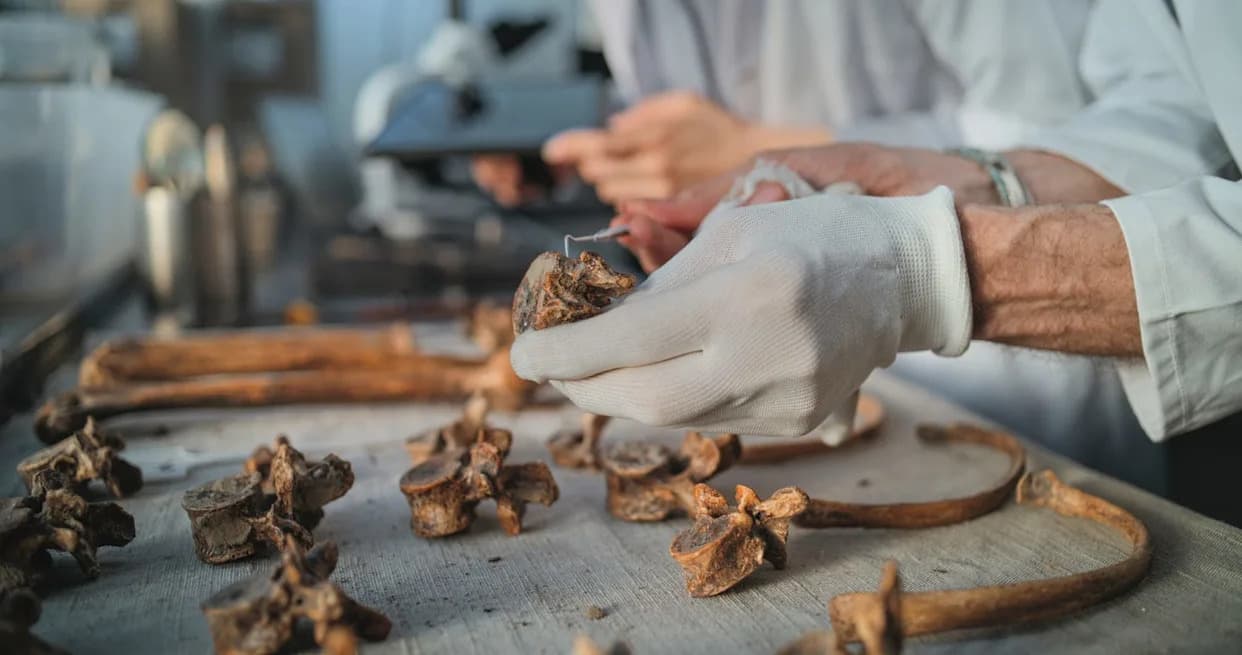
In a study published Nov. 19 in the American Historical Review, scientists described how they recovered protein residues from marks on the pages. The team used specially manufactured plastic diskettes to lift proteins from the paper surface and then applied mass spectrometry to sequence and identify peptide chains. In total, the researchers report sequencing 111 proteins from the Vogtherr manual.
What They Found
Most proteins matched human origin, consistent with heavy handling. Crucially, several peptide signatures corresponded to plants and animals mentioned in the recipes:
- Peptides attributable to European beech, watercress and rosemary were recovered beside hair-growth and anti–hair-loss recipes, supporting the link between the text and material practice.
- A peptide consistent with lipocalin was found adjacent to a recipe that recommends washing a bald head with human feces, which suggests some readers may have followed this extreme remedy.
- Other collagen peptides matched signatures that could derive from tortoise shell or lizards. Because these peptides were located near hair-restoration recipes — and historical sources record pulverized lizard heads used to prevent hair loss — the authors suggest readers may have experimented with lizard-based preparations.
- Surprisingly, some collagen peptides resembled hippopotamus-derived proteins. In early modern Europe, hippo teeth and other parts were valued curiosities associated with cures for baldness and dental ailments. These peptides were found by heavily annotated sections on halitosis, mouth ulcers and discolored teeth, hinting that readers consulted and tested such exotic remedies.
Interpretation and Caveats
The authors emphasize that molecular identifications are tentative in some cases: short collagen fragments can be similar across related species, so assignments to tortoise, lizard, or hippopotamus remain probabilistic. Nonetheless, the spatial association of specific peptides with annotated recipes provides strong contextual evidence that readers were not only copying recipes but handling and testing ingredients.
"People always leave molecular traces on the pages of books and other documents when they come into contact with paper," said Gleb Zilberstein, a biotechnology expert and study co-author. "These traces include components of sweat, sometimes saliva, metabolites, contaminants, and environmental components."
Why It Matters
This work opens a novel window onto early modern household science: proteomics can help reconstruct what ailments people sought to treat, which remedies they tried, and even the materials they handled. The researchers plan to extend this approach to other historical books and explore whether proteomic signatures might one day help distinguish individual readers or reading communities.
Study Reference: Proteomic analysis of an annotated 1531 medical manual published Nov. 19 in the American Historical Review. The annotated copy is held at the John Rylands Research Institute and Library, University of Manchester.
Help us improve.