This week’s science roundup highlights promising preclinical Alzheimer’s results in mice using P7C3-A20, a new interpretation that the Bayeux Tapestry was designed for mealtime storytelling at St Augustine’s Abbey, and the discovery of three actively accreting galaxies colliding. Additional reports cover a South Asian genomic study tracing lactose-tolerance origins, a speculative seven-dimensional theory predicting a new particle (the Torstone), and organoid-based neural signatures distinguishing schizophrenia from bipolar disorder.
This Week in Science: Experimental Drug Reverses Alzheimer’s In Mice, A New Bayeux Theory, Rare Galaxy Collision And More
(Jolygon/iStock/Getty Images Plus)
This week’s science roundup collects striking advances across biology, astronomy, genetics, theoretical physics and the humanities — from an experimental compound that reversed advanced Alzheimer’s symptoms in mice to a fresh interpretation of the Bayeux Tapestry and the discovery of three colliding galaxies hosting active supermassive black holes.
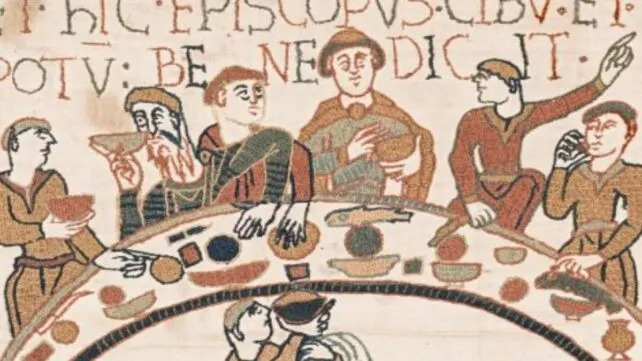
A scene from the Bayeux Tapestry that shows a medieval dining scene involving Bishop Odo. (Public domain)
Drug Candidate Reverses Cognitive Decline In Mouse Models
A compound called P7C3-A20 produced dramatic results in laboratory mouse models of advanced Alzheimer’s disease: treated animals showed restored cognitive performance, reduced neuronal damage and inflammation, and partial repair of the blood–brain barrier. Researchers describe these as promising preclinical findings that illuminate mechanisms for protecting neurons and interrupting the pathological cascade behind dementia in these models. Further work will be needed to verify safety, understand dosing and test whether similar effects translate to humans.
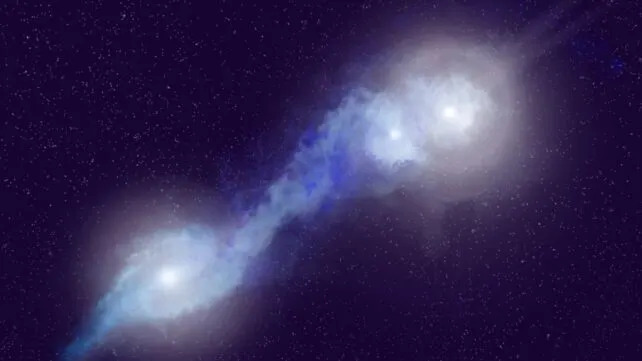
An artist's impression of J1218/1219+1035. (NSF/AUI/NSF NRAO/P. Vosteen)
A New Theory For The Bayeux Tapestry
Historian Benjamin Pohl proposes that the Bayeux Tapestry — the celebrated medieval embroidery — was intended to be read aloud during communal meals at St Augustine’s Abbey in England. Pohl argues that mealtime audiences of monks, who gathered for social reflection and storytelling, would provide the ritual context and attentive viewers that help explain the tapestry’s narrative structure and scale.
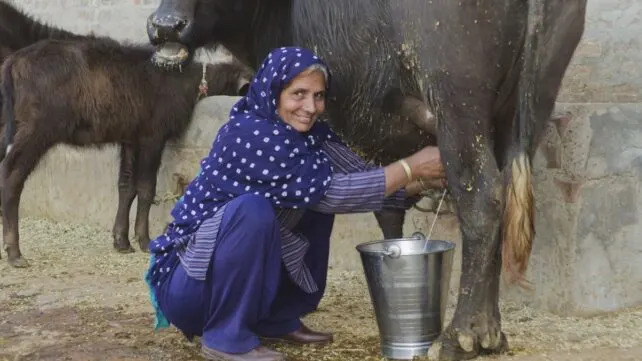
Traditional buffalo herders of South Asia have unusually high lactose tolerance. (uniquely india/photosindia/Getty Images Plus)
“Just as today, in the Middle Ages mealtimes were always an important occasion for social gathering, collective reflection, hospitality, and entertainment, and the celebration of communal identities. In this context, the Bayeux Tapestry would have found a perfect setting,” Benjamin Pohl.
Three Active Galaxies Caught Mid-Merger
Astronomers have identified a rare system of three galaxies in the process of colliding, each hosting an actively accreting supermassive black hole. Such triple active systems are exceptionally uncommon, and observing one during a merger gives astronomers a valuable opportunity to study how massive galaxies and their central black holes grow and interact.

Subscribe to ScienceAlert's free fact-checked newsletter
“Triple active galaxies like this are incredibly rare, and catching one in the middle of a merger gives us a front-row seat to how massive galaxies and their black holes grow together,” said astrophysicist Emma Schwartzman of the US Naval Research Laboratory.
Tracing Lactose Tolerance Across South Asia
A genome-wide study of South Asian populations traced the spread of a gene variant that confers lactose tolerance. The best explanation for the observed patterns is that the variant arrived from the Eurasian Steppe and rose in frequency under positive selection. The exceptionally high prevalence of the variant in the Toda and Gujjar—communities with buffalo-herding, dairy-rich diets—supports a cultural-driver hypothesis for local selection.
(koto_feja/iStock/Getty Images Plus)
Speculative Seven-Dimensional Theory Predicts A New Particle
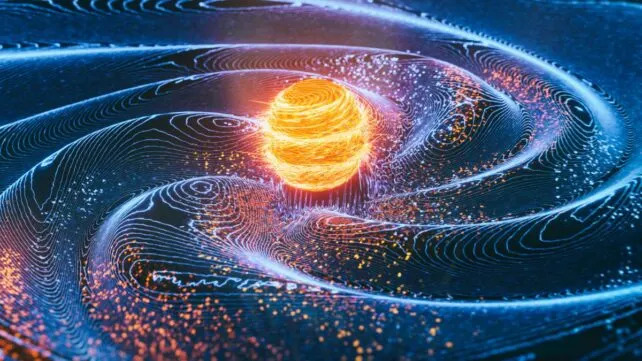
A theoretical paper suggests that particle mass might emerge from the twisted geometry of a seven-dimensional spacetime. The hypothesis predicts a new, testable particle (nicknamed the Torstone) and proposes potential observational signatures: anomalies in collider experiments, unexpected features in the cosmic microwave background, or unusual gravitational-wave signals. The idea is speculative but offers concrete avenues for falsification.
(Westend61/Getty Images)
Brain Organoids Reveal Disorder-Specific Neural Signatures
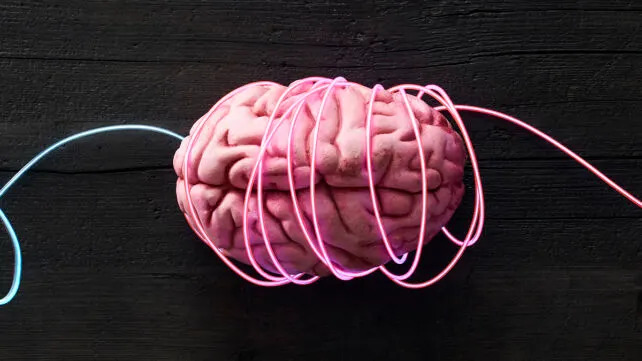
Researchers using lab-grown human brain organoids identified distinct neural signatures associated with schizophrenia and bipolar disorder. The team hopes these organoids can one day help confirm diagnoses and serve as a platform to test drug responses on patient-derived tissue, informing personalized treatment strategies and drug-dosing decisions.
Other Highlights
Additional items this week include studies on garlic-based mouthwash, experiments suggesting storms can slow certain physical processes, the interstellar visitor 3I/ATLAS passing near Earth, reports of a possible runaway black hole, and behavioral research on cat vocalizations and depression relief.
Help us improve.