Analysis of nearly 60 sewer-drain sediment samples from Vindolanda reveals frequent intestinal infections among Roman soldiers, including roundworms, whipworms and possible Giardia duodenalis. Despite baths and latrines, poor sanitation fostered fecal contamination of food and water, producing chronic diarrhea, dehydration and fatigue that would have reduced combat readiness. The parasite profile resembles that of other Roman military sites and the findings are published in Parasitology.
Study Reveals Grim Parasite Burden Undermining Roman Soldiers at Vindolanda

Roman Soldier looking out at the horizon
Archaeological analysis of sewer sediments from Vindolanda, the Roman fort near Hadrian's Wall in northern England, shows that soldiers stationed there were heavily infected with intestinal parasites that likely undermined their fighting fitness.
Evidence From Sewage: Worms, Giardia And Long-Term Contamination
Researchers from the University of Cambridge and the University of Oxford examined just under 60 sewer-drain sediment samples dating to the 3rd century CE. Much of the preserved material came from a latrine drain that discharged into a stream north of the fort. The samples contained clear evidence of helminths (intestinal worms) such as roundworms and whipworms, and possible evidence of Giardia duodenalis, a microscopic protozoan that causes diarrhea.
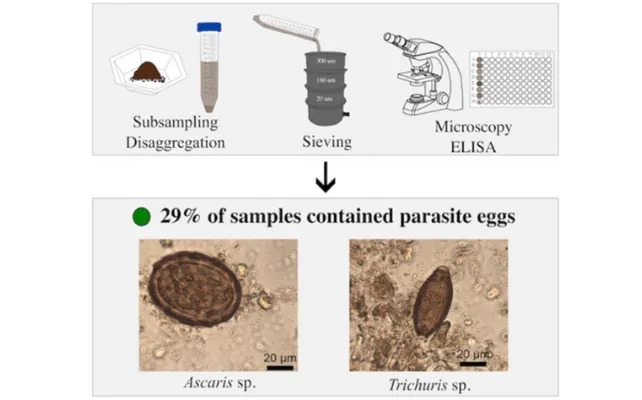
A significant percentage of the samples collected contained signs of worm eggs. (Ledger et al.,Parasitology, 2025)
“While the Romans were aware of intestinal worms, there was little their doctors could do to clear infections or to treat persistent diarrheal disease,” says Marissa Ledger, an archaeologist at McMaster University who co-led the study while completing her PhD at Cambridge. “These chronic infections likely weakened soldiers, reducing fitness for duty.”
Sanitation, Diet And Disease
Vindolanda had baths, latrines and a drinking-water supply, but poor sanitation practices allowed fecal contamination of food, water and hands. Samples from an earlier fortification (constructed around 85 CE) also contained roundworm and whipworm, indicating long-term persistence of these parasites at the site. Chronic infections would have caused diarrhea, cramps, dehydration, dramatic fatigue and weight loss, degrading soldiers' effectiveness and opening the way for other enteric pathogens such as Salmonella and Shigella.
Context And Comparisons
Vindolanda's parasite profile is similar to findings from other Roman military sites in Austria, the Netherlands and Scotland, perhaps reflecting comparable living conditions and a pork-heavy diet recorded in contemporary texts. By contrast, urban centers such as Londinium (London) and York show a broader parasite mix, including tapeworms associated with fish and other meats.

Subscribe to ScienceAlert's free fact-checked newsletter
Vindolanda's waterlogged soils have preserved exceptional organic material from everyday life: more than 5,000 leather shoes, a wooden phallus and over 1,700 thin wooden tablets inscribed with ink that document the fort's routines. Together with the new parasitological evidence, these finds paint a vivid — and sometimes grim — picture of life on Rome's northwestern frontier nearly 2,000 years ago.
Publication: The study reporting these findings appears in the journal Parasitology.
Help us improve.