The Wageningen University team used ancestral sequence reconstruction to recreate ancient cannabinoid oxidocyclase enzymes and test their activity. They found that ancestral enzymes were promiscuous—producing multiple cannabinoid precursors from CBGA—while modern enzymes specialize after gene duplication. The resurrected proteins are more robust and easier to express in microbes, offering potential for biotechnological cannabinoid production and development of CBC-rich medicinal varieties.
Scientists Resurrect Ancient Cannabis Enzymes, Tracing Origins of THC, CBD and CBC
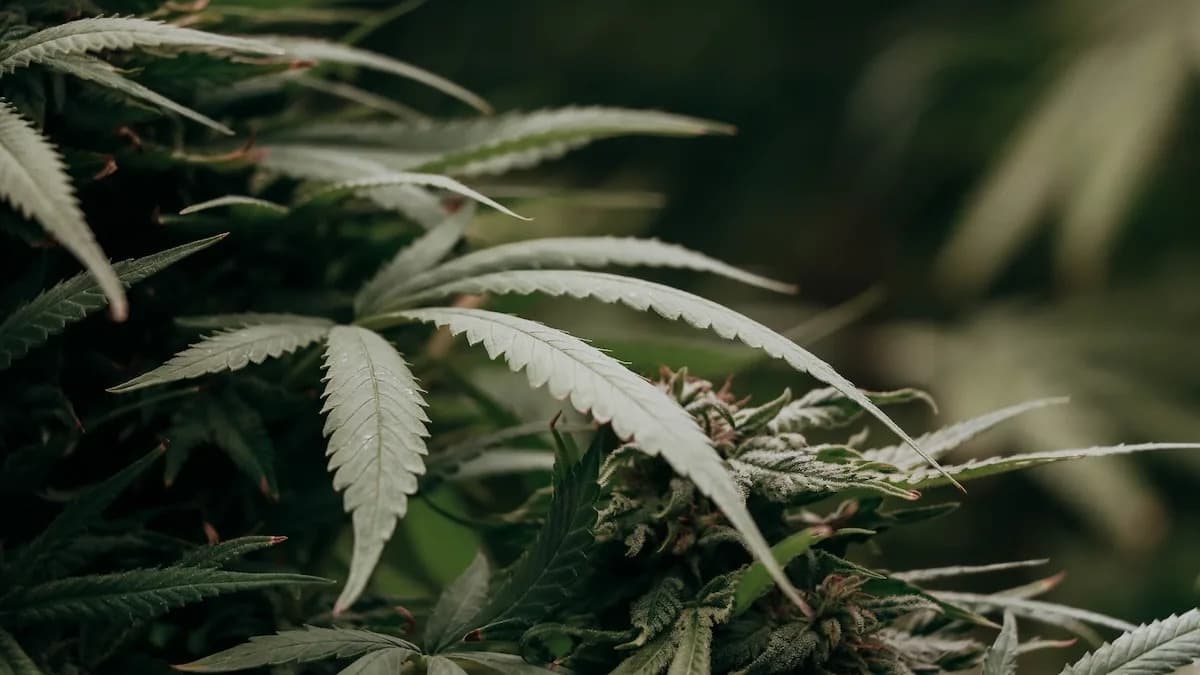
close-up image of cannabis plant
Cannabis is a remarkably versatile plant that hides a rich pharmacopeia in its leaves and flowers. While many of its compounds evolved millions of years ago to deter pests and pathogens, humans have long repurposed some for food, fiber, medicine and recreation.
Reconstructing Ancient Enzymes
A new study from researchers at Wageningen University & Research in the Netherlands used ancestral sequence reconstruction (ASR) to infer and recreate long-extinct enzymes that once produced major cannabinoids such as tetrahydrocannabinol (THC), cannabidiol (CBD) and cannabichromene (CBC). The team synthesized the inferred ancestral genes, expressed the proteins, and tested their biochemical activity.

Humans have found multiple uses for cannabis compounds. (rimmabondarenko/Canva)
“These ancestral enzymes are more robust and flexible than their descendants,” said biosystematics scientist Robin van Velzen, noting that their stability makes them promising starting points for biotechnology and pharmaceutical development.
Key Findings
The study focused on a family of enzymes called cannabinoid oxidocyclases, which convert cannabigerolic acid (CBGA) into downstream cannabinoids. Unlike modern cannabis, where three specialist oxidocyclases each produce a single cannabinoid (THC, CBD or CBC), the reconstructed ancestral enzymes were promiscuous—able to convert CBGA into multiple cannabinoid precursors simultaneously.
Evolutionary reconstruction and laboratory tests indicate that modern specialist enzymes evolved later through gene duplication and divergence from these multifunctional ancestors. The researchers also found evidence that oxidocyclase activity evolved independently in cannabis and in distantly related cannabinoid-producing plants such as rhododendrons.

Subscribe to ScienceAlert's free fact-checked newsletter
Practical Implications
From an applied perspective, the resurrected ancestral enzymes were easier to express in microbes like yeast than their modern counterparts, which is important for industrial, biotechnological production of cannabinoids. One recreated enzyme acts as an evolutionary intermediate that efficiently produces CBC—a cannabinoid with reported anti-inflammatory and analgesic effects that is scarce in contemporary cannabis strains.
“At present, there is no cannabis plant with a naturally high CBC content,” Van Velzen said. “Introducing this enzyme into a cannabis plant or using it in microbial production could enable new medicinal varieties and more efficient manufacturing routes for desirable cannabinoids.”
The study was published in Plant Biotechnology Journal.
Help us improve.