This week’s science highlights include an experimental compound, P7C3-A20, that reversed cognitive decline in mouse models of advanced Alzheimer’s by protecting neurons, reducing inflammation, and restoring the blood–brain barrier. A historian argues the Bayeux Tapestry may have been intended for monastic mealtime viewing, while astronomers observed a rare triple galaxy merger hosting active supermassive black holes. Genetic research traces a lactose-tolerance variant in South Asia to Steppe ancestry, and theoretical and organoid studies offer provocative, testable leads in physics and psychiatry.
This Week In Science: Experimental Drug Reverses Alzheimer’s Symptoms In Mice, A New Theory For The Bayeux Tapestry, Rare Triple Galaxy Merger, And More
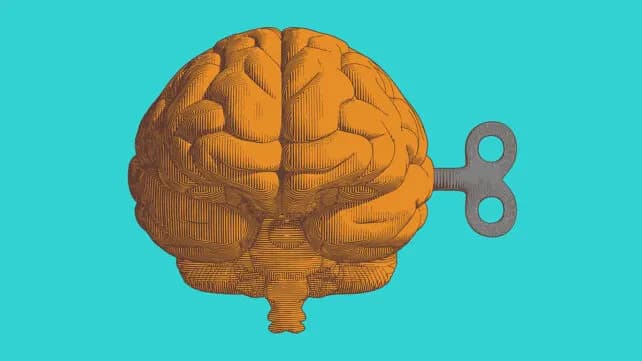
(Jolygon/iStock/Getty Images Plus)
This week’s science roundup highlights a striking preclinical Alzheimer’s result, a fresh historical theory about the Bayeux Tapestry, astronomers witnessing a rare triple galaxy collision, genetic detective work in South Asia, provocative theoretical physics, and advances using lab-grown brain tissue to study psychiatric illness.
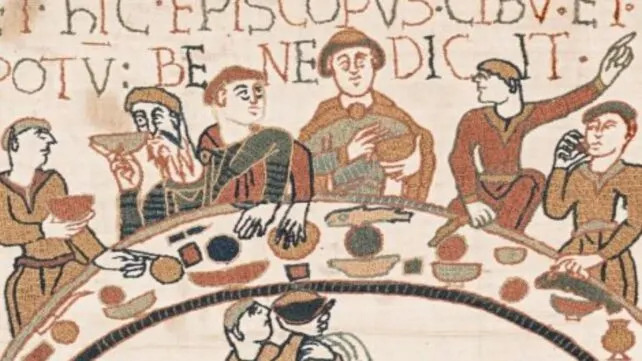
A scene from the Bayeux Tapestry that shows a medieval dining scene involving Bishop Odo. (Public domain)
P7C3-A20 Reverses Cognitive Decline In Mouse Models Of Alzheimer’s
Researchers testing an experimental compound called P7C3-A20 report that it fully reversed cognitive decline in mouse models with advanced Alzheimer’s-like pathology. Treated animals showed halted neuronal damage, reduced inflammatory markers, and restored blood–brain-barrier integrity — a combination of effects that together restored measurable behavior and memory in the mice. The result is an important preclinical milestone, but investigators emphasize that success in mice does not guarantee human benefit; further safety and efficacy testing in other models and clinical trials will be required.

An artist's impression of J1218/1219+1035. (NSF/AUI/NSF NRAO/P. Vosteen)
A New Hypothesis For The Bayeux Tapestry’s Purpose
Historian Benjamin Pohl proposes that the Bayeux Tapestry may have been displayed and read during mealtimes at St Augustine’s Abbey in England. Pohl argues medieval communal meals were social and ritual occasions—ideal for storytelling, reflection, and identity formation—and that the tapestry’s narrative format would have suited monastic mealtime viewing and discussion.
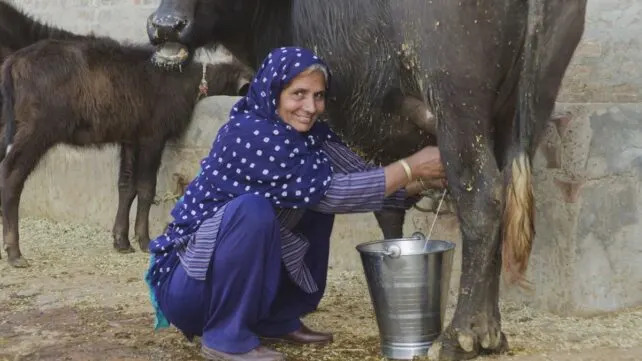
Traditional buffalo herders of South Asia have unusually high lactose tolerance. (uniquely india/photosindia/Getty Images Plus)
Three Galaxies With Active Black Holes Caught In A Merger
Astronomers have identified a rare system of three colliding galaxies, each hosting an active supermassive black hole. Observing a triple active merger offers a unique opportunity to study how massive galaxies and their central black holes grow and interact during complex mergers, and could help refine models of galaxy evolution.

Subscribe to ScienceAlert's free fact-checked newsletter
Lactose-Tolerance Variant Traced Across South Asia
A genome-wide study of South Asian populations traced a lactose-tolerance allele to introduction from the Eurasian Steppe followed by positive selection. The allele is especially frequent in Toda and Gujjar groups, likely reflecting cultural and dietary practices: both groups have histories of pastoralism and high consumption of fresh dairy products such as milk, butter, yogurt, and cheese.

(koto_feja/iStock/Getty Images Plus)
Seven-Dimensional Geometry Proposed As Source Of Particle Mass
A theoretical paper suggests that particle mass could arise from the twisted geometry of a seven-dimensional spacetime. The authors propose that discovering a hypothetical particle they call the Torstone — via collider anomalies, unexplained features in the cosmic microwave background, or unexpected gravitational-wave signals — could support the idea. The proposal is speculative but highlights testable signatures for future observations.
(Westend61/Getty Images)
Brain Organoids Reveal Neural Signatures For Psychiatric Disorders
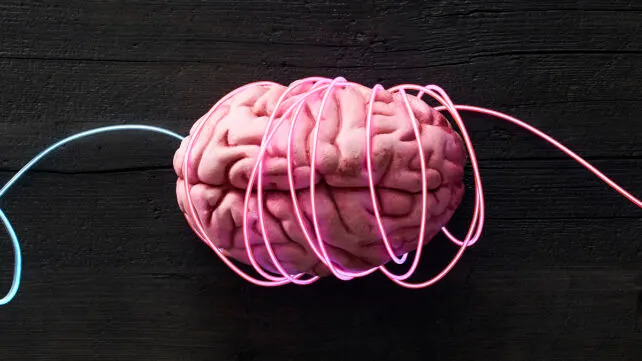
Researchers using human brain organoids—miniaturized, lab-cultured tissue models—found distinct neural activity and molecular patterns associated with schizophrenia and bipolar disorder. Annie Kathuria (Johns Hopkins University) notes the long-term goal: use patient-derived organoids to improve diagnosis and to screen drug treatments and dosing, accelerating personalized approaches to psychiatric care.
Other short items this week included quirky or eye-catching studies: garlic-based mouthwash research, reports that severe storms can alter subjective time perception, the passage of interstellar object 3I/ATLAS near Earth, claims of a runaway black hole, behavioral studies on cat vocalization, and novel approaches to treating depression.
Note: All items summarize recent research and reports; many findings are preliminary and, in the case of experimental treatments and theoretical proposals, require further validation.
Help us improve.