Analysis of calcium carbonate deposits from Pompeii’s Republican Baths (c. 130–30 B.C.) indicates bathing pools were contaminated with organic matter from microbial activity and human waste and contained elevated lead traces likely from lead pipes. The baths were supplied by wells and cisterns and refilled only about once per day, allowing contamination to build up. Despite poor hygienic conditions, social bathing likely continued with patrons spending limited time in the warm water.
Pompeii’s Earliest Baths Were Likely Filthy and Lead‑Contaminated, New Study Finds
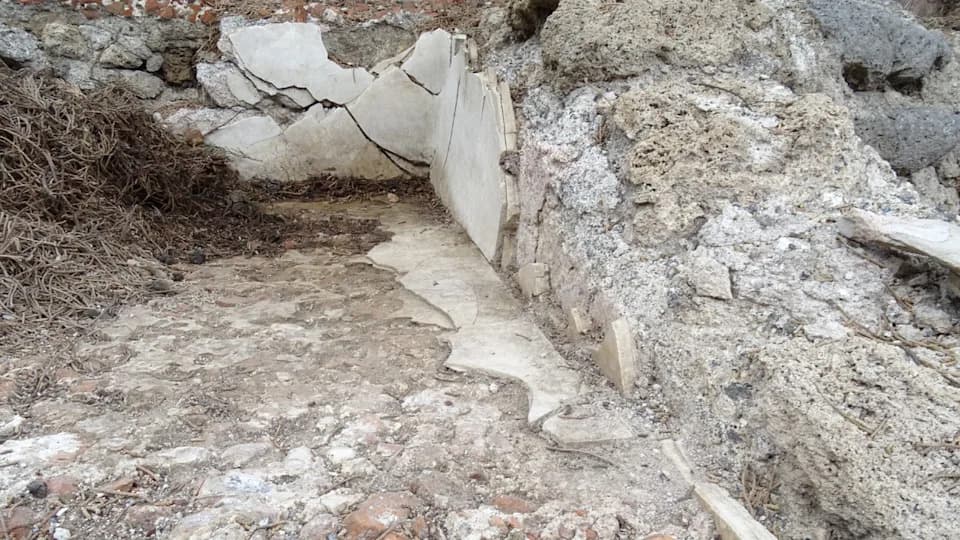
Remains of a pool in the oldest public bath structure in Pompeii. | Credit: Cees Passchier
The earliest public baths at Pompeii — used roughly from 130 to 30 B.C. — were likely far less sanitary than the grand aqueduct-fed complexes of later Rome. A new study of mineral deposits preserved in the Republican Baths reveals organic contamination consistent with human waste and elevated lead levels probably introduced by lead pipes.
Researchers led by geoarchaeologist Gül Sürmelihindi of Johannes Gutenberg University Mainz analyzed calcium carbonate incrustations (limescale) that formed inside the bath complex. By measuring carbon isotope values across the site, the team reconstructed how water quality changed from the supply well to the heated pools and drainage areas.
Key findings: the carbonate deposits show a pronounced drop in carbon isotope values from the well to the bathing pools and drains — a pattern the authors interpret as an influx of organic carbon from microbial activity and human-derived inputs such as sweat, sebum, urine and residues from olive oil used in bathing.
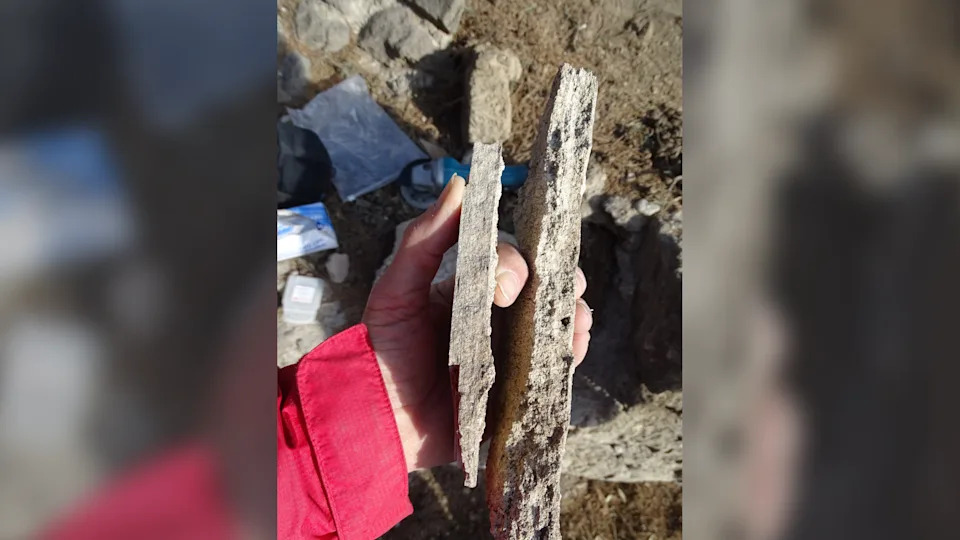
Researchers took carbonate samples from the oldest public bath structure in Pompeii. | Credit: Cees Passchier
"It is very likely that the bathing experience in this small bathing facility was maybe not hygienic and hence not very inviting," said Gül Sürmelihindi (Johannes Gutenberg University Mainz), noting the baths were supplied by wells and cisterns and could be refilled only once per day.
The team also detected elevated lead concentrations in the complex, likely introduced via the lead-pipe system that supplied water and plumbing. The authors note that as calcium carbonate built up inside pipes over time, that limescale would have progressively reduced lead leaching into the water.
Before Pompeii had an aqueduct, baths were filled from wells and cisterns using a single water-lifting device operated by enslaved workers. Because water could be replenished at most once daily, heated pools could accumulate organic and microbial contamination between refills.
Co-author Cees Passchier (also Johannes Gutenberg University Mainz) emphasized the social importance of bathing: regardless of class, people typically mixed in the baths and paid little for entry. "If the water were truly foul, patrons probably would not have stayed long in the small warm pools," he said; instead, bathers may have lingered in the warm air of the complex and socialized rather than spending extended time immersed.
The study was published Jan. 12 in the Proceedings of the National Academy of Sciences (PNAS).
Help us improve.