NASA's Artemis II SLS rocket and Orion spacecraft have reached Launch Pad 39B and entered final preflight testing ahead of the first crewed lunar flight in more than 50 years. The roughly 10-day mission will not land but will validate life-support and other systems critical to future Moon landings. A wet dress rehearsal is scheduled no later than Feb. 2; if successful, launch opportunities span Feb. 6–11, with additional windows in March and April. NASA says it has applied lessons from Artemis I and continues to prioritize crew safety.
Artemis II Rocket Reaches Launch Pad as Final Tests Begin Ahead of First Crewed Lunar Flight in 50+ Years

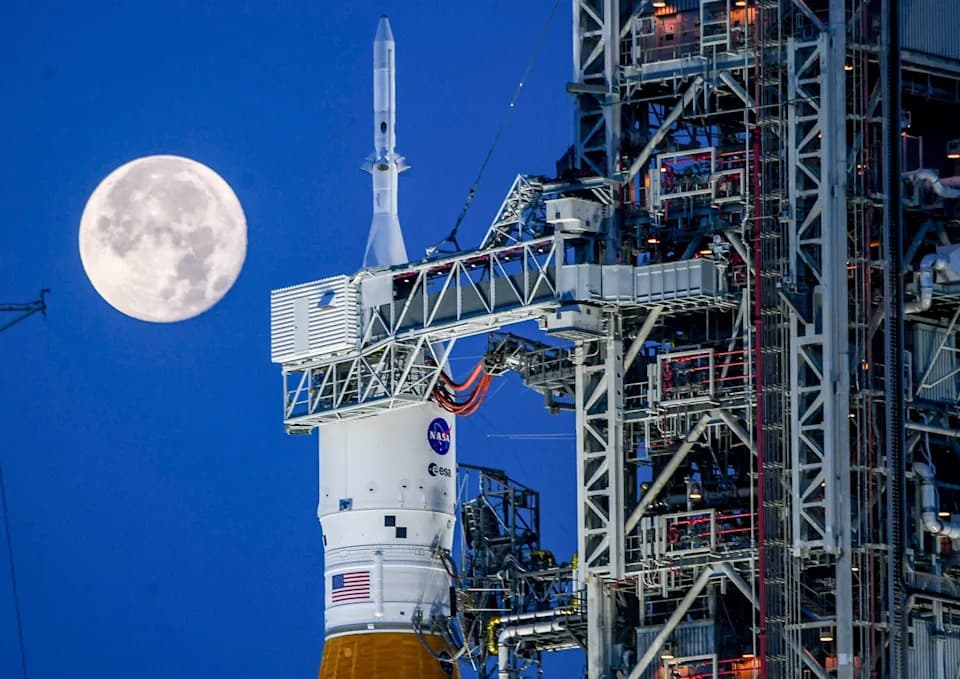
NASA's Artemis II Space Launch System rocket and Orion spacecraft are seen illuminated by lights at Launch Complex 39B, Saturday, Jan. 17, 2026, at NASA's Kennedy Space Center in Florida. (NASA/Keegan Barber)
NASA’s Artemis II Space Launch System (SLS) rocket and Orion spacecraft have arrived at Launch Pad 39B at Kennedy Space Center, and final preflight testing has begun ahead of the first crewed lunar mission in more than 50 years.
Current operations
On Saturday the 322-foot stack rolled about four miles from the Vehicle Assembly Building to Pad 39B, taking nearly 12 hours and moving at under 1 mile per hour on a transporter roughly the size of a baseball infield. Technicians will now connect ground-support equipment — including electrical lines and cryogenic propellant feeds — and power up the rocket's systems to verify interfaces with the mobile launcher and pad infrastructure.
About the mission
Artemis II is a roughly 10-day crewed flight around the Moon; the crew will not land but will validate life-support, propulsion and other critical systems needed for future lunar landings and sustained operations on the Moon. The flight will be the first time humans travel beyond Earth orbit since the Apollo era.
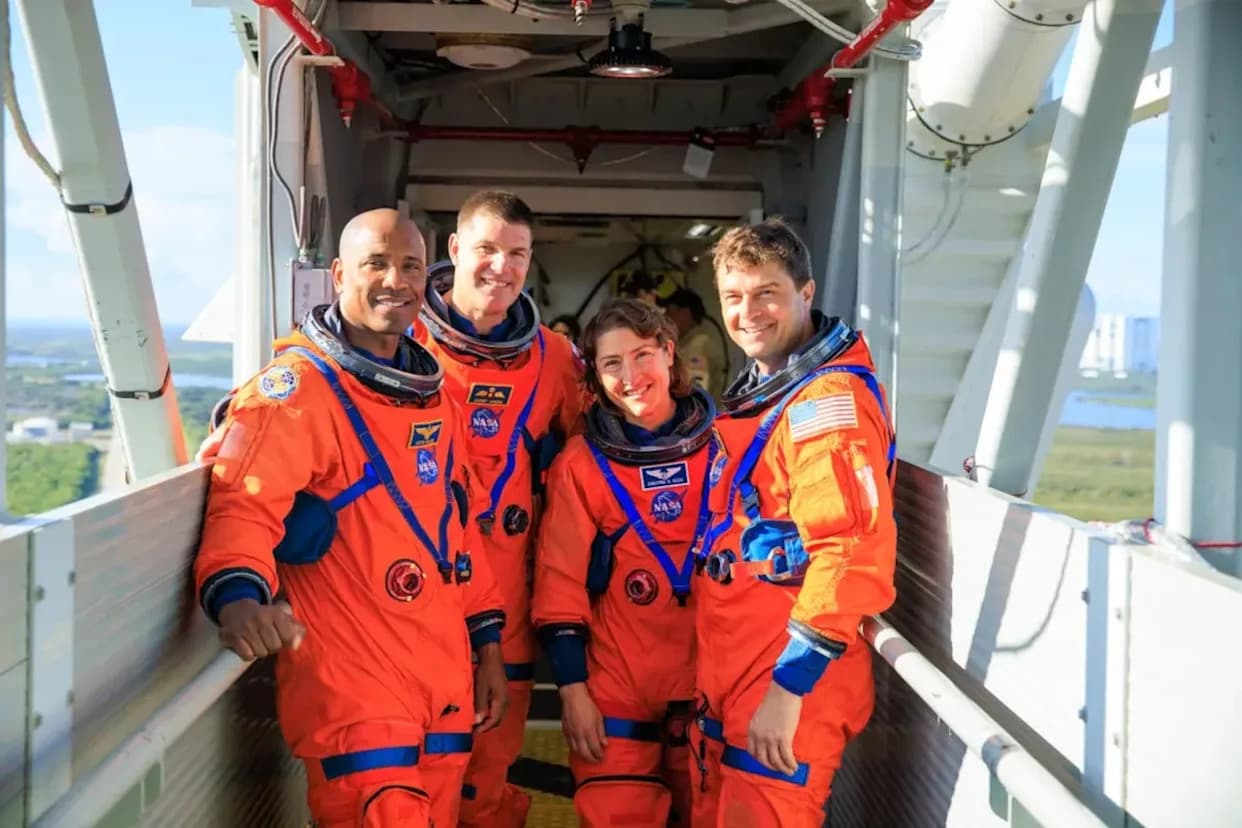
Crew: NASA astronauts Reid Wiseman, Victor Glover and Christina Hammock Koch, and Canadian Space Agency astronaut Jeremy Hansen.
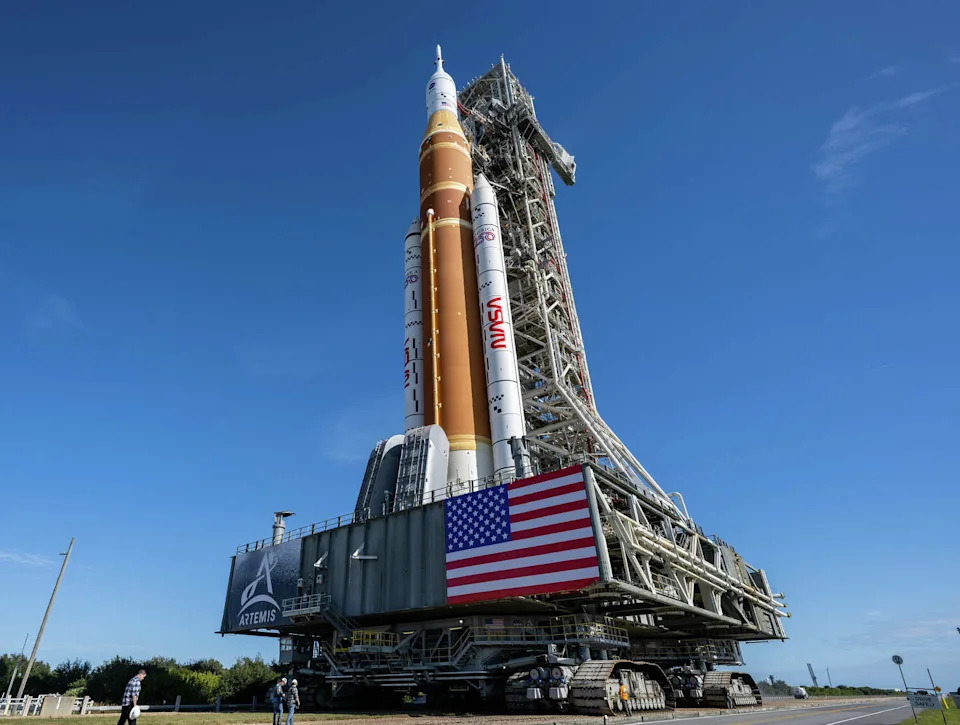
NASA's Artemis II Space Launch System rocket and Orion spacecraft, secured to the mobile launcher, are seen as they make the 4.2 mile journey toward Launch Pad 39B, Saturday, Jan. 17, 2026, at NASA's Kennedy Space Center in Florida. (NASA/Keegan Barber)
"This is going to be our first step toward a sustained lunar presence," said John Honeycutt, chair of the Artemis II mission management team.
Schedule and tests
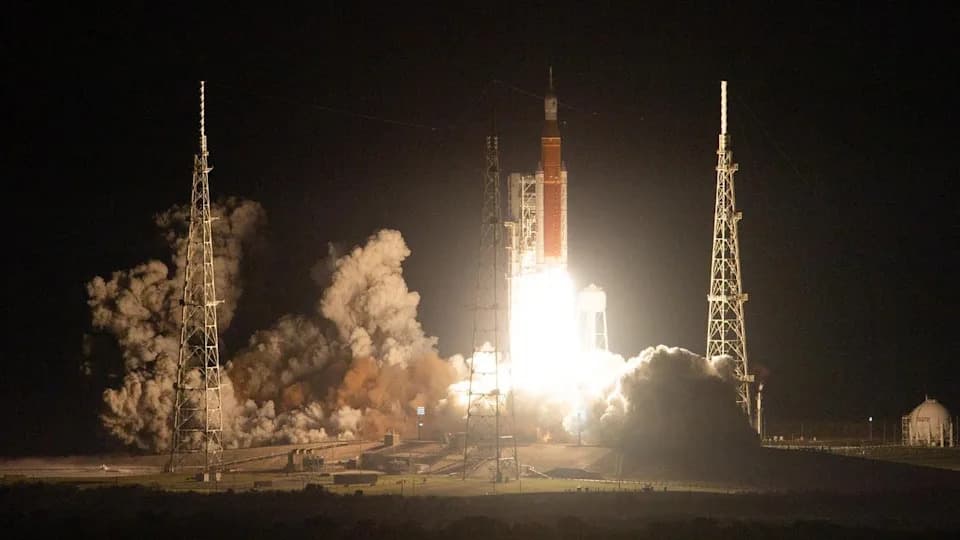
NASA plans a wet dress rehearsal — a full countdown practice that includes fueling the rocket — no later than Feb. 2. If that test is successful, Artemis II has launch opportunities on Feb. 6, 7, 8, 10 or 11, with additional windows available in early March and April.
"We're going to fly when we're ready," Honeycutt said. "From launch through the mission days to follow, the crew safety is going to be our No. 1 priority."
Lessons learned and reliability improvements
Artemis I, the uncrewed maiden flight of the SLS and Orion in 2022, encountered multiple issues during wet dress rehearsals and launch attempts. NASA has since modified some ground hardware and refined propellant-loading procedures to improve reliability. "All of the lessons that we've learned from Artemis I ... we have used that countdown and that philosophy as our building blocks for Artemis II," Artemis Launch Director Charlie Blackwell-Thompson said.
Looking ahead
Over the coming days engineers will complete system checkouts, verify pad interfaces, and rehearse countdown operations. If all systems perform nominally, the Artemis II crew could ride the SLS to lunar orbit as soon as early February, marking a major milestone in NASA's campaign to return humans to the Moon and establish a sustained lunar presence.
Note: Dates and windows are subject to change based on test results and readiness reviews.
Help us improve.