Archaeologists have exposed a rare rock‑hewn Second Temple‑period mikveh beneath the Western Wall Plaza, sealed under a destruction layer dated to 70 CE. The site contained burned ash, pottery and many stone vessels — evidence of strict ritual‑purity practices in Temple‑era Jerusalem. The plastered, rectangular bath is about 3 meters long and nearly 2 meters deep, reached by four carved steps, and sits near former Temple Mount entrances. Officials say the find highlights Jerusalem's religious character and the value of ongoing excavations.
Rare Second Temple–Era Mikveh Unearthed Beneath Western Wall Plaza, Sealed Since 70 CE
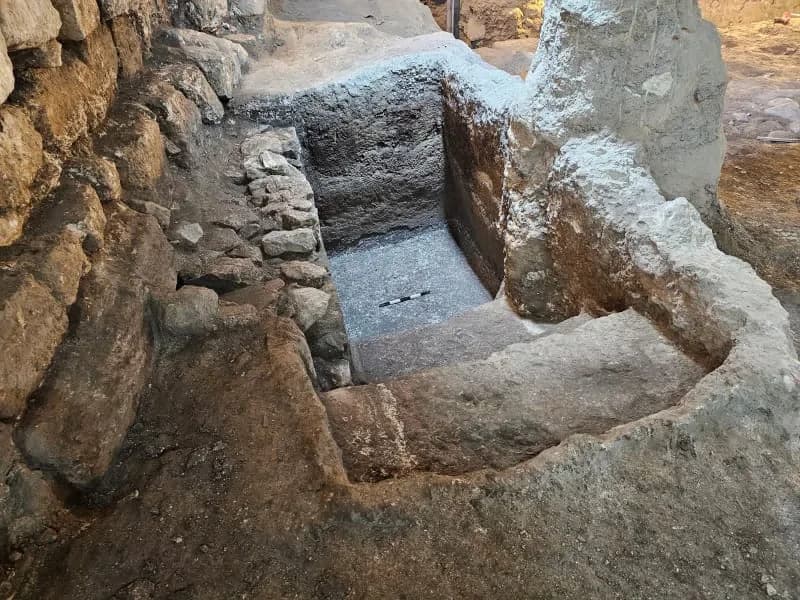
THE RITUAL purification bath (mikveh) from the Second Temple period. (photo credit: Ari Levy, Israel Antiquities Authority)
Archaeologists working beneath the Western Wall Plaza have uncovered a rare rock‑hewn mikveh (ritual bath) from the final days of the Second Temple period, the Israel Antiquities Authority (IAA) and the Western Wall Heritage Foundation announced.
The installation was revealed sealed beneath a thick destruction layer dated to 70 CE. That layer contained burned ash and a wide array of artifacts that together provide a vivid snapshot of life in Jerusalem immediately before the city's fall to Rome. Excavators recovered pottery and numerous stone vessels — objects widely used at the time because, according to Jewish law, stone does not contract ritual impurity.
The mikveh measures roughly 3 meters long and nearly 2 meters deep. The rectangular, plaster‑lined basin is reached by four hewn steps descending into the chamber. Its location is particularly significant: the bath lies close to what were once major access points to the Temple Mount — the Great Bridge to the north and Robinson's Arch to the south — underscoring its role in the city's religious infrastructure and the daily life of pilgrims and residents.
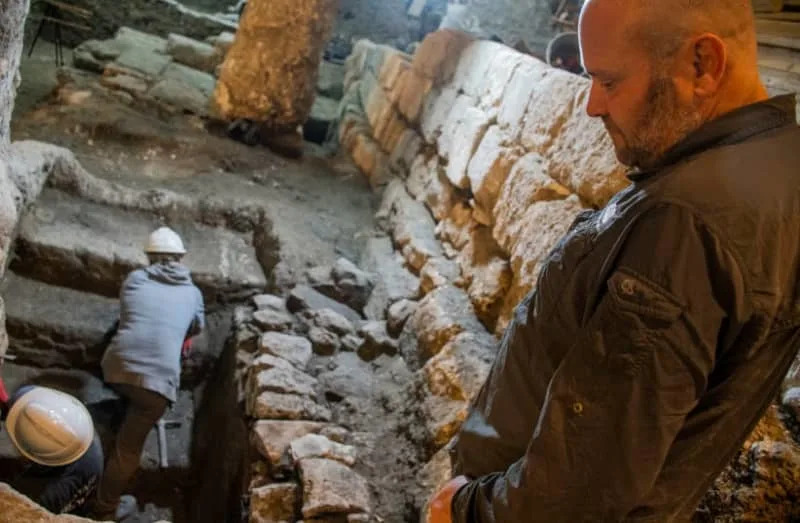
Ari Levy, IAA excavation director: "Jerusalem should be remembered as a Temple city. Many aspects of daily life were adapted to that reality, and this is reflected in the density of ritual baths and stone vessels found throughout the city."
Levy and other officials noted that the halachic preference for stone vessels explains their abundance: unlike pottery or metal, stone objects did not become ritually impure and could be used repeatedly over long periods, a practical advantage for a city serving large numbers of pilgrims.
The discovery has local cultural resonance because it was announced ahead of Asara Betevet, the fast of the 10th of Tevet, a day that commemorates the Babylonian siege of Jerusalem more than 2,500 years ago. Heritage Minister Rabbi Amichai Eliyahu said the find deepens understanding of how religious practice and everyday life were interwoven in Temple‑period Jerusalem.
Mordechai (Suli) Eliav, director of the Western Wall Heritage Foundation, described the mikveh — found with ashes of destruction at its base — as a powerful emblem of resilience: "It testifies like a thousand witnesses to the ability of the people of Israel to move from impurity to purity, from destruction to renewal."
Officials emphasized that the discovery reinforces the importance of continued archaeological research and preservation in Jerusalem, which sheds light on the city's layered history and preserves memories for future generations.
Help us improve.