The Villa di Poppea at Oplontis has yielded newly exposed Second‑Style frescoes—including peacocks and a theatrical mask interpreted as Pappus—that likely framed garden views and signaled the room’s use for entertaining. Excavations uncovered four previously unknown rooms (bringing the complex to over 100), including an apsidal chamber linked to baths. Castings revealed former garden trees and lush plantings, and two private cubicula are nearing restoration, promising deeper insight into elite Roman domestic life.
Newly Revealed Second‑Style Frescoes and Garden Views Unearthed at Villa di Poppea, Oplontis
Archaeological Park of Pompeii
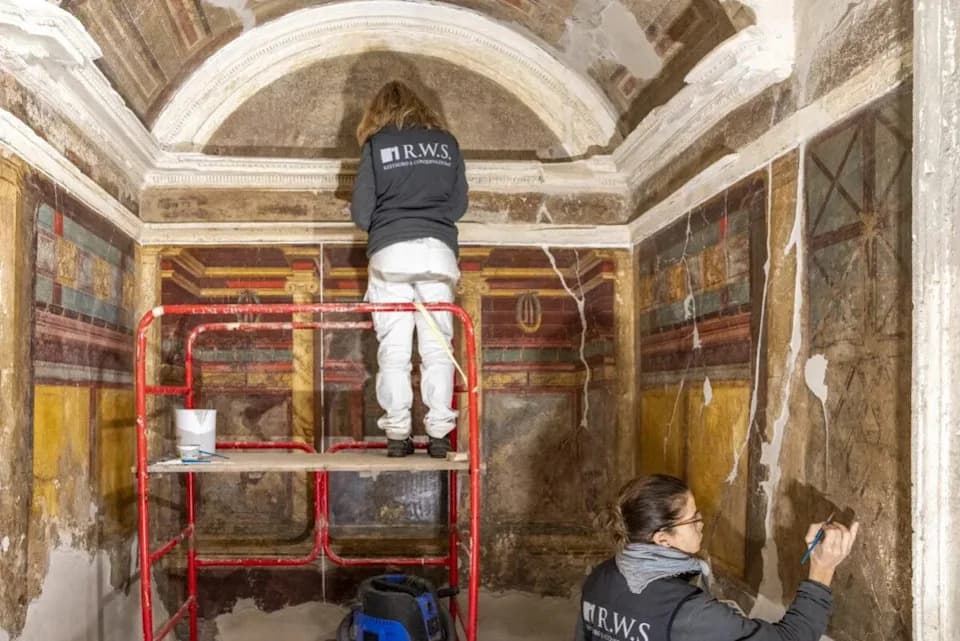
Archaeologists working at the Villa di Poppea in Oplontis — near modern Torre Annunziata — have uncovered richly detailed Second‑Style frescoes and new architectural evidence that shed fresh light on elite Roman domestic life. The discoveries, reported by Archaeology Magazine and covered by Men's Journal, include wall paintings of peacocks, a theatrical mask, four previously unknown rooms and garden features that once framed the villa’s luxurious views.
Frescoes, Iconography, and Function
Excavators exposed a series of partially preserved wall paintings in a room researchers call the "Hall of the Mask and the Peacock." Executed in an accomplished Second‑Style technique, the frescoes depict multiple peacocks arranged along the walls — imagery that appears deliberately positioned to frame and emphasize views of the adjacent gardens.

Archaeological Park of Pompeii
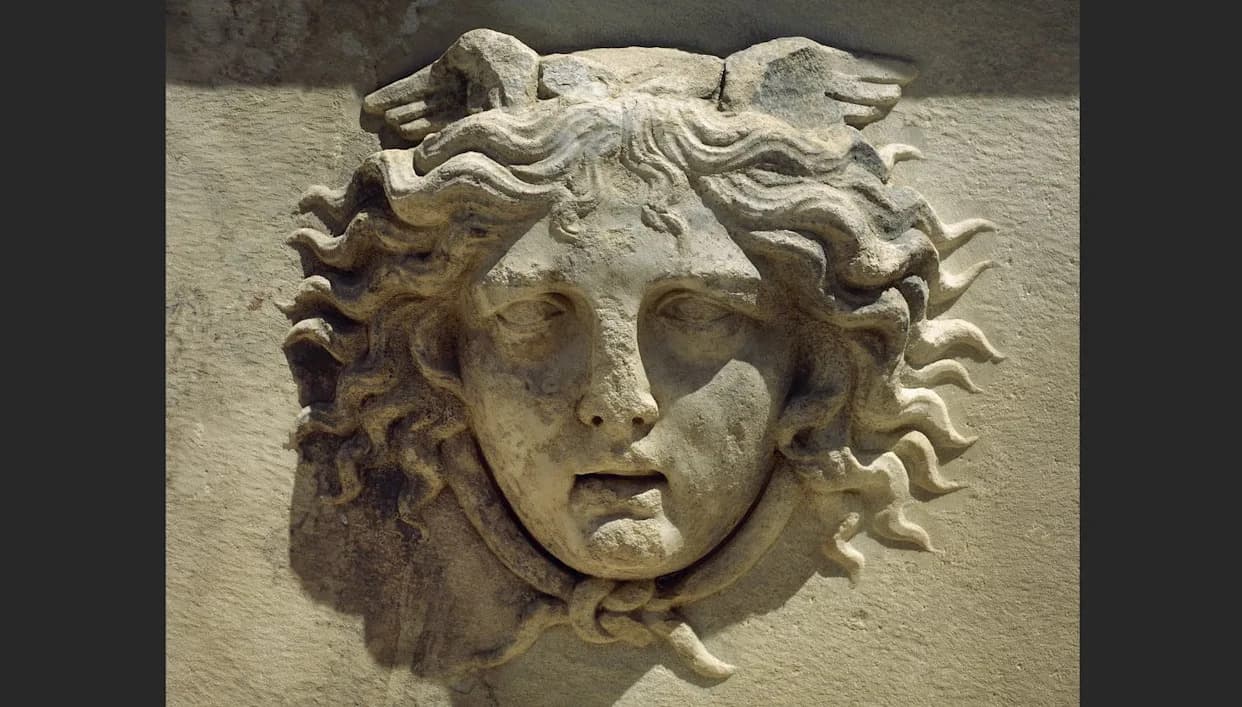
On the same wall teams identified a painted theatrical mask interpreted as Pappus, a stock figure from Atellan comedy traditionally shown as an elderly man attempting to assume a fashionable or youthful air. The presence of this mask introduces a playful, performative note and supports the idea that the room was used for entertaining guests.
Architecture, Gardens, and New Rooms
Fieldwork and mapping have allowed investigators to reconstruct more of the villa’s ground plan. Four previously unrecorded rooms were identified, bringing the complex’s total to more than 100 rooms. Among the new discoveries is an apsidal chamber linked to the bathing suite, highlighting the residence’s architectural complexity and the centrality of bathing and leisure in elite Roman homes.

Archaeological Park of Pompeii
Casting techniques used at the site revealed the outlines of trees and impressions of plantings that once stood in the garden, and researchers noted lush vegetation on the villa’s southern side. These findings emphasize how garden design and landscape features were integrated with interior decoration to create curated sightlines and experiences for visitors.
Conservation and Research Outlook
Conservators have nearly completed restoration of two private cubicula adjacent to the excavation area. Ongoing conservation, study and publication of the frescoes and architectural features are expected to provide a more nuanced picture of decoration, daily life and cultural preferences in Pompeii-era elite dwellings.
Context: The Villa di Poppea is traditionally linked to Poppaea Sabina, the second wife of the emperor Nero. Continued work at the site helps scholars better understand the aesthetics, social functions and landscape planning of Roman elite residences.
This article is based on reporting by Archaeology Magazine and a version that appeared in Men's Journal.
Help us improve.