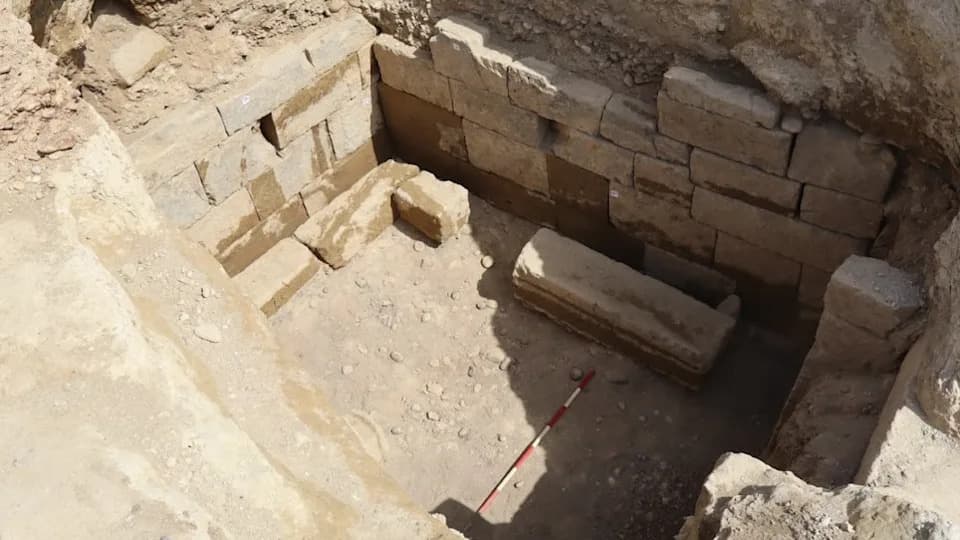
A 2,000-year-old Roman stone wall near Cham-Oberwil in central Switzerland has been exposed in a gravel quarry, revealing a foundation of at least 5,300 sq ft and evidence of a large multi-room complex. Finds include tableware, finely made glass, amphora fragments from Mediterranean trade, iron nails indicating timber superstructures, gold fragments and coins — notably a Julius Caesar denarius from the 1st century B.C. The unusually good preservation and the site's elevated location suggest it may have been a villa or temple and promise new insights into Roman activity in the pre‑Alps.
2,000-Year-Old Roman Wall Unearthed Near Cham-Oberwil — An Archaeological Sensation in Central Switzerland
An Ancient Roman Complex Was Found in SwitzerlandOleg Breslavtsev - Getty Images
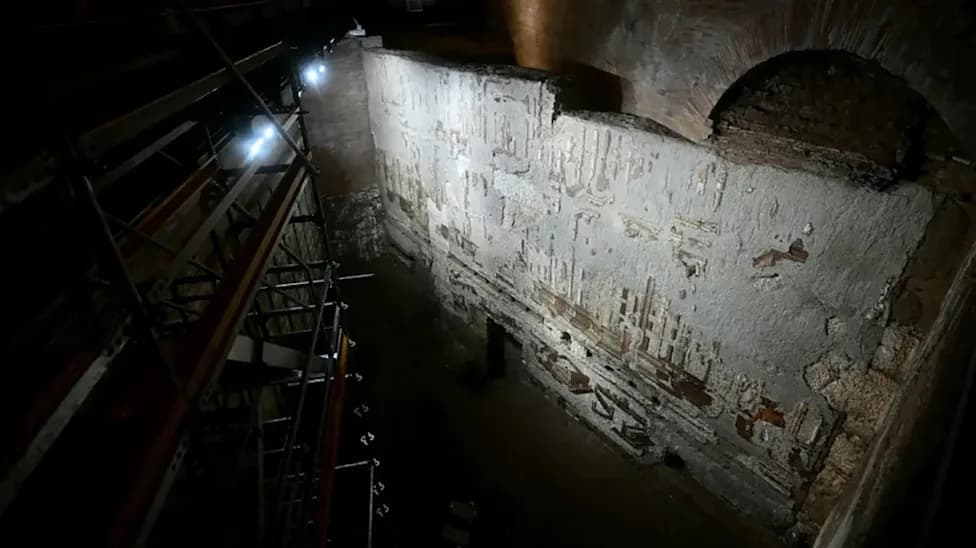
A remarkably well-preserved 2,000-year-old Roman stone wall has been uncovered in a gravel quarry near Cham-Oberwil in the Canton of Zug. The wall, found just a few centimeters below the surface, forms part of a foundation covering at least 5,300 square feet and points to a substantial multi-room building complex on an elevated site overlooking the pre‑Alpine landscape.
What Archaeologists Found
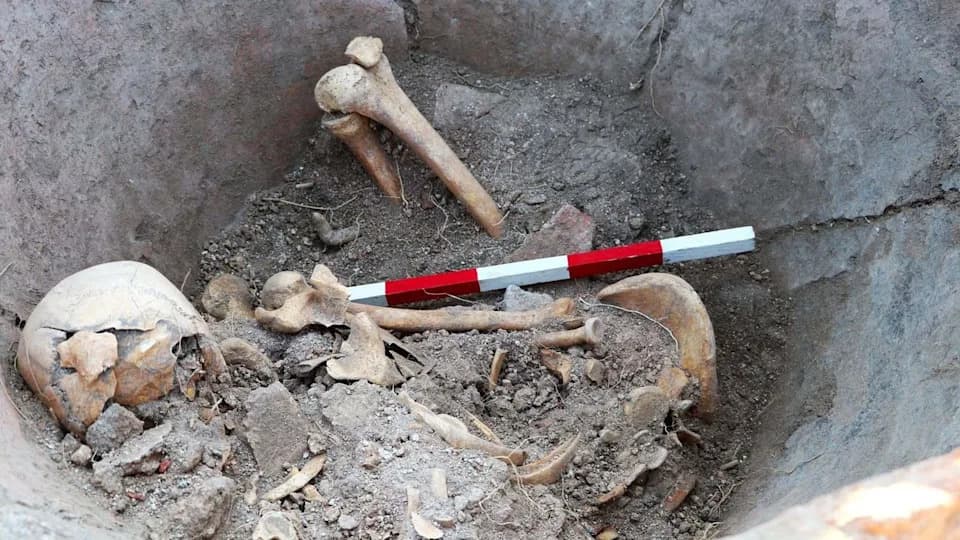
Excavations led by the Canton of Zug’s Office for the Preservation of Monuments and Archaeology revealed not only the stone foundations but also a rich assemblage of artifacts. Investigators recovered everyday objects such as tableware and finely made glass vessels, alongside amphora fragments that attest to long-distance trade with the Mediterranean. Large numbers of iron nails suggest wooden structures once rose from the stone base.
Notable Discoveries
- Fragments of amphorae likely used to transport wine, olive oil and garum.
- Gold fragments, probably from jewelry, and a variety of copper and bronze coins.
- A denarius bearing the likeness of Julius Caesar dating to the 1st century B.C., underscoring the site’s integration into Roman monetary and trade networks.
Context And Significance
Professor Christa Ebnöther of the University of Bern called the preservation "astounding," noting that only a few structural remains from the Roman period are known in the pre‑Alpine region. Roman buildings of comparable scale have not been excavated in this area for nearly a century, making the discovery particularly significant for understanding Roman presence and building practices at the northern edge of the Roman world.
“Only a few structural relics of this kind from the Roman period are known in the pre-Alpine region,”
— Christa Ebnöther, Professor of Archaeology of the Roman Provinces, University of Bern
Layers of Human Activity
The site appears to have attracted human settlement for millennia. Earlier finds nearby include a Middle Bronze Age settlement, late Bronze Age graves and numerous Celtic coins, indicating long-term occupation and reuse of the landscape.
What It Might Have Been
Located on an elevated ridge near Äbnetwald with sweeping views, the complex could have served as a grand villa designed to take advantage of the outlook, or possibly as a temple or public building. As Gishan Schaeren of the Archeology Society Zug noted, the visibility of upper bricks at the surface helped prompt the excavation.
“We were also amazed that the top bricks were even visible above ground,”
— Gishan Schaeren, Head of the Department of Prehistory and Prehistoric Archaeology, Archeology Society Zug
Next Steps
Archaeologists will continue systematic excavation and analysis to clarify the building’s function, date occupation phases more precisely, and reconstruct how goods and people moved to this pre‑Alpine outpost. For now, the exposed wall and accompanying finds offer a rare window into life, trade and architecture on the northern fringes of Roman influence.
Help us improve.