The iScience study analyzed videos of 119 wild chimpanzees and found that risky free-flight behavior peaks in infancy rather than adolescence. Infants were about three times more likely than adults to take such risks; juveniles and adolescents were also more prone but to a lesser degree. Risk-taking did not vary by sex or canopy height, and researchers suggest that extended human supervision may delay peak risk-taking in our species. Play likely helps young chimps build the motor skills needed for life in the trees.
Study: Infant Chimps Take the Most Risks — 'Free Flight' Peaks in Early Life
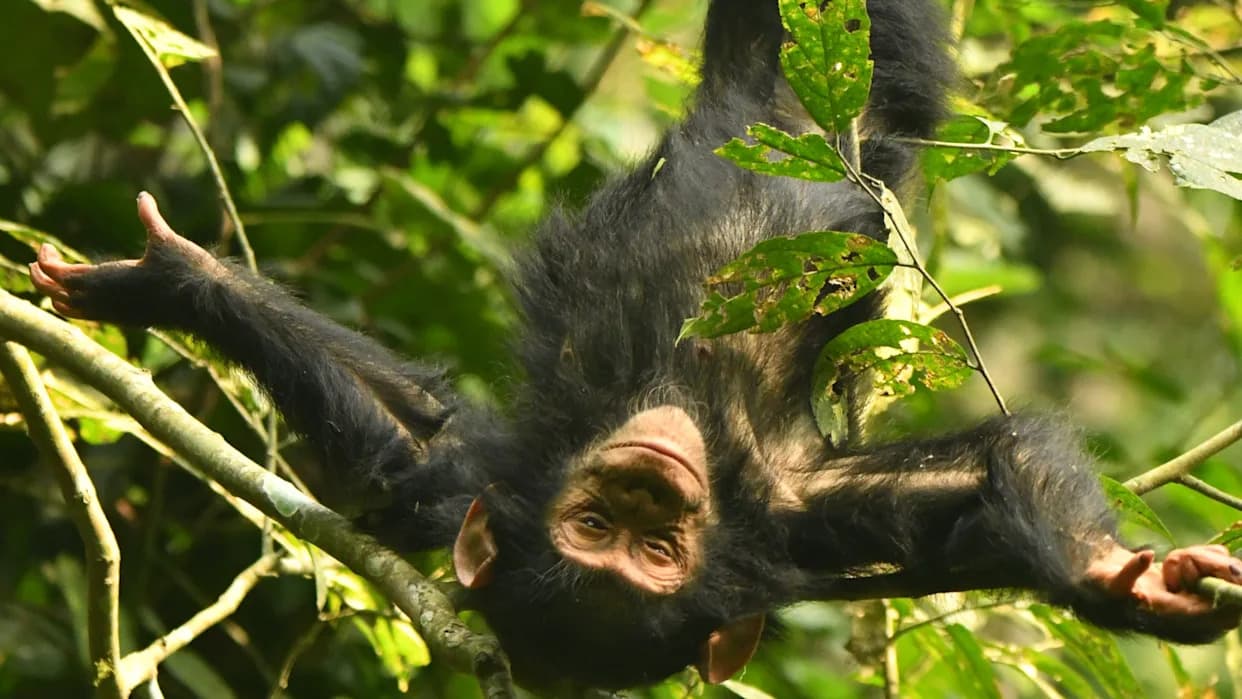
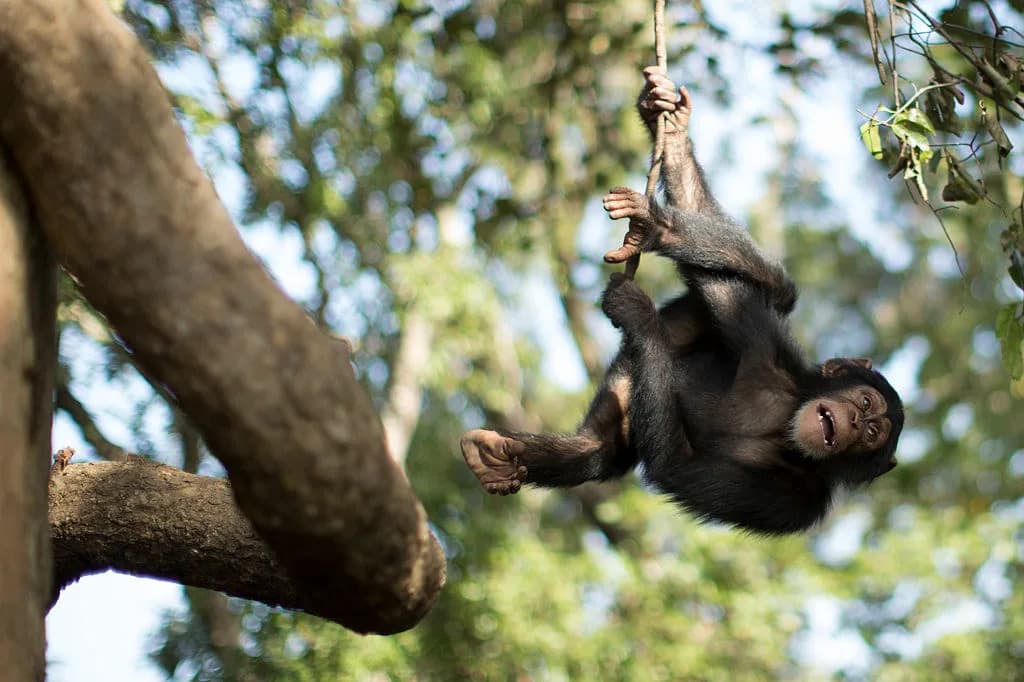
A young chimp is suspended from its feet at the Ngogo Chimpanzee Project at Kibale National Park in Uganda.
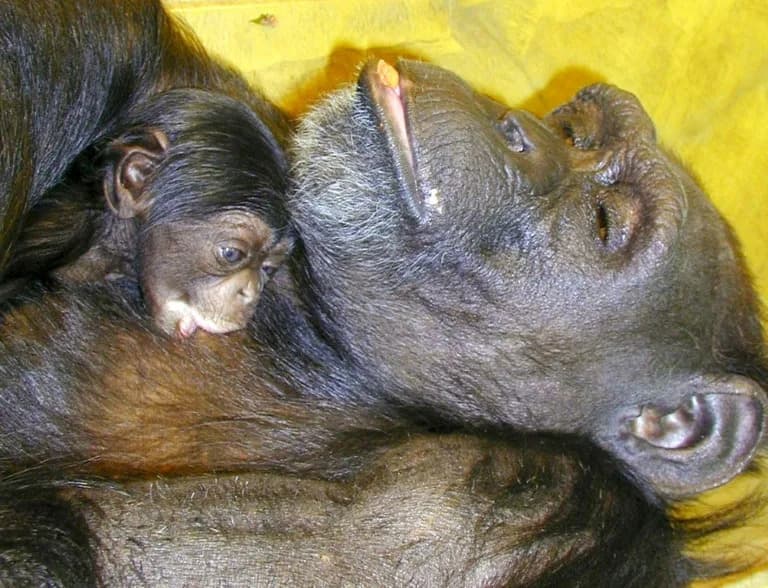
New research shows that the most hazardous, acrobatic behavior in wild chimpanzees occurs in infancy rather than adolescence. A team analyzing video recordings of 119 wild chimps found that deliberately letting go of branches or leaping between them — a behavior the authors call free flight — is far more common among the youngest animals.
Key Findings
Compared with adults, infant chimpanzees (roughly birth to five years) were about three times more likely to perform risky free-flight actions. Juveniles were roughly 2.5 times more likely and adolescents about 2.1 times more likely than adults to take these risks. The pattern held across sexes and independent of how high the animals were in the canopy.
What Researchers Observed
The study, published in iScience, used systematic video observations to document deliberate falls and jumps in the trees — situations in which a chimp releases its grip and is briefly unsupported. The primary hazard in such instances is falling and sustaining injury, yet infant chimps performed free flight most frequently.
“One of the main findings is that all chimpanzee kids are risky, and that infant and juvenile chimpanzees are even more risky than adolescents,”
said Lauren Sarringhaus, lead author and biologist at James Madison University. Co-senior author Laura MacLatchy of the University of Michigan noted the youngest chimps were "doing all of these crazy leaps and drops," especially once they were out of arm’s reach of their mothers.
Why It Matters
The authors suggest several explanations. Young chimps are lighter, have more flexible skeletons, and may be less likely to suffer severe injury from falls — making infancy a feasible window for practicing challenging movement. Play and seemingly reckless leaps likely help build the balance, coordination and confidence required for an arboreal lifestyle.
Importantly, the study raises a comparative-developmental idea about humans: unlike chimp mothers, human caregivers can supervise children from a distance for many years, potentially delaying the peak of observable, unsupervised risk-taking into adolescence. In short, extended human oversight may shift risk-taking later in life.
Takeaway
Infant chimpanzees show the highest rates of deliberate, risky free-fall behavior. This finding highlights how developmental ecology and caregiver constraints shape when and how animals, including humans, practice risky but potentially useful skills.
Help us improve.