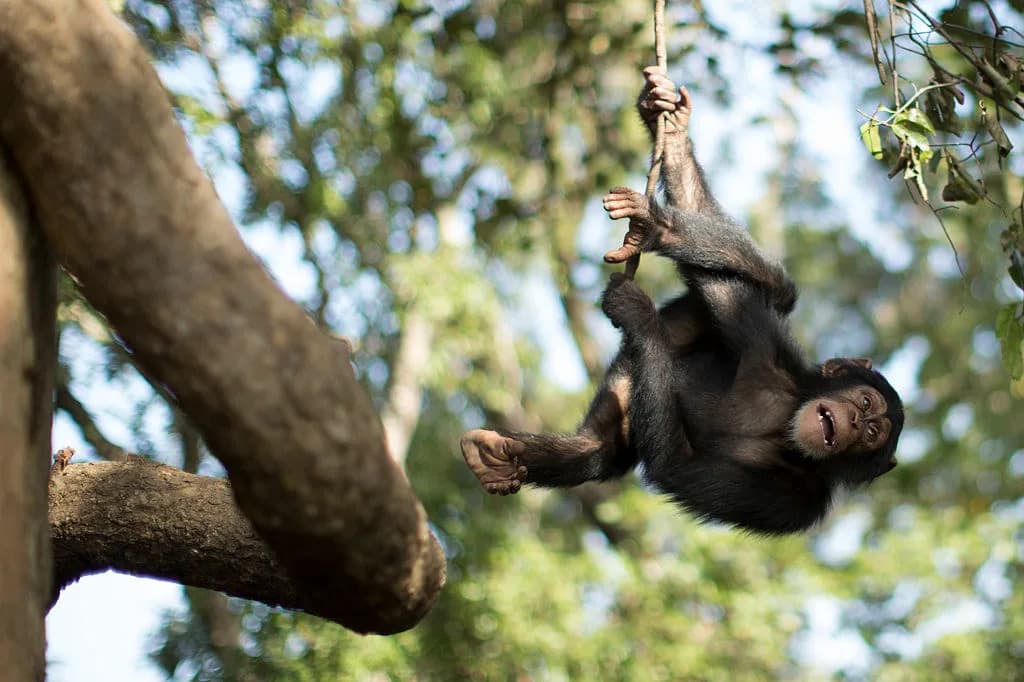
Ai, a chimpanzee studied at Kyoto University and nicknamed a “genius,” has died aged 49 from multiple organ failure and age-related ailments. She recognised over 100 Chinese characters, the English alphabet, Arabic numerals 0–9 and 11 colours, and could recreate objects on a screen using simple shapes. Ai’s decades of participation in controlled experiments helped shape research published in journals such as Nature and laid groundwork for understanding primate—and by extension human—cognition.
“Genius” Chimpanzee Ai — Renowned for Reading Characters — Dies in Japan at 49
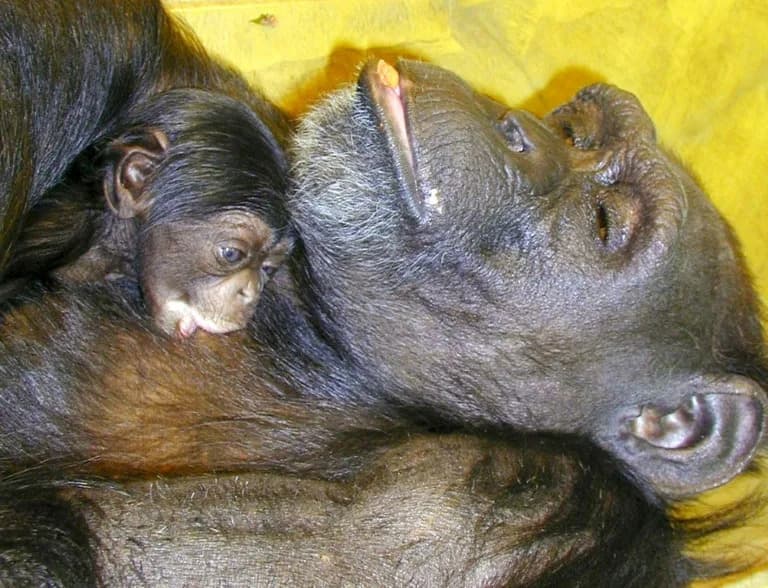
Ai (pictured in 2000 with her baby Ayumu) could recognise more than 100 Chinese characters and her abilities were the subject of scholarly papers (-)(-/JIJI PRESS/AFP)
Ai, a chimpanzee famed for her extraordinary cognitive abilities, has died in Japan at the age of 49, Kyoto University researchers said. The university's Center for the Evolutionary Origins of Human Behavior reported that Ai passed away on Friday from multiple organ failure and other conditions related to old age.
Her name — Ai — means “love” in Japanese. Over decades of research at Kyoto University, she took part in a series of experiments on perception, learning and memory that significantly advanced scientific understanding of primate cognition.
Primatologist Tetsuro Matsuzawa and colleagues documented Ai’s remarkable abilities: she recognised more than 100 Chinese characters, identified the letters of the English alphabet, reliably named Arabic numerals 0–9, and distinguished 11 colours. In one experiment she matched the Chinese character for the colour pink to a pink square rather than a purple one. In another task, when shown a real apple, she assembled a “virtual apple” on a screen using a rectangle, a circle and a dot — demonstrating the ability to represent objects using simple shapes.
Ai’s performance made her the subject of numerous scholarly papers and media programmes, including studies published in the journal Nature. Her research helped establish experimental methods for probing the chimpanzee mind and provided a foundation for questions about the evolution of human cognition.
Ai was born in West Africa and arrived at Kyoto University in 1977. In 2000 she gave birth to a son, Ayumu, whose later performances in memory tasks drew attention to parent–offspring knowledge transfer in chimpanzees.
"Ai was highly curious and actively participated in these studies, revealing various aspects of the chimpanzee mind for the first time," the Center said in a statement.
Researchers and the public often called Ai a “genius” for her unusual skills, but scientists emphasize that her contributions were also the result of careful experimental design, consistent training and long-term observation. Her death marks the loss of a central figure in comparative cognition research.
Help us improve.