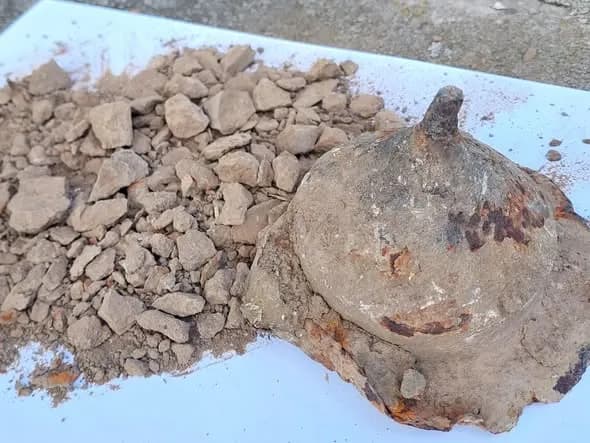
The Wigan Archaeological Society uncovered a 4,500‑year‑old Bronze Age cremation at a farm in Aspull and found a large oval ring ditch with an entrance that may be an earlier henge. Volunteers recovered evidence of funeral pyres and a Bronze Age cremation urn, and radiocarbon dating confirmed the burial's Bronze Age age. Experts caution that, while some early reports suggested a much older date, Neolithic henges in Britain typically date to around 3000–2500 BCE; further dating of the ditch will be needed to confirm its age.
Amateur Dig Near Wigan Uncovers Bronze Age Burial — May Be Cut Into a Much Older Henge

Volunteers from the Wigan Archaeological Society excavating a farm in Aspull, between Manchester and Liverpool, have uncovered a Bronze Age cremation and evidence that the grave may have been cut into a much earlier monumental feature.
The team initially identified a burial context dated to roughly 4,500 years ago: funeral pyres, charred deposits and a Bronze Age cremation urn containing fragments of human bone. Radiocarbon dating carried out with university partners confirmed the Bronze Age date for the cremation material.
During excavation the volunteers encountered a large, oval ring ditch with a distinct entrance. "We think the burial has been repurposed from an earlier monument — a Neolithic henge — because the ring ditch is so large and has an entrance on one side," said William Aldridge of the society. He described the feature as "totally unprecedented in this part of the country."
Henges are usually prehistoric circular enclosures defined by a ditch and bank and sometimes by timber or stone settings. If this feature proves to be a henge, it would indicate the site had ceremonial or ritual significance before the Bronze Age burials were placed there.
Some early reports suggested an extremely ancient date for the monument, but archaeologists caution against rapid conclusions. In Britain, Neolithic henges typically date to the period around 3000–2500 BCE, not 10,000 BCE. Further sampling and direct dating of deposits from the ring ditch will be needed to establish a reliable chronology.
When the team first exposed human bone they paused work and notified police and the coroner so investigators could rule out a recent death; only after those checks confirmed the remains were ancient did excavations continue.
Wigan has produced other notable finds in recent years, including Roman-period remains interpreted as a bathhouse and a fort, suggesting the area has long been reused and reinterpreted by successive communities. "Lots of different theories have been put forward," said society member Chris Drabble. "But I am sure that, at some point, something made this place special."
Excavation and analysis are ongoing. Specialists will target samples from the ring ditch and surrounding deposits for careful study and radiocarbon dating to determine whether the feature is truly Neolithic and how the Bronze Age burials relate to earlier activity on the site.
Help us improve.