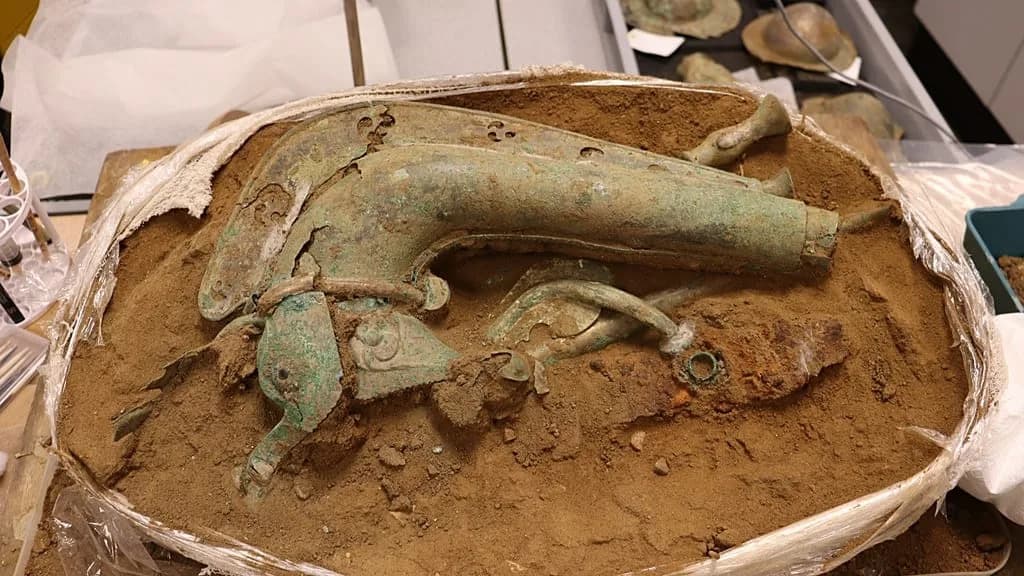
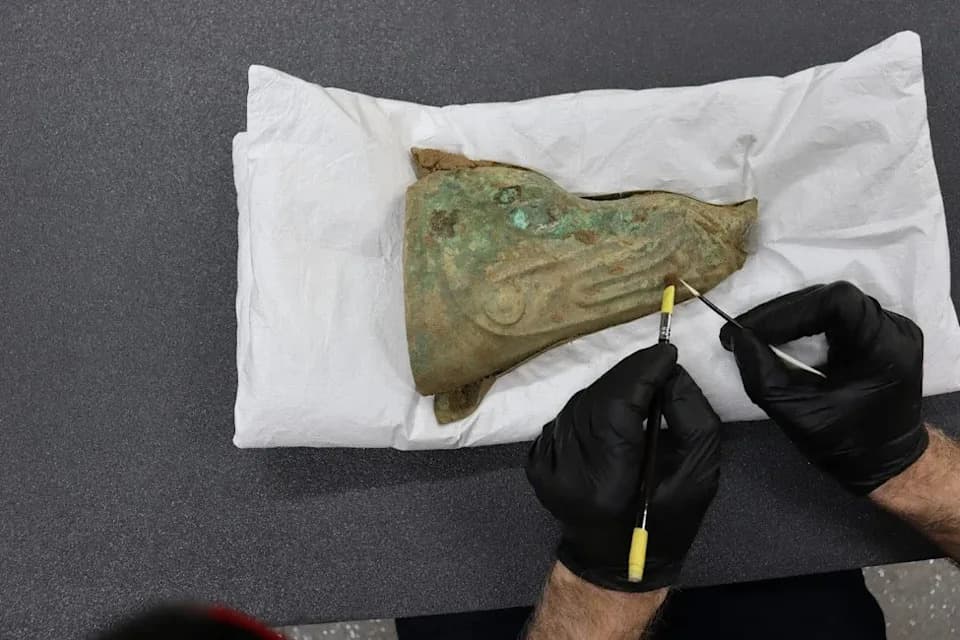
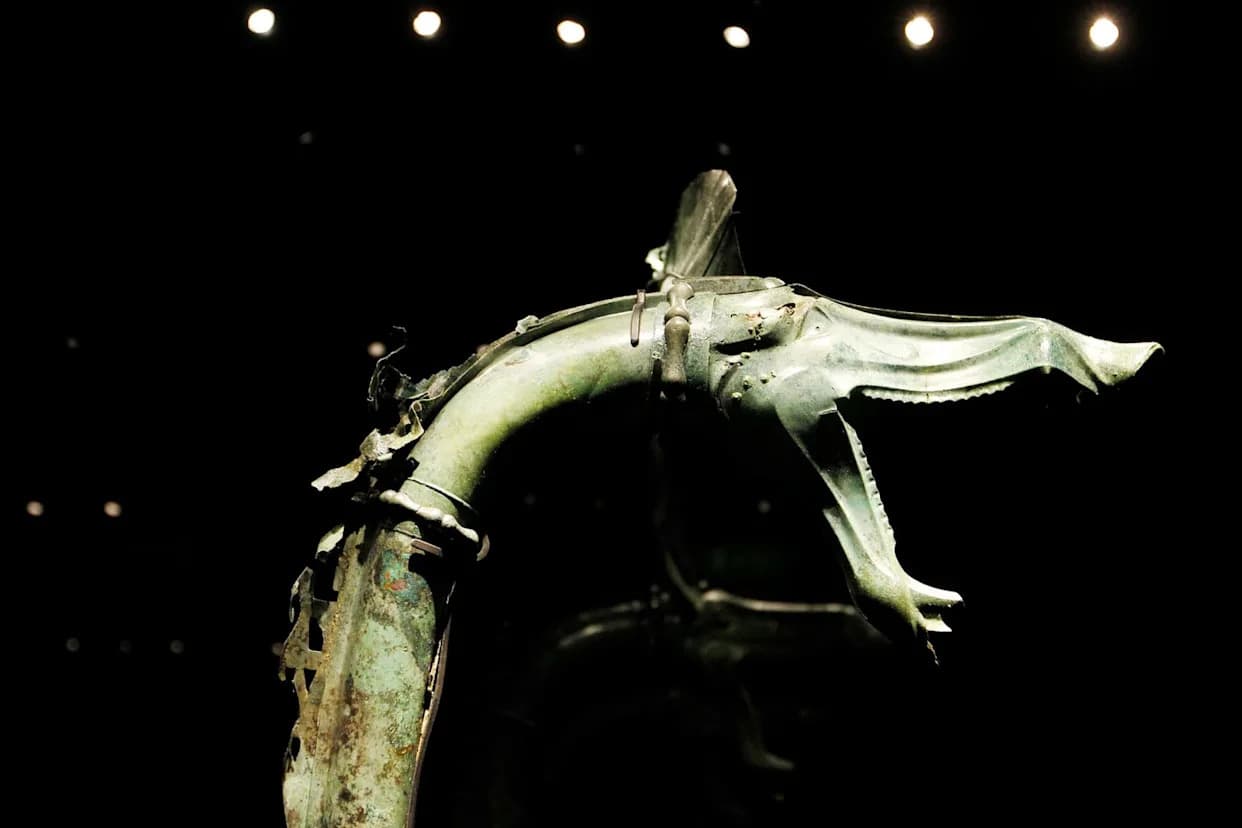
Archaeologists excavating for the Sizewell C project in Suffolk have uncovered a "princely" seventh‑century burial containing two high‑status individuals, weapons, personal items and the sand impression of a fully harnessed horse. Poor soil preservation left sand silhouettes rather than intact bones, but the impressions record exceptional detail. The find is one of 11 Anglo‑Saxon barrows at the site and forms part of a broad archaeological sequence at Sizewell spanning from the Neolithic to the medieval period.
Workers Unearth 1,400-Year-Old ‘Princely’ Anglo‑Saxon Burials at Sizewell C
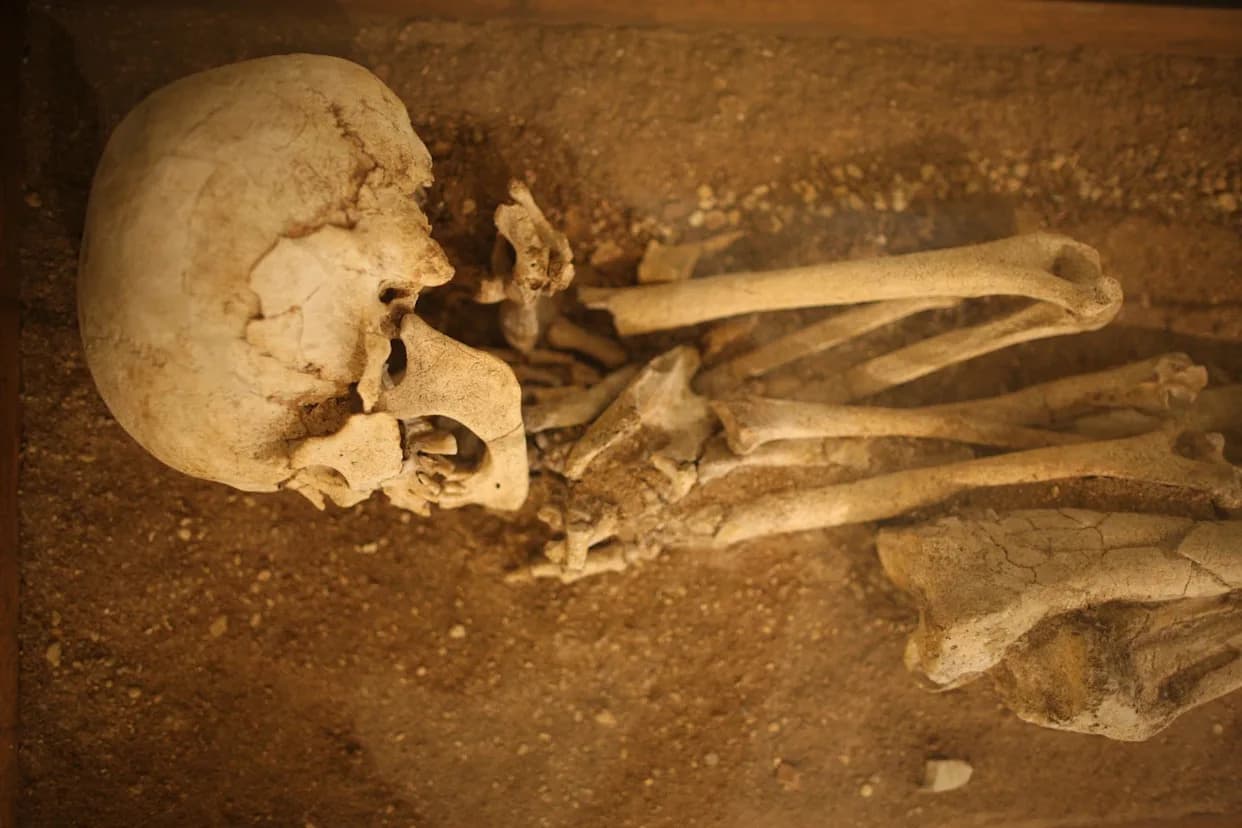
Workers Found Royal Burials at a Nuclear SiteFred de Noyelle - Getty Images
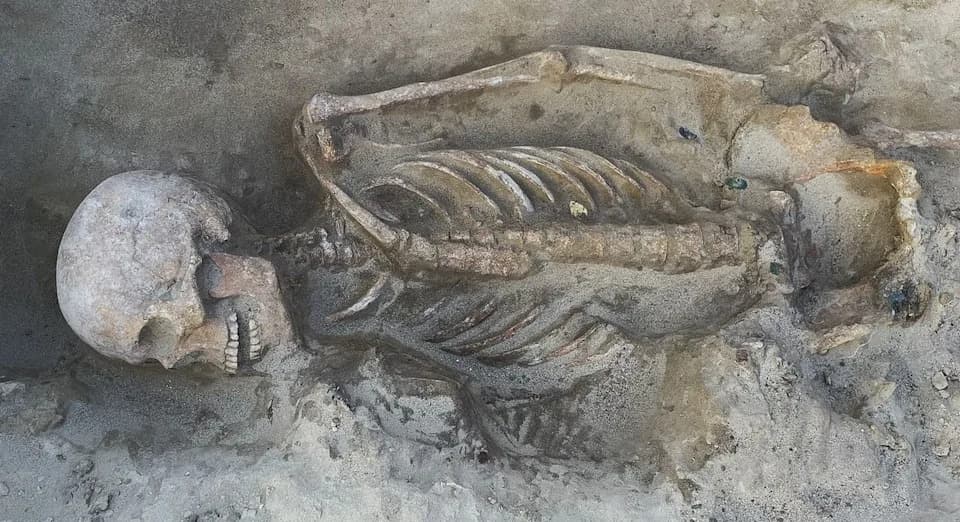
Archaeological teams working on the Sizewell C project in Suffolk have uncovered a remarkable seventh‑century burial complex that specialists describe as "princely." The discovery includes two high‑status individuals buried with weapons, personal items and the clear sand imprint of a fully harnessed horse.
Sand Silhouettes Reveal Exceptional Detail
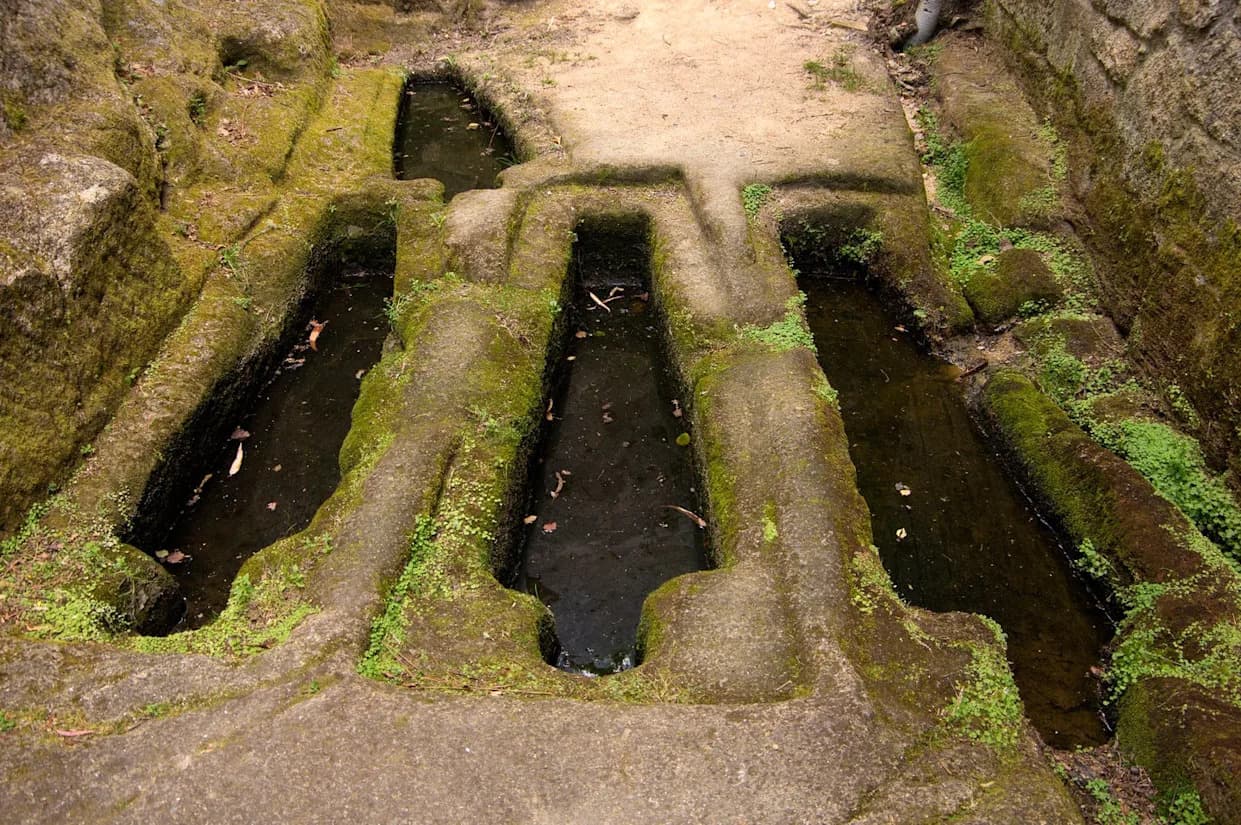
The site consists of 11 Anglo‑Saxon barrows (burial mounds). Poor organic preservation in the local soil meant that archaeologists did not recover intact skeletons. Instead, careful excavation exposed striking sand impressions that preserve the outlines of bodies, grave goods and the horse harness in exceptional detail. Len Middleton, a project officer with Cotswold Archaeology, described the impressions as "striking sand silhouettes that capture the outlines of bodies in remarkable detail."
What Makes This Grave ‘Princely’
One mound is particularly rich: it contained the remains of two high‑status individuals accompanied by weapons and personal effects, and the silhouette of a fully harnessed horse. Archaeologists say this is one of the largest single grave assemblages recorded at the Sizewell investigations and points to complex social hierarchies on the East Anglian coast during the sixth and seventh centuries.
Part Of A Much Larger Sequence
The burials were unearthed while contractors prepared a route for the new Sizewell Link Road and are dated to the sixth and seventh centuries. Nigel Cann, Chief Executive Officer of Sizewell C, said the discovery offers a "fascinating glimpse into Suffolk’s rich heritage and the lives of its early communities." Excavation leaders emphasize the find's national importance for understanding early medieval power, belief and identity.
The Sizewell C programme has already produced a long sequence of earlier finds, including a well‑preserved pottery kiln, a rare Iron Age oak ladder, a Bronze Age cremation urn, and the remains of an early Neolithic building with stone tools and pottery (likely around 3500 BCE). Another trench revealed a hoard of more than 300 11th‑century silver coins wrapped in lead and cloth—interpreted as a savings cache hidden during unrest—and now conserved by the Suffolk County Council’s Archaeological Service.
Deep Time On Display
Rosanna Price, Engagement Manager at Cotswold Archaeology, summarized the scale of the programme: "An astonishing 36,000 years of human presence—from the roaming of Neanderthals to the first farmers about 6,000 years ago, and from the rich culture of early medieval England to the wartime activity of the 20th century." The archaeological programme currently covers approximately 770,000 square metres (about 190 acres) across some 70 sites around Sizewell.
"Suffolk continues to reveal its stunning past, and the magnitude of these discoveries should not be underestimated," said Debbie Richard, Suffolk County Council’s deputy cabinet member for Archaeology and Landscape Partnerships.
Excavation and recording continue as contractors complete infrastructure work for the new power station, ensuring that the region's long and varied human history is documented and conserved.
Help us improve.