This report documents the earliest clear evidence of cremation in Africa: a 9,500-year-old adult pyre at Hora 1 rock shelter in northern Malawi. Forensic and microscopic analyses indicate a single small adult—likely a woman about 1.5 m tall—was cremated at temperatures of at least 1,000°F (540°C); cut marks show deliberate flesh removal with stone tools. The pyre required an estimated 30 kg of wood, involved multiple participants, and occupied a location used for repeated fires from roughly 10,240 years ago onward, signaling a long-lived ritual significance.
9,500-Year-Old Pyre in Malawi Reveals Unexpected Stone Age Cremation Ritual
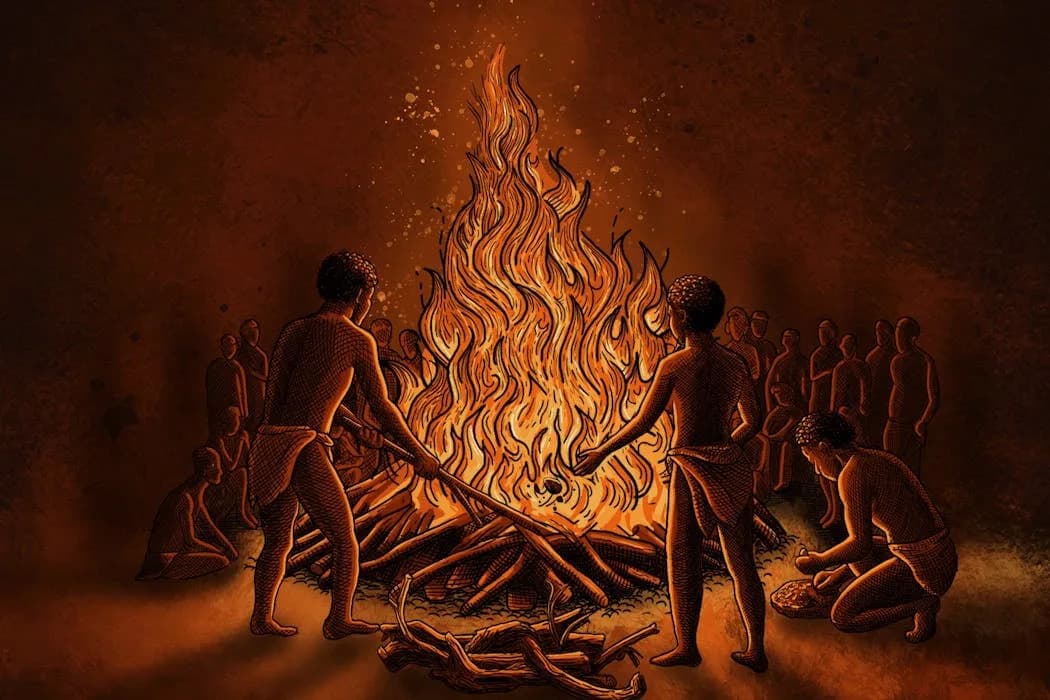
Why did this community burn one woman's remains in such a visible, spectacular way? Patrick Fahey
Nearly 10,000 years ago, beneath a natural rock overhang at the Hora 1 site in northern Malawi, people tended a ferocious fire that left a dramatic archaeological trace. Our multidisciplinary team of bioarchaeologists, archaeologists and forensic anthropologists has documented the earliest clear evidence of cremation in Africa and the oldest known adult pyre cremation worldwide.
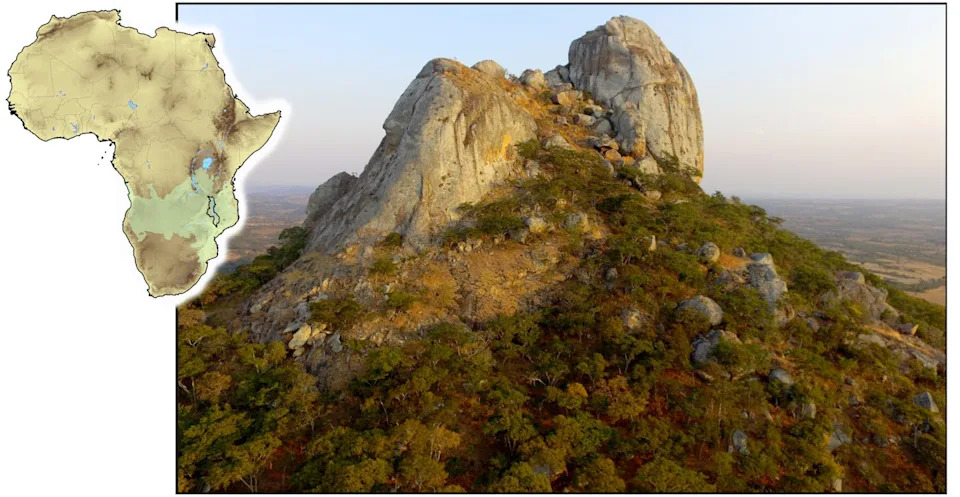
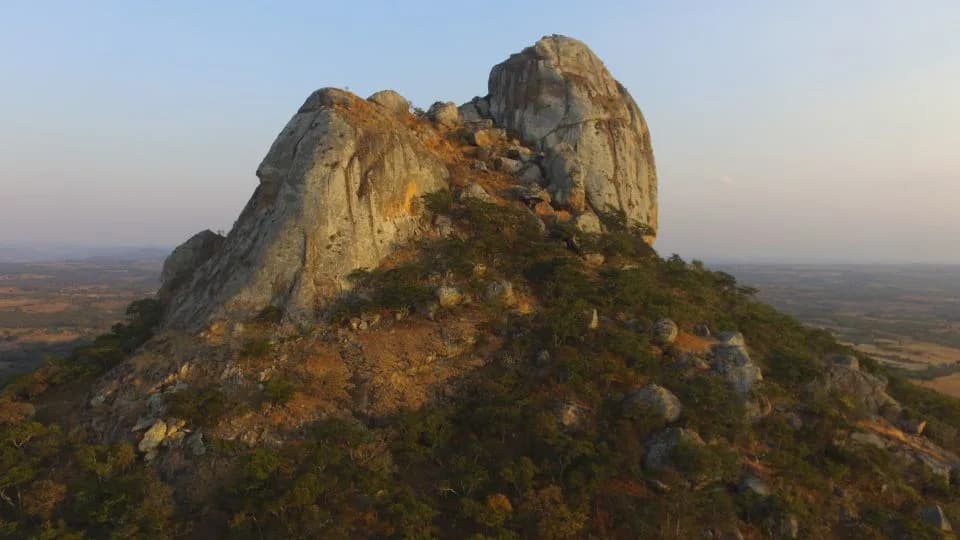
The pyre was found under a giant boulder near the base of Mount Hora. The site is in Malawi, which is outlined in black within the Zambezian forest (colored green) on the map of Africa. Jessica Thompson and Natural Earth
Discovery and Context
Excavation revealed a compacted ash deposit roughly the size of a queen bed beneath the shelter. Radiocarbon dating places the cremation at about 9,500 years ago, with earlier and later fires at the same location beginning around 10,240 years ago. The deposit contains clustered, calcined bone fragments and microscopic ash layers that preserve a sequence of burning events, indicating long-term significance of the spot.
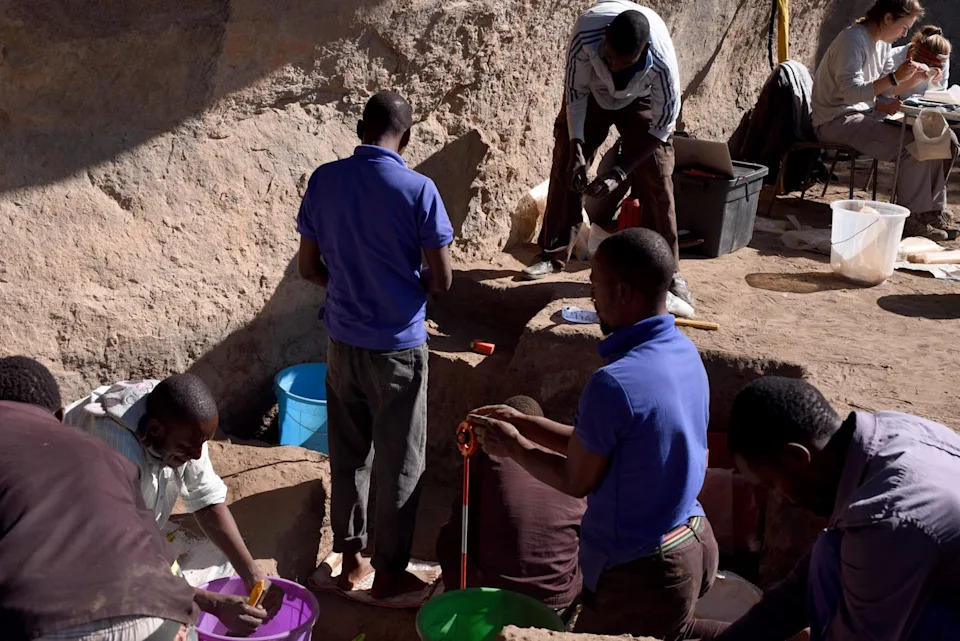
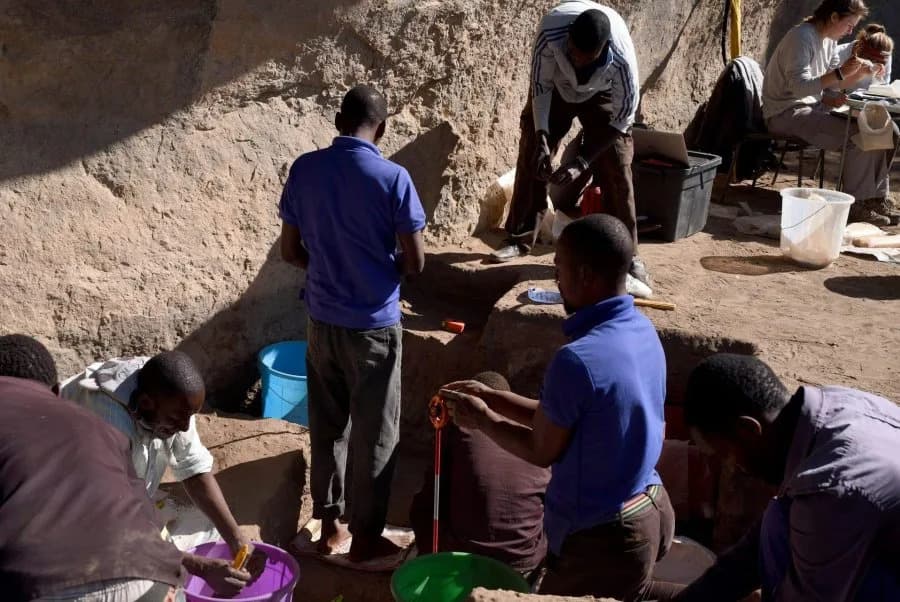
Excavators standing at the depth of the pyre at the Hora 1 site in northern Malawi. Jessica Thompson
Who Was Cremated?
Forensic and bioarchaeological analyses show all human fragments come from a single small adult, probably a woman about 1.5 meters (5 feet) tall. Skeletal markers indicate a physically active life, a partially healed bone infection in an arm, and early arthritis consistent with a middle-aged adult.
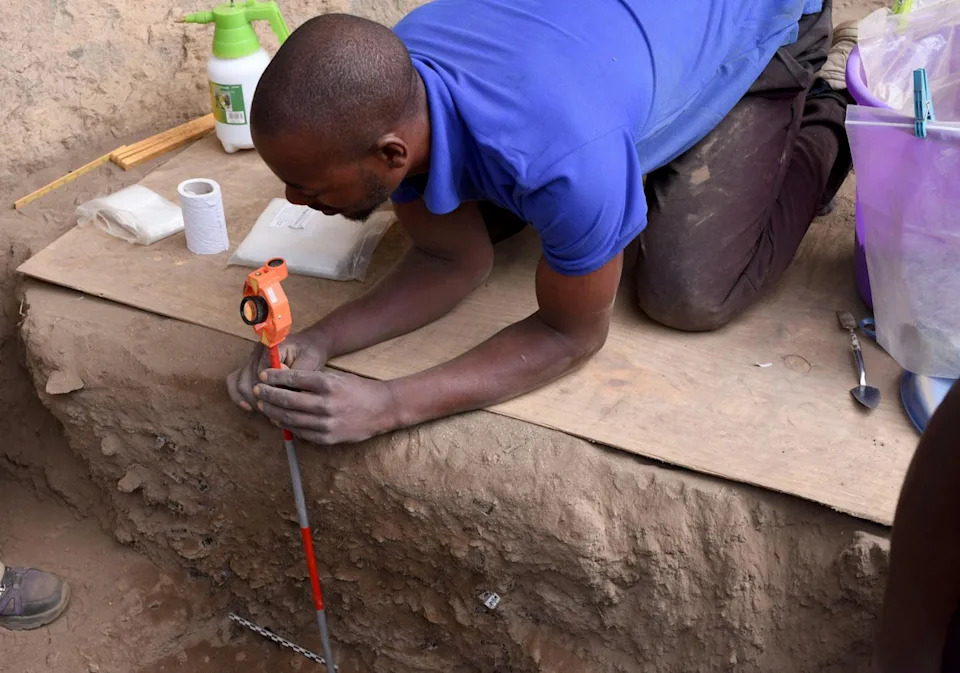
Excavators began finding a thick ash deposit about 2 feet (0.6 meters) under the modern-day surface of the rock shelter. Jessica Thompson
How the Cremation Was Carried Out
Burning patterns—warping, cracking and discoloration—indicate the body burned with some soft tissue present at temperatures of at least 1,000°F (540°C). Microscopic cut marks at muscle attachment sites and along the arms show attendants used stone tools to remove flesh and aid combustion. Numerous small, pointed stone flakes were found inside the ash, suggesting tools were added to the fire as it burned. Ash microfossils and soil traces imply at least ~30 kg (about 70 lb) of deadwood was collected and tended for hours or days.
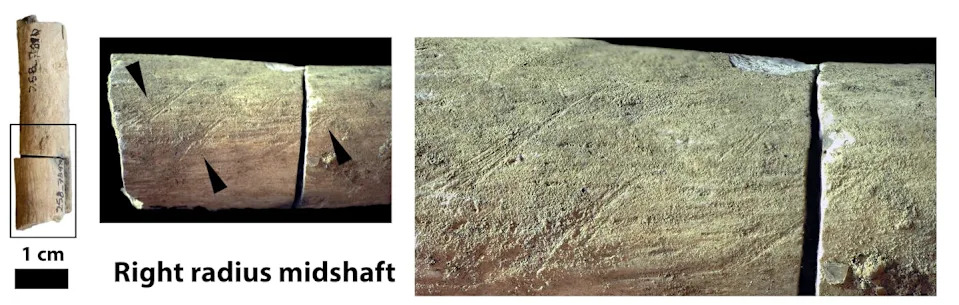
Marks incised on the shaft of the lower arm bone (radius) were inflicted by a stone tool. The bone then turned gray as it burned. The area in the box on the left is enlarged on the right of the image. Jessica Thompson
Ritual Significance and Unusual Features
The arrangement of remains and the scale of fuel and labor argue against cannibalism and for a community-scale mortuary ritual. Notably, skull bones and teeth—elements that often survive cremation—are absent, suggesting the head may have been removed before or during the ritual, although this cannot be confirmed absolutely. Additional displaced and differently colored fragments from later excavation seasons indicate the body was handled and moved during the burning.
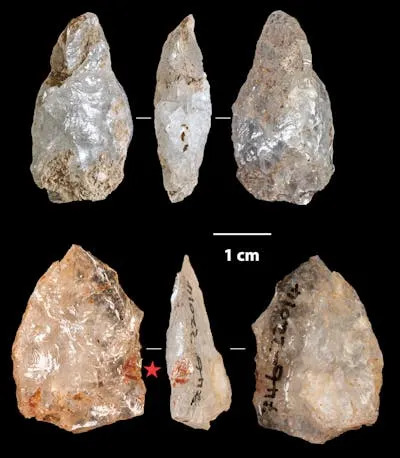
Tiny pointed tools made from local stone were found within the pyre. They were probably made at the same time that it burned. Justin Pargeter
Implications for Hunter-Gatherer Societies
This find challenges assumptions that elaborate, place-tied mortuary rituals are restricted to food-producing societies. At Hora 1 other burials dating back to 16,000 years ago show simple interment practices for men, women and children from a long-term local population. The exceptional pyre event indicates differential treatment of the dead and suggests more complex social roles or beliefs within this hunter-gatherer community.
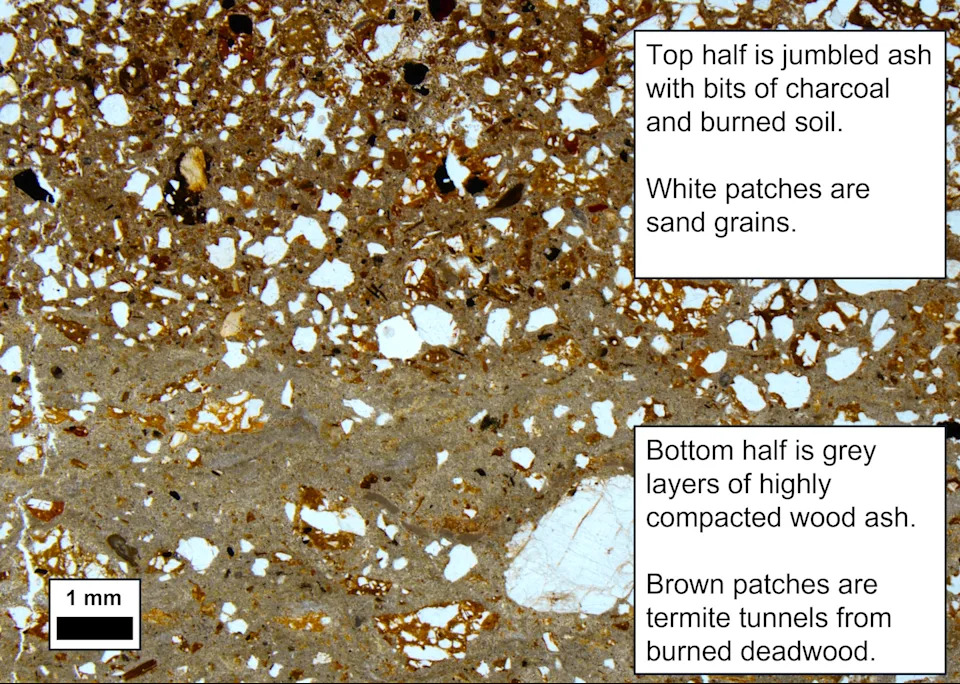
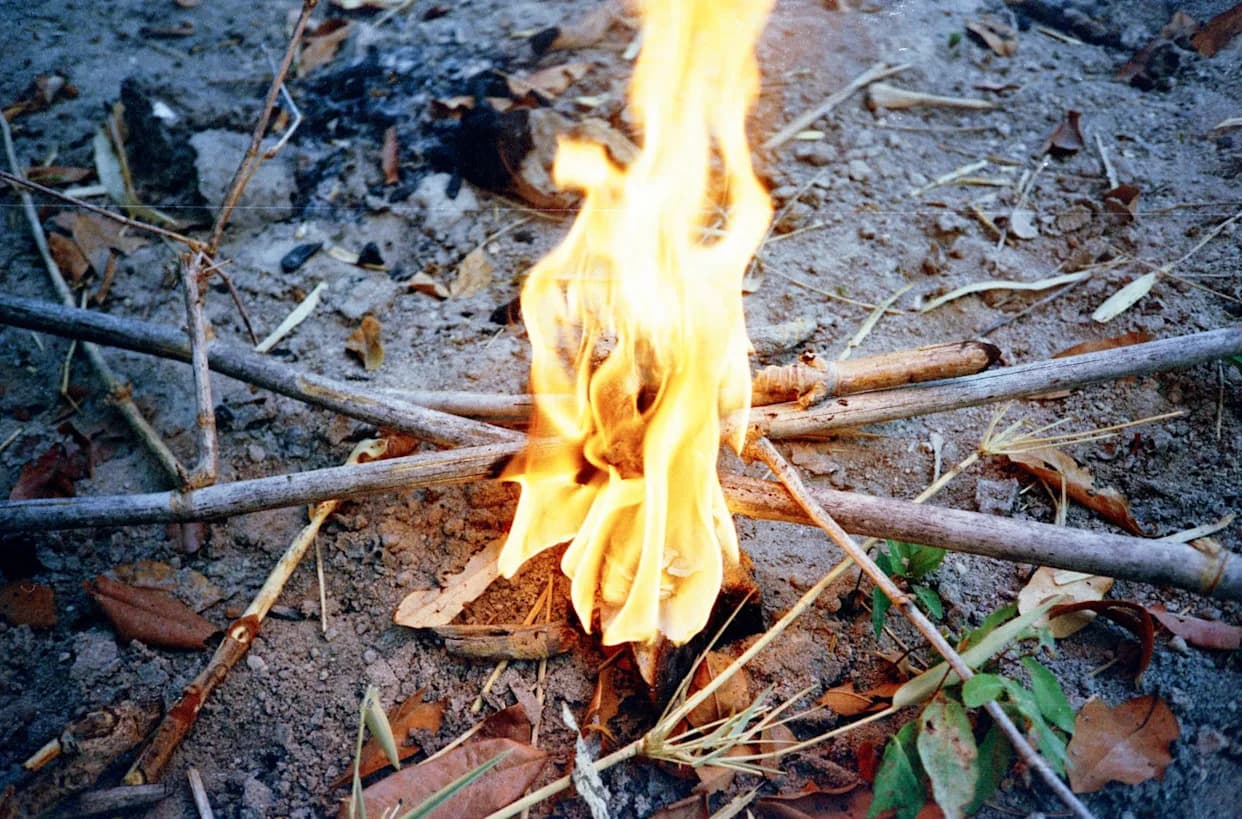
Loose, sandy, burned soil was mixed on top of very thin layers of ash, showing that the pyre was lit over and over again. Flora Schilt
Methods
Conclusions rely on a combination of microscopic ash analysis, radiocarbon dating, forensic anthropology, and bioarchaeological study of bone morphology and cut-mark patterns. These complementary approaches allowed the team to reconstruct both the biological profile of the individual and the technical and social dimensions of the cremation event.
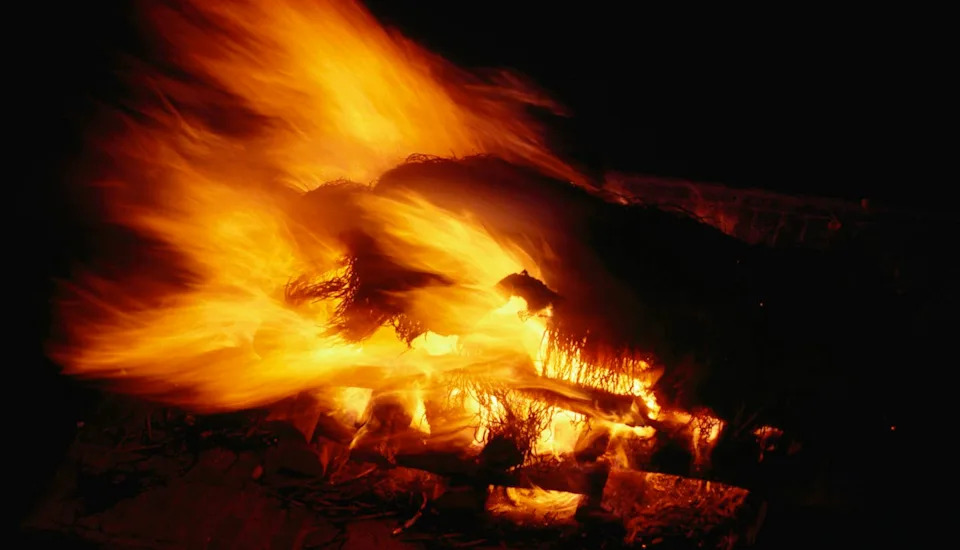
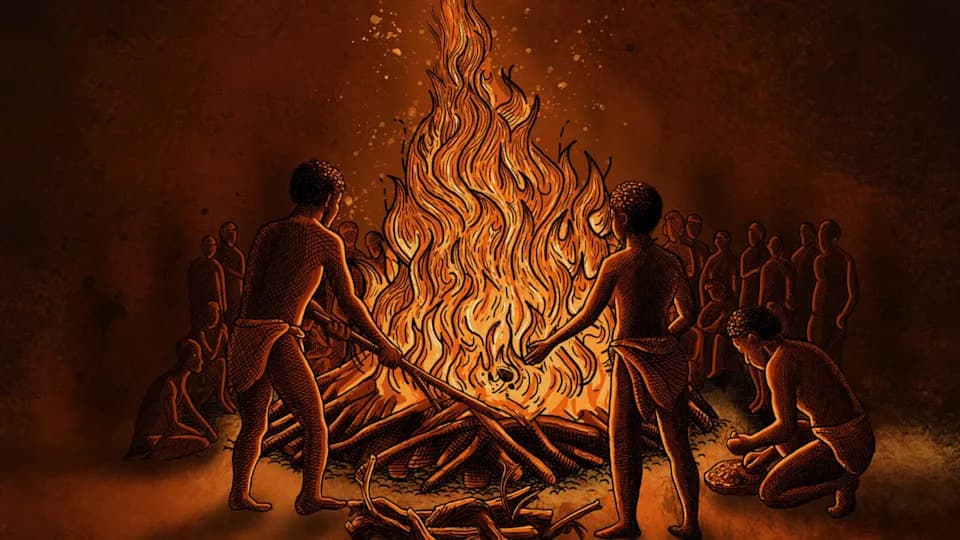
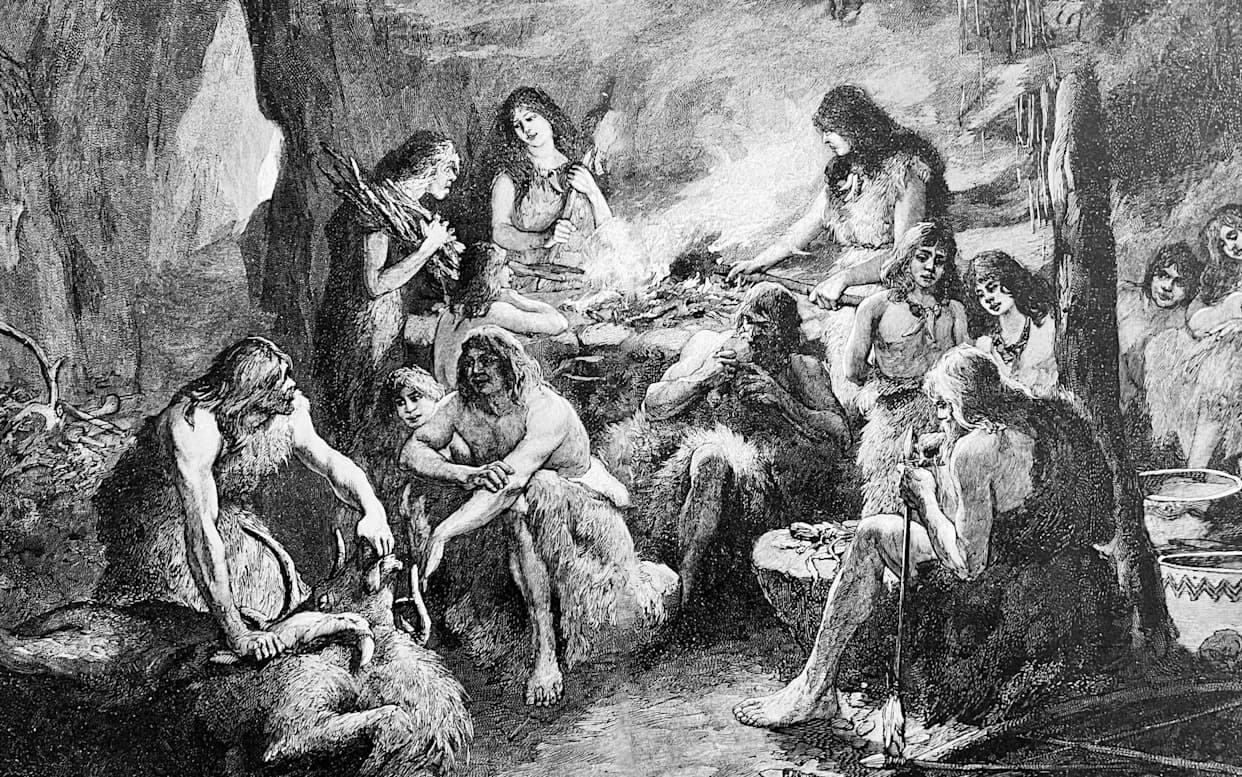
The pyre event was a spectacle that required many hours of communal effort and would have been impossible to hide.Anders Blomqvist/Stone via Getty Images
Conclusion: The Hora 1 pyre documents a large, labor-intensive mortuary spectacle among Stone Age foragers in south-central Africa—one that was remembered and ritually revisited for centuries.
This article summarizes findings originally reported in Science Advances by Jessica C. Thompson (Yale University), Elizabeth Sawchuk (Stony Brook University), Jessica Cerezo-Román (University of Oklahoma), and colleagues. Funding disclosure and author affiliations are detailed in the original paper.
Help us improve.