The Hora 1 site in northern Malawi preserves the earliest clear pyre cremation in Africa and the oldest known adult pyre cremation worldwide, dated to about 9,500 years ago. Forensic analysis shows the burned remains belonged to a single small adult—likely a middle-aged woman—cremated at temperatures of at least 1,000°F (≈540°C). The scale of the ash deposit, evidence of stone-tool use, and layered fire deposits indicate a community-built, attended ritual that required roughly 30 kg (70 lb) of wood and that the location was reused across centuries. The find challenges assumptions about mortuary behavior among prehistoric hunter-gatherers and suggests social complexity and place-centered ritual memory.
9,500-Year-Old Cremation in Malawi Reveals Large-Scale Hunter-Gatherer Funeral Ritual
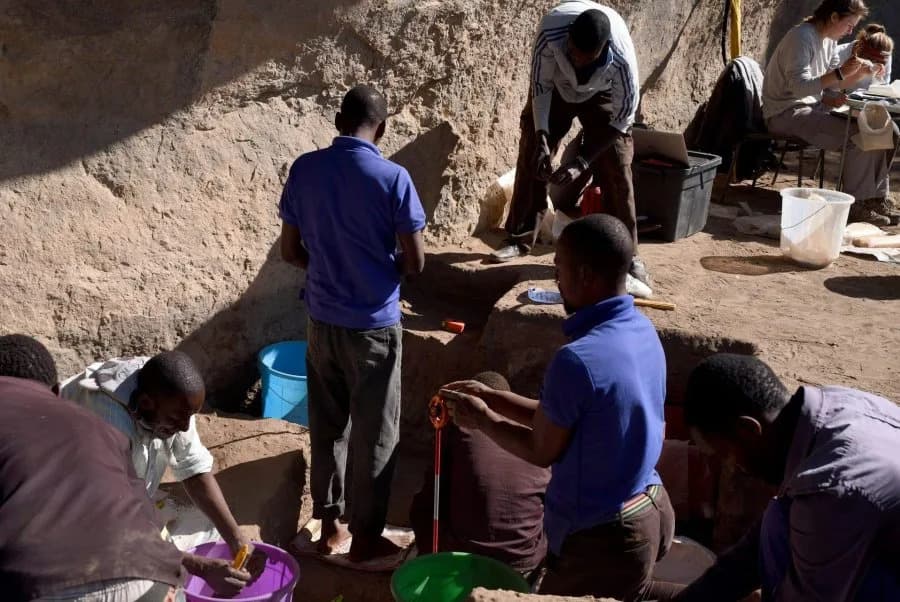
Excavators standing at the depth of the pyre at the Hora 1 site in northern Malawi. Photo by Jessica Thompson/The Conversation
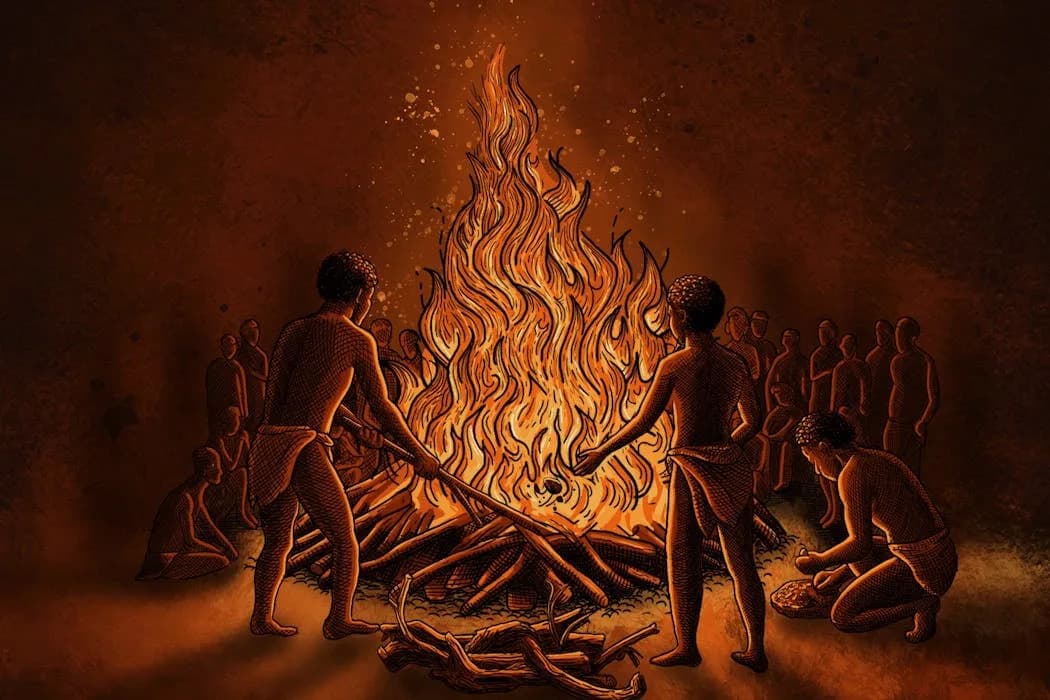
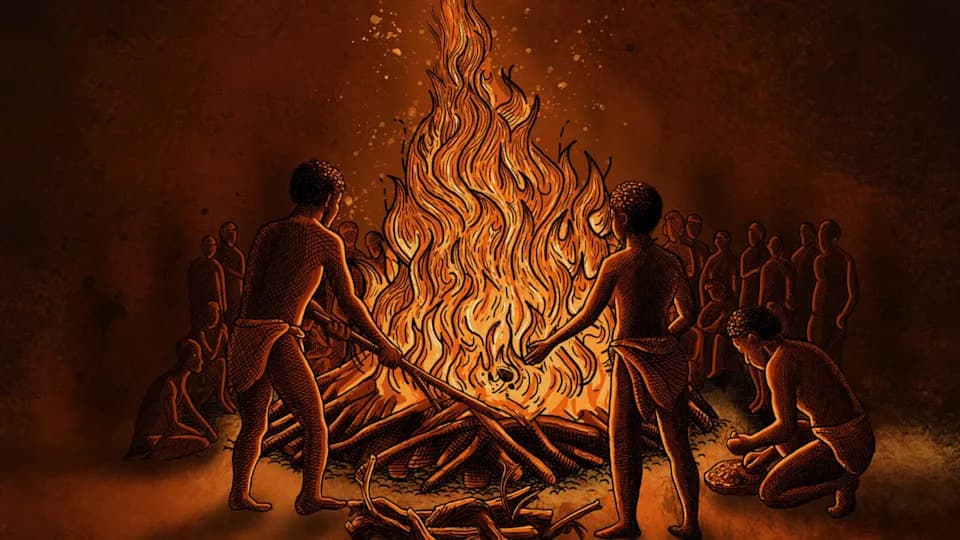
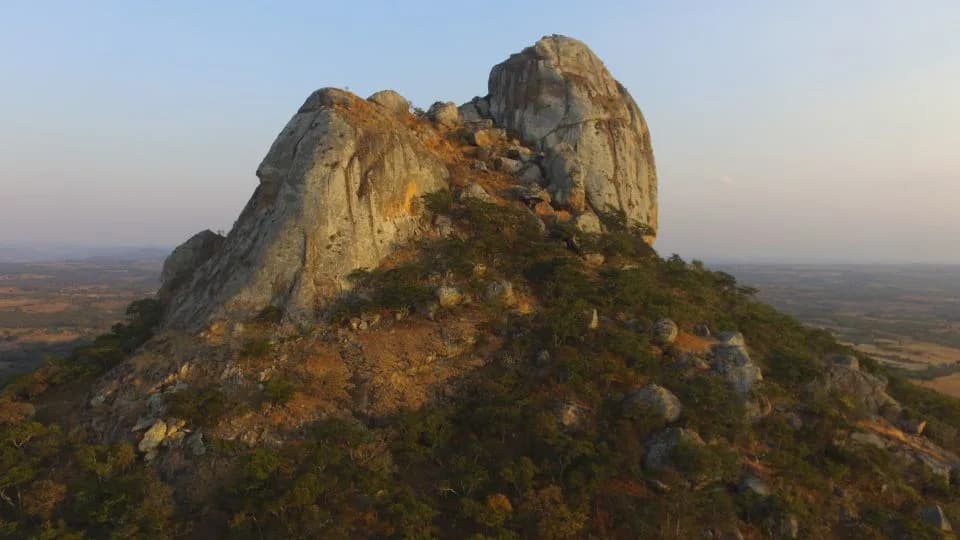
Near the equator the sun slips below the horizon in minutes and darkness pours in from the surrounding forest. Almost 10,000 years ago, at the base of a mountain in what is now northern Malawi, a fierce, long-burning blaze beneath a natural stone overhang threw a community's shadows up onto a rock wall and left traces that survived in the archaeological record.
Discovery at Hora 1
Excavations at the Hora 1 site revealed a compacted ash deposit about 0.5 meters thick. Within that matrix an excavator uncovered a small human bone fragment: the broken end of a humerus joined to the end of a radius, preserving a burned and fractured elbow joint. Further analysis showed all the charred fragments belonged to a single adult who had been burned in that ash deposit.
What the Forensic Evidence Shows
Forensic and bioarchaeological analysis indicates the individual was a small adult—likely a woman—approximately 1.5 meters (just under 5 feet) tall and probably middle-aged. Heat-induced warping, cracking and discoloration show the body was burned with soft tissue still present at temperatures of at least 1,000°F (≈540°C). Microscopic cuts at muscle attachments and numerous small pointed stone chips in the ash indicate attendants used stone tools to remove flesh or to tend the burning.
Pyre, Not Cannibalism
The scale and patterning of the bones within a queen-sized ash deposit point to a constructed pyre and mortuary ritual rather than a case of cannibalism. Notably, skull bones and teeth—typically the most heat-resistant elements—are absent, suggesting the head may have been removed before or during the cremation as part of the rite.
Community Effort and Site Reuse
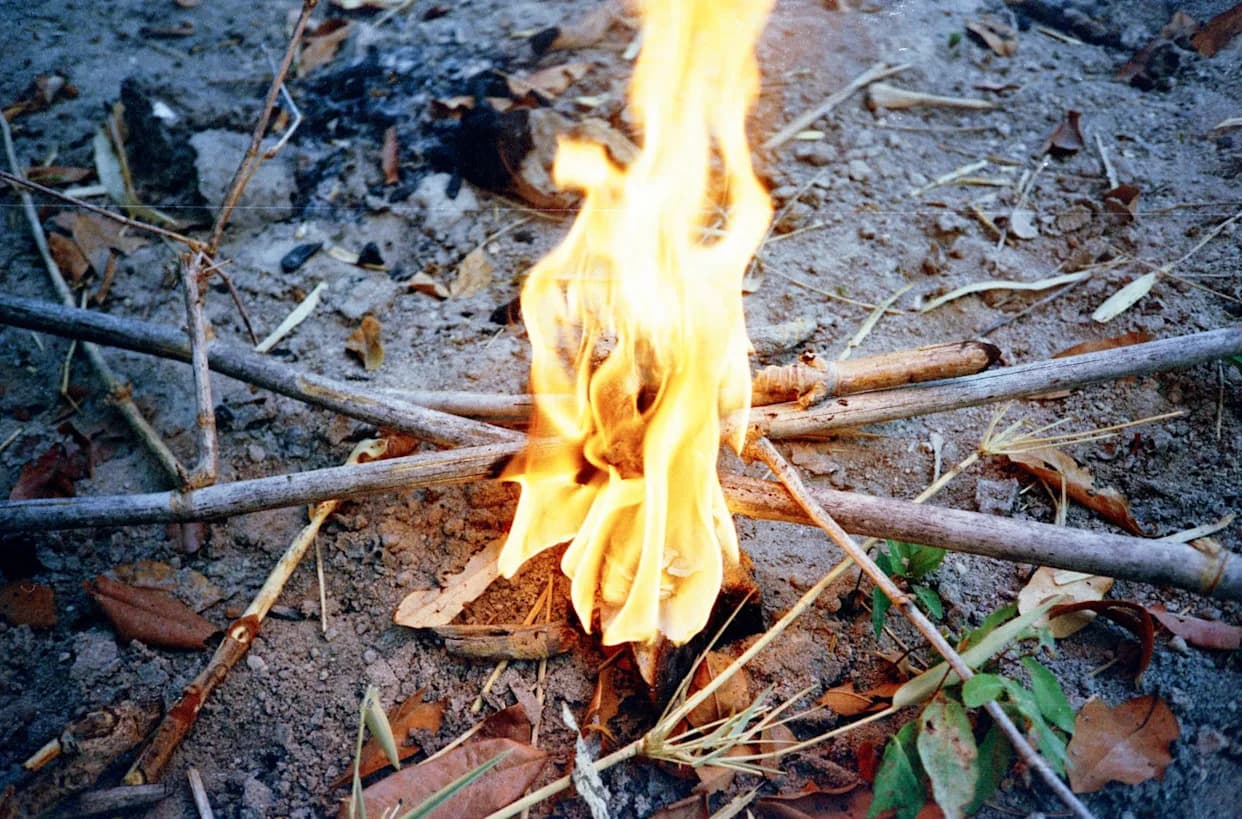
Microscopic and residue analyses (including charcoal, blackened fungal fragments, reddened termite-derived soil and plant remains) suggest people collected roughly 30 kg (about 70 lb) of deadwood and tended the fire for hours or days. Radiocarbon dating of layered ash shows burning at the same spot began by about 10,240 years ago, and the principal pyre cremation occurred ~9,500 years ago. The site was reused for large fires centuries later, indicating its continued communal significance.
Broader Significance
This discovery, reported in Science Advances, documents the earliest clear example of pyre cremation in Africa and the oldest known adult pyre cremation globally. It challenges assumptions that elaborate, place-centered mortuary spectacles were uncommon among prehistoric hunter-gatherers in Africa and raises questions about social differentiation, ritual practice and memory in this long-term local community.
Authors and Affiliations: Jessica C. Thompson (Yale University), Elizabeth Sawchuk (Cleveland Museum of Natural History / Stony Brook University), Jessica Cerezo-Román (University of Oklahoma). Findings published in Science Advances; this summary is based on their research.
Help us improve.